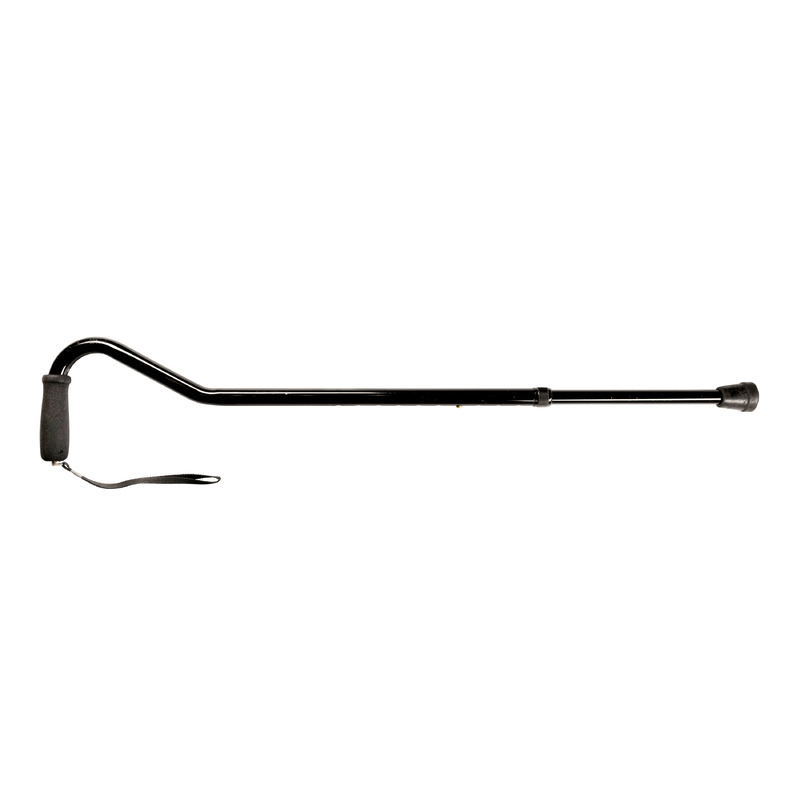
This walking stick was used by Mikhail Gorbachev in his later years. After his death, Dmitry Muratov received it as a gift from Gorbachev's daughter Irina Virganskaya. Gorbachev had helped finance the founding of the newspaper Novaya Gazeta, which under Muratov's editorship engaged in critical investigative journalism.
Muratov remembers how Gorbachev once in a restaurant pounded the table with his stick and said: "First of all, listen to my UN speech!" He picked up a sheet and read: "BAN THE WAR." Muratov asked: "Was that all?" Gorbachev replied: "Is there anything to add?" And pounded the table once more with his stick.
Dmitry Muratov donated the walking stick to the Nobel Prize Museum in 2023.
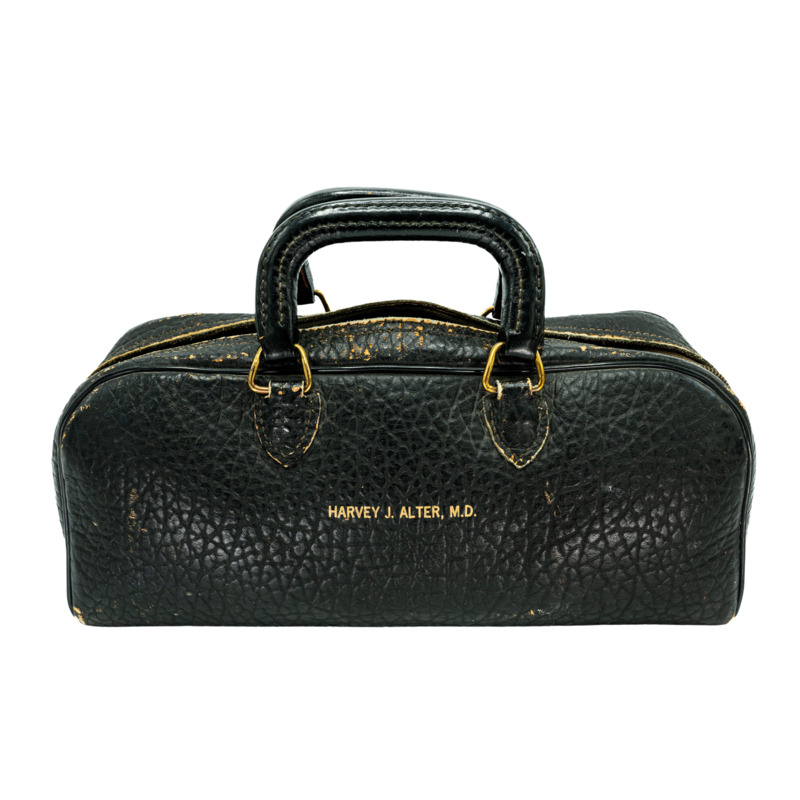
This doctor’s bag was used by Harvey Alter during his last year of training to become a doctor. He studied at the University of Rochester and did his final internship at Strong Memorial Hospital in the early 1960s. Alter later did groundbreaking research in virology and discovered the previously unknown hepatitis C virus.
Harvey Alter donated the doctor’s bag to the Nobel Prize Museum in 2023.
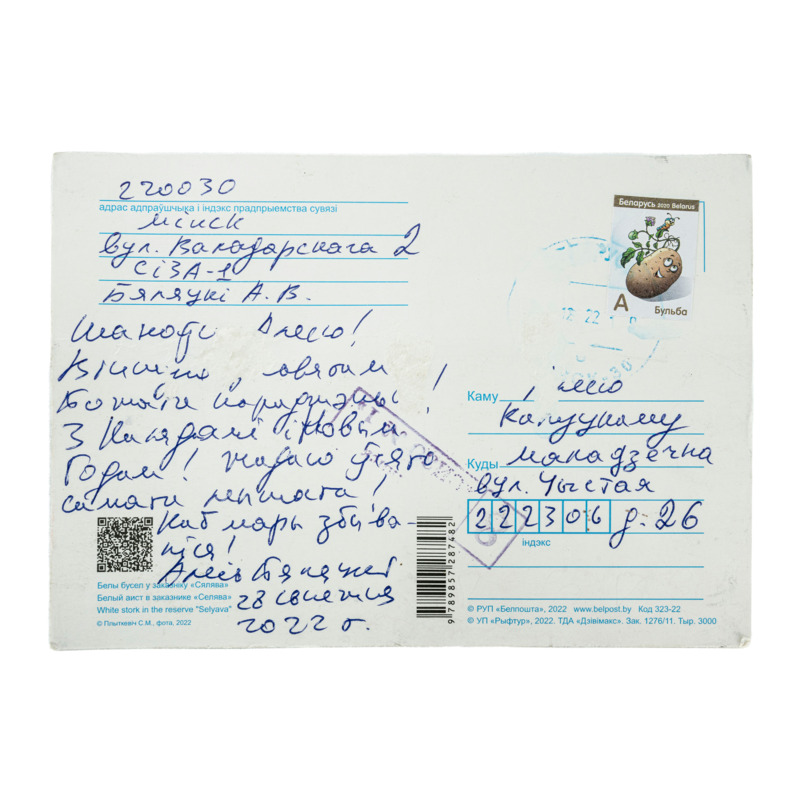
On Christmas 2022, the Belarusian human rights activist Ales Bialiatski sent this card to his colleague Ales Kapucki. The blue stamp shows that the card was sent from the pre-detention centre SIZO No. 1 in Minsk, where Bialiatski was detained at the time. The greeting reads:
“Dear Ales!
I congratulate you on the feast of the birth of God!
Merry Christmas and Happy New Year! I wish you all the best! May dreams come true!
Ales Bialiatski, 28 December 2022.”
Bialiatski had been detained in 2021, accused of tax evasion. He was in prison when it was announced in October 2022 that he had been awarded the Nobel Peace Prize. In 2023, he was sentenced to ten years in prison for smuggling and financing political protests.
The postcard was donated to the Nobel Prize Museum by Ales Kapucki in 2022.
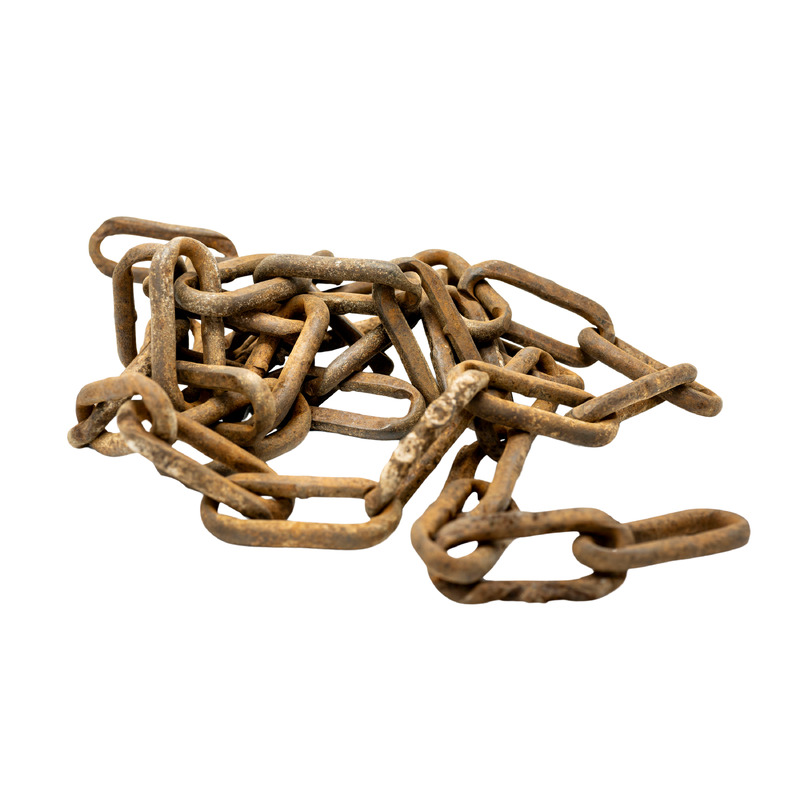
This chain has been used in various activities carried out by the Center for Civil Liberties (CCL) since 2014 in response to Russia’s arrests of human rights activists in Crimea. One example is the #SaveOlegSentsov campaign, which gathered thousands of people from 40 countries to demonstrate against the illegal imprisonment of Ukrainian film director Oleg Sentsov and other political prisoners. In the end, 34 people were released, and one of them was Sentsov. The campaign appealed for support from the Parliamentary Assembly of the Council of Europe and was also a reminder that political prisoners are still being held in Russia.
CCL donated the chain to the Nobel Prize Museum in 2023.
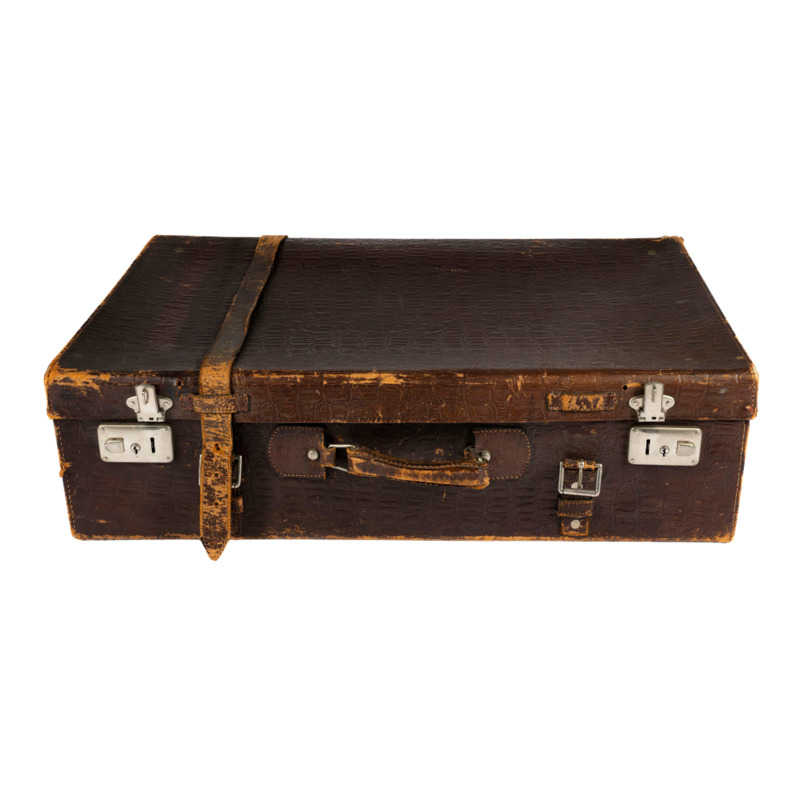
When Nelly Sachs arrived in Sweden in 1940, she had this suitcase with her. It contained only what she could carry when she escaped from Berlin with her mother on one of the last civilian flights during the Second World War. As a Jew, she had been persecuted by the Nazis and realised her life was in danger. The escape was made possible through the concerted efforts of friends. One of the friends who vouched for Nelly Sachs and her mother was Selma Lagerlöf. In her youth, Sachs had been fascinated by Lagerlöf’s stories and had corresponded with her. Nelly Sachs also became a writer. and her poetry and plays often centred on the fate of the Jewish people.
Nelly Sachs gave the suitcase to her friend and translator Margaretha Holmqvist. In 2010, Holmqvist gave it to the author Aris Fioretos, to be included in a major exhibition on Sachs’s life and work in Germany, Switzerland and Stockholm. In 2023, Fioretos donated it to the Nobel Prize Museum.
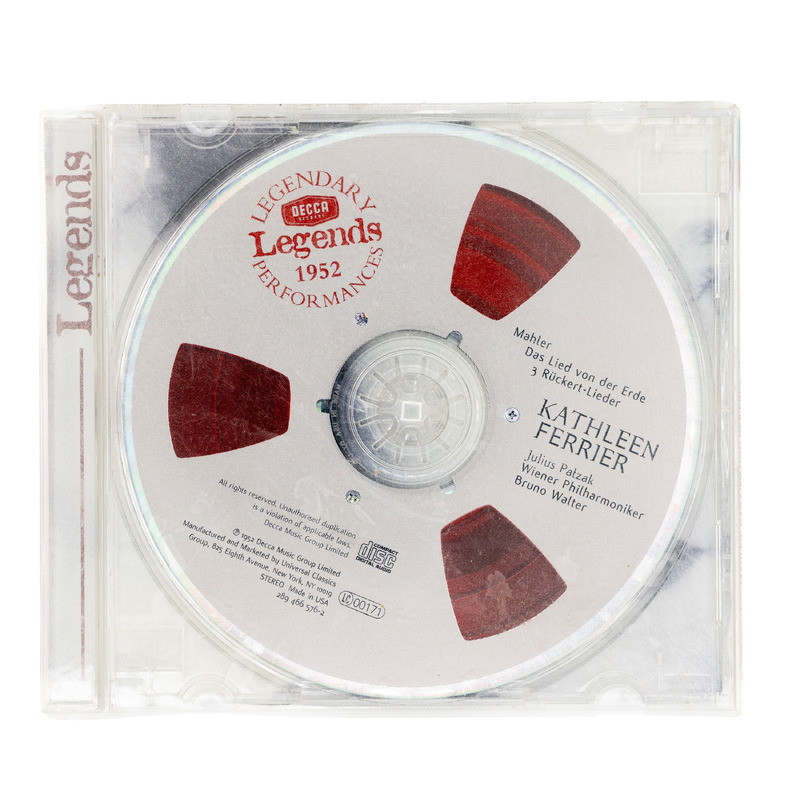
In the four years it took her to write the poems in Averno, Louise Glück listened intensely to this CD of Gustav Mahler. She described how important music was to her writing in a letter sent to the Nobel Prize Museum in connection with her donation of the CD:
“For most of my life, the writing of a book has been preceded (often by several years) by obsessive listening to a particular piece of music. I say the writing of a book as though there were a matter of steady application toward a calculated end. But in my experience, writing is erratic, a kind of possessed fluency alternating with a steady silence. Only the music is both inspired and steady; it seems to me my poems emerge from it.
During the four years in which AVERNO was written, this is what I listened to. A few readers who knew nothing of my writerly habits heard Mahler, especially in 'October' – a tribute, I think, to the music’s haunted strangeness.”
Louise Glück donated the CD to the Nobel Prize Museum in 2023.
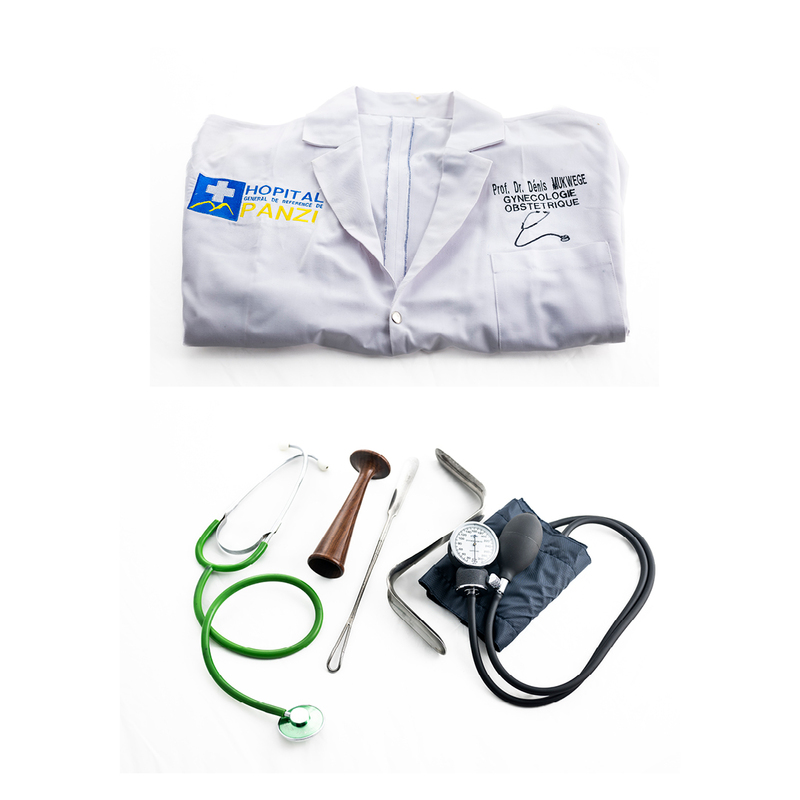
To Denis Mukwege, a white coat and five instruments for medical examinations represent his work to help women who are victims of sexual violence in the Democratic Republic of Congo.
School children often ask Denis Mukwege what it takes to get the Nobel Peace Prize. He usually gives a concrete example by telling them about his work as a doctor. With the same end in mind, he gave these gifts to the Nobel Prize Museum:
a white coat
a blood pressure machine
a stethoscope used for listening to the heart and lungs and other organs
a trumpet-shaped wood stethoscope for listening to the heartbeat of a foetus
a depressor and a speculum, two instruments used for gynaecological examinations
With these instruments, and empathy and passion, Mukwege has helped women who were victims of sexual violence. He works at the Panzi Hospital in his hometown Bukavu in the Democratic Republic of Congo. Internationally, he is deeply committed to the fight against the use of sexual violence in wars and other conflicts.
Denis Mukwege donated the white coat and the instruments to the Nobel Prize Museum in 2023.
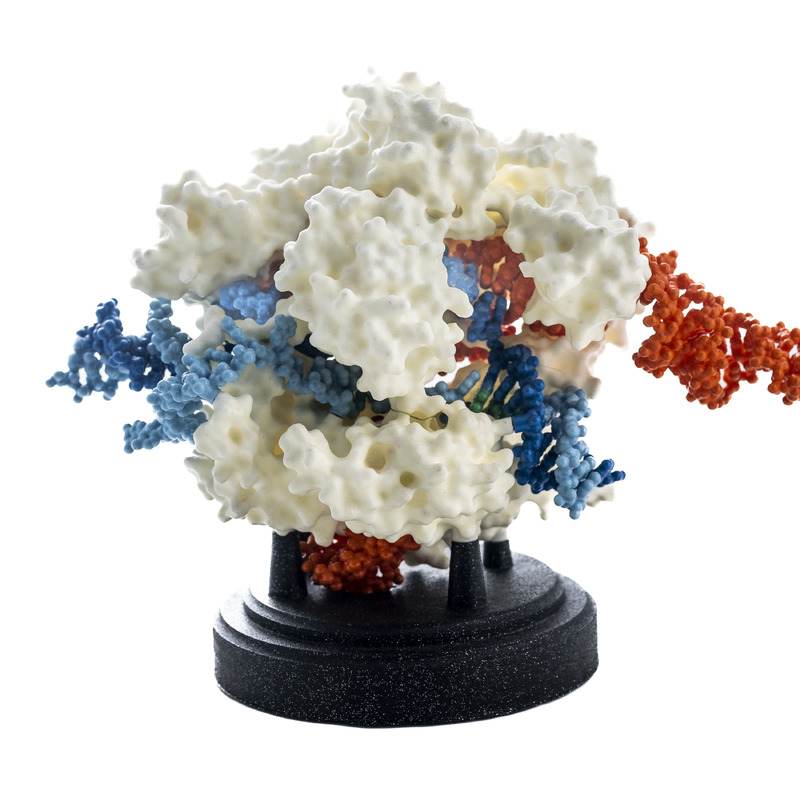
This is a model of the protein Cas9, which plays a key role in CRISPR/Cas9, a powerful and precise method for altering the genome of organisms. The model was used by Jennifer Doudna, one of the scientists behind CRISPR/Cas9.
Jennifer Doudna donated the model to the Nobel Prize Museum in 2022.
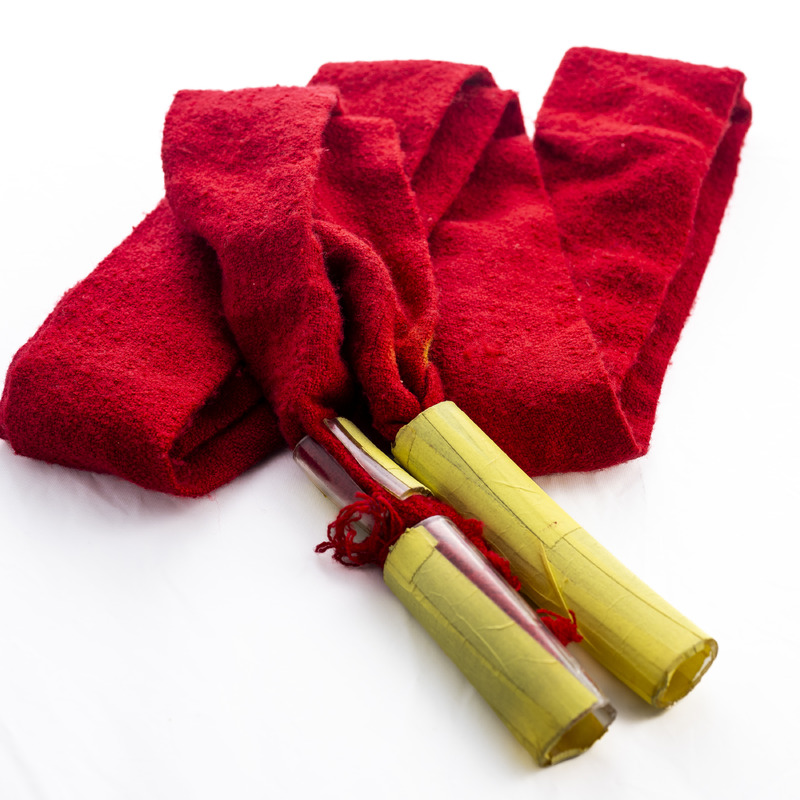
Shoelaces with little caps at the end that stops them from fraying. Elizabeth Blackburn has compared this to the purpose of the telomeres, which she studied. In her lectures, she used these large shoelaces to illustrate this. The telomeres are the end bits in the chromosomal DNA molecules. They are shaped to partly protect the chromosomes, but the telomeres shorten slightly with every cell division.
Elizabeth Blackburn donated the shoelaces to the Nobel Prize Museum in 2022.
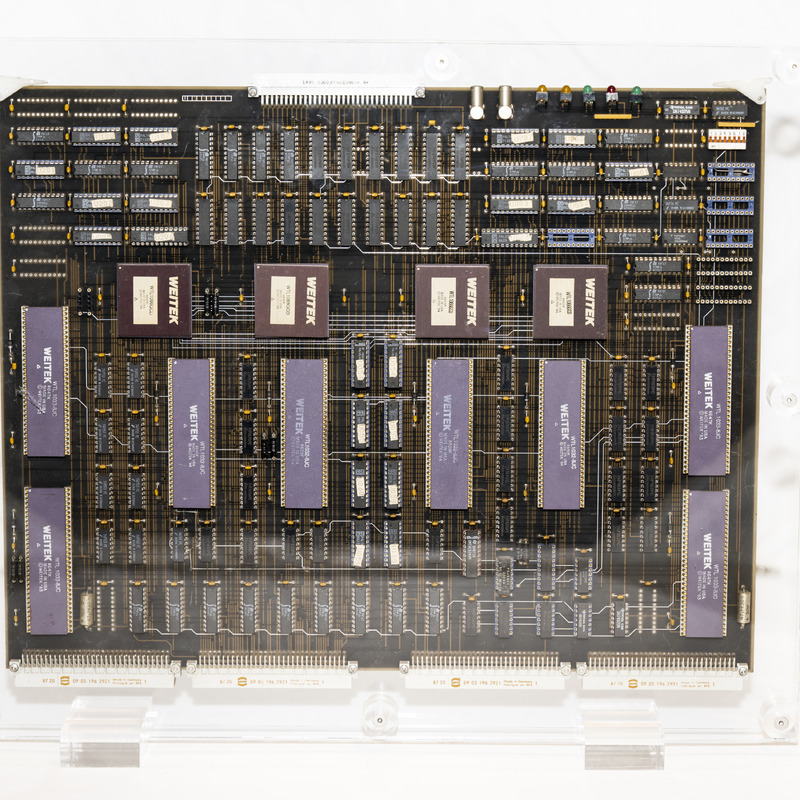
This circuit board is the floating point unit of the APE (Array Processor Experiment) computer, which was built in Rome, Italy, in 1985–1987. It was important for the extensive calculation needed in Giorgio Parisi's research on complex systems.
Giorgio Parisi donated the circuit board to the Nobel Prize Museum in 2022.
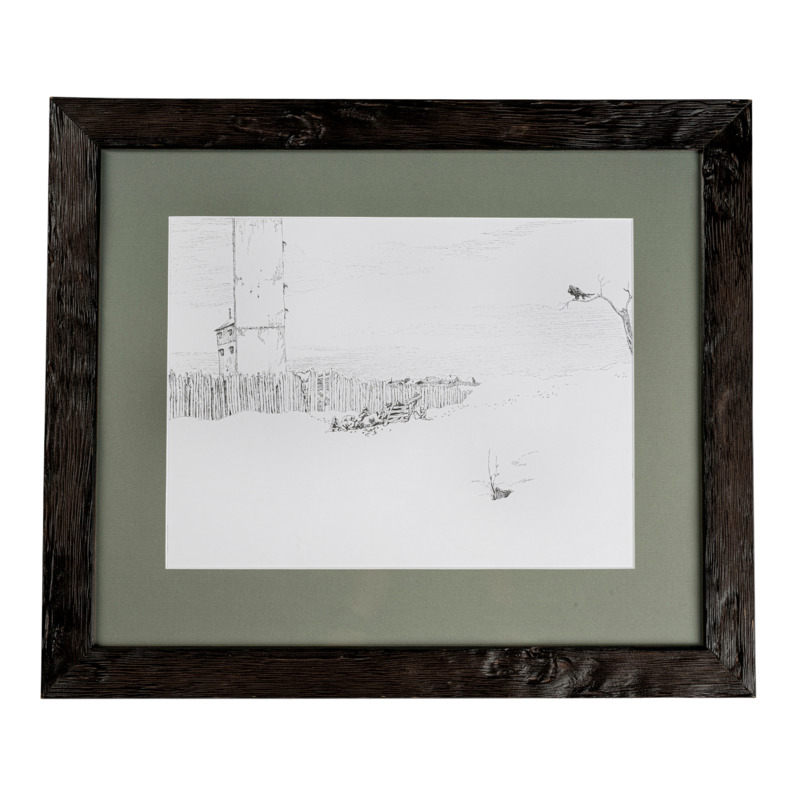
This copy of a drawing was donated to the Nobel Prize Museum by the human rights organisation Memorial, which is dedicated to collecting, preserving and publishing material on oppression during the Soviet Union’s totalitarian regime.
The drawing “The Crow” was made by the Russian artist Boris Sveshnikov in a prison camp in 1949–1950. In 1946, when Sveshnikov was a 19-year-old art student, he was sentenced to eight years in prison for anti-Soviet propaganda. He served his sentence in the labour camp Ukho-Izhemsky in the Komi Republic in northern Russia.
The drawing includes both realistic and dream-like elements. For Memorial, it tells of the destruction of life and talent. It symbolises loneliness, injustice and lack of freedom, while also expressing hope.
Memorial donated the copy of the drawing to the Nobel Prize Museum in 2023.
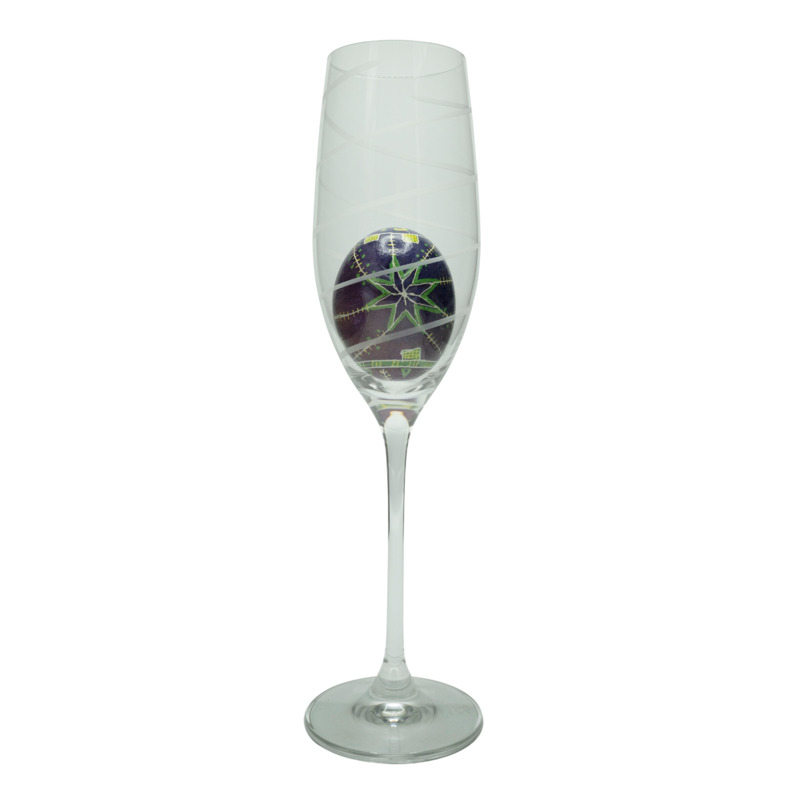
When Charles Rice turned 60, he received this egg from his mentor Dennis Barrett, who had painted it. The egg came in a protective glass. Rice met Barrett in 1970. Barrett sparked Rice’s interest in virology and became his mentor and friend. For Rice, the egg symbolises that a chance meeting can lead to new directions in life. He also wants to emphasise the importance of having a supportive mentor.
Charles Rice donated the egg and the glass to the Nobel Prize Museum in 2022.
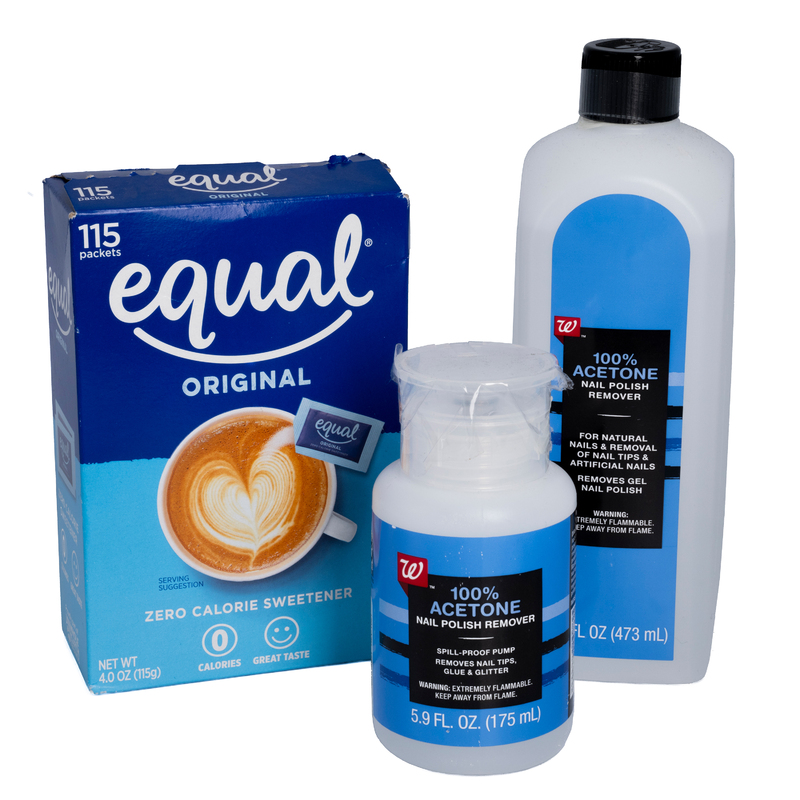
These ordinary chemical products contain the ingredients for a groundbreaking chemical innovation. This is a pack of sweetener containing the amino acid phenylalanine. The bottle contains acetone, which can be used to remove paint. David MacMillan's research team combined these two molecules to make the first example of a new type of catalyst: an organocatalyst. Two everyday, inexpensive and sustainable substances that could be combined to make a catalyst for a diversity of chemical reactions.
David MacMillan donated the sweetener and acetone to the Nobel Prize Museum in 2022.
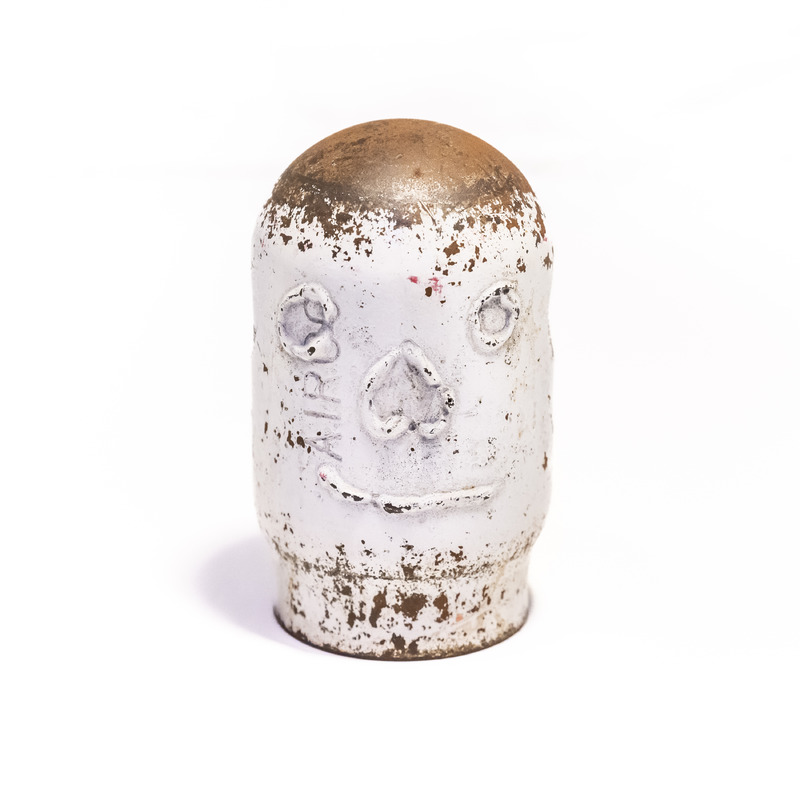
This cap for a gas tube served as a mascot for David MacMillan’s research team. They called the mascot Nabo. MacMillan is not particularly fond of Nabo, but his colleagues loved sneaking him into various contexts. For example, he appeared at MacMillan’s Nobel Prize lecture. Nabo represents MacMillan’s warm relationship to his many colleagues. But now, Nabo has joined the Nobel Prize Museum’s collection.
David MacMillan donated the mascot to the Nobel Prize Museum in 2022.
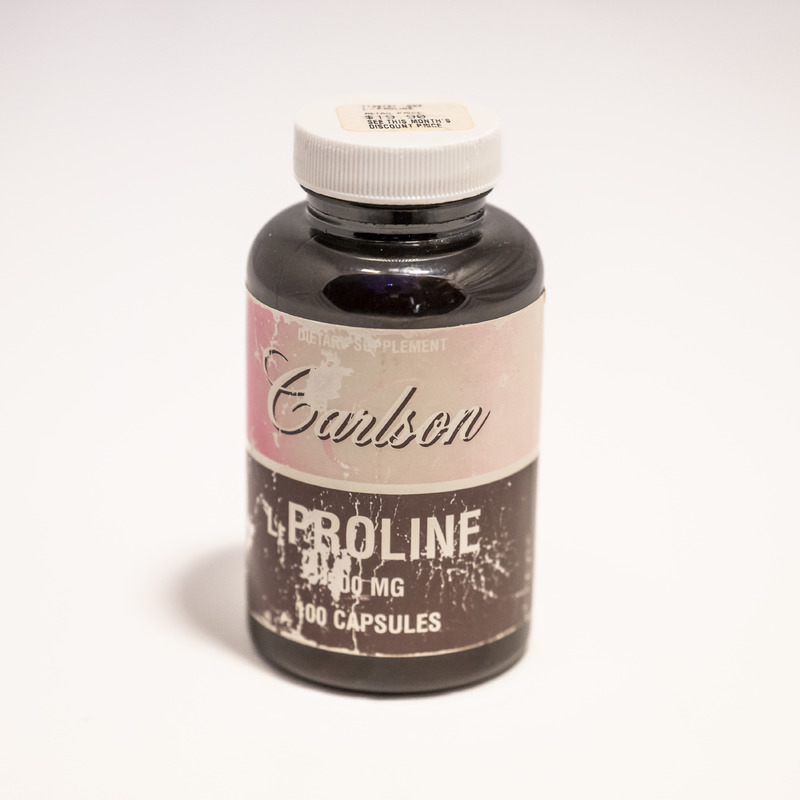
Benjamin List bought this jar of dietary supplements while conducting his Nobel Prize-awarded research. The supplements contain the substance proline, which plays a key role in List’s discovery. Proline serves as a catalyst for building molecules. List tested using it to build a molecule that occurs in two mirrored forms and discovered that only one form arose nearly every time. This is very useful when manufacturing pharmaceuticals.
Benjamin List donated the dietary supplements to the Nobel Prize Museum in 2022.
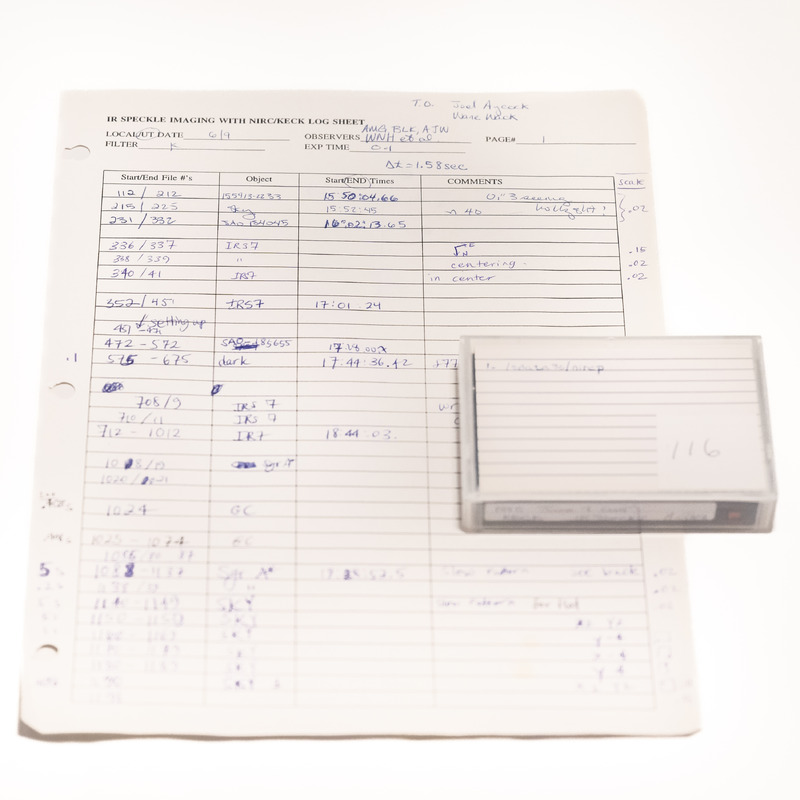
This magnetic tape contains the first collection of measurements from Andrea Ghez’s research on a super massive black hole at the centre of our Milky Way galaxy. Ghez had to struggle to receive resources and access to the Keck Observatory in Hawaii to conduct the project. When the measurement data arrived, it provided surprisingly clear answers. The notes from the observations include the comment “Holy shit!”. The research, however, has taken a long time, around 30 years, and during that time technology has advanced immensely. Not only was collecting data important but also preserving the data. The magnetic tape symbolises this as well.
Andrea Ghez donated the to the Nobel Prize Museum in 2022.
This optical device, an “image slicer” was part of an apparatus that was decisive in Reinhard Genzel’s research on a super massive black hole at the centre of our galaxy.
Genzel and his colleagues used a method called Integral field spectroscopy to combine image analysis with spectroscopy. Highly simplified, the experiment deals with capturing light beams, splitting the beams into different wavelengths and then interpreting the data.
The image slicer allows a spectrum to be measured simultaneously for each image pixel. In this way, a “third dimension” becomes accessible. This is why Genzel and his colleagues named their first instrument of this kind a “3D slicer” in the 1990s. This marked the starting point for measuring the velocities with which stars orbit the black hole at the center of the Milky Way.
Reinhard Genzel donated the optical device to the Nobel Prize Museum in 2022.
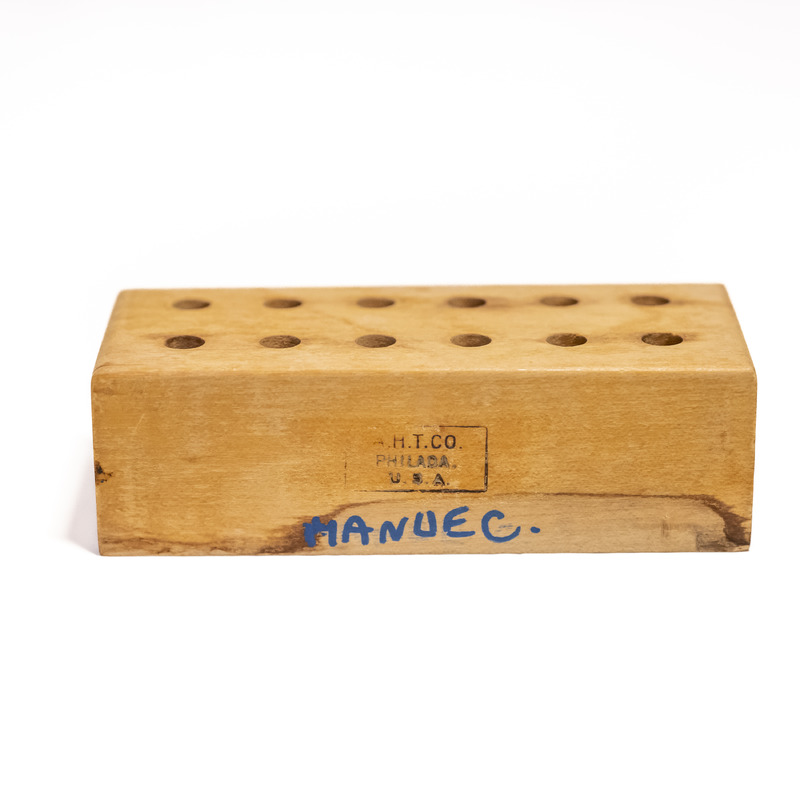
This test tube rack has a special place in Emmanuelle Charpentier’s heart. She first used it while on a postdoc at Rockefeller University in New York. To ensure no one took her rack, she labelled it with her nickname: “Manue C”. For Charpentier, the test tube rack symbolises her time as a microbiologist and reminds her of doctoral student days at the Pasteur Institute in Paris, where they had similar racks, and in New York. She saw a similar test tube rack in a museum in Berlin that had been used by Nobel Prize laureate Robert Koch and thought her rack might also one day belong in a museum. Compared to modern test tube racks made of plastic, this older rack is wooden. It was also used as a pen holder.
Emmanuelle Charpentier donated the test tube rack to the Nobel Prize Museum in 2020.
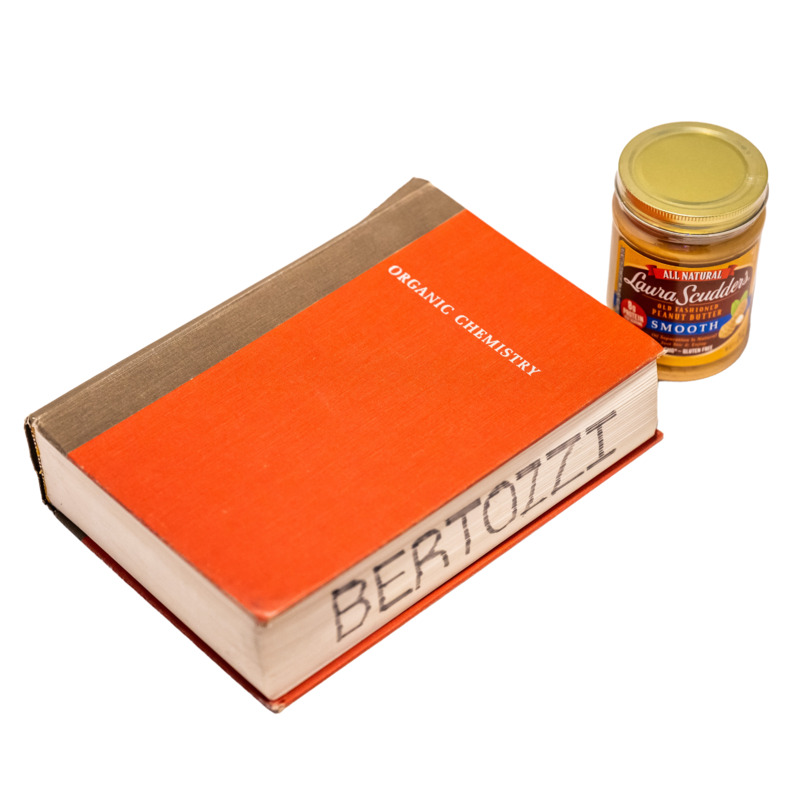
This textbook in organic chemistry was decisive in leading Carolyn Bertozzi to become a chemistry researcher. She was originally set on studying medicine. Her medical studies included a course in organic chemistry with this textbook,sparking her interest in the subject. The book became her best friend, she changed her major to chemistry and went on to research in the field.
The jar contains Bertozzi’s favourite peanut butter. She eats peanut butter more than any other food. It is a source of energy and helps her think.
Carolyn Bertozzi donated the textbook and peanut butter to the Nobel Prize Museum in 2022.
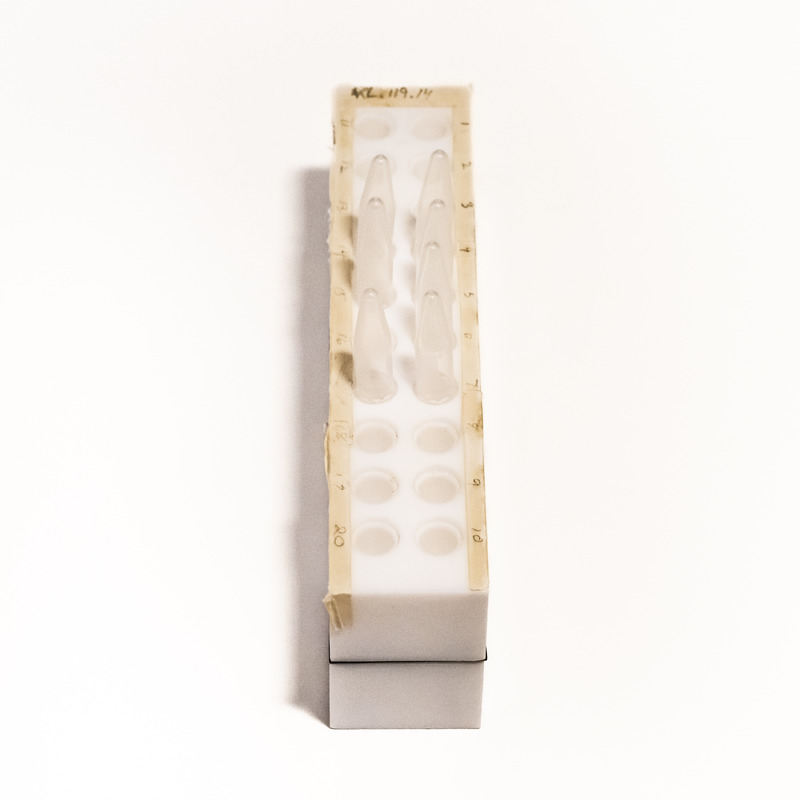
This “multiple column” played a critical role in the experiments developed by Morten Meldal in click chemistry, which involves joining molecules. Meldal invented the multiple column to mix different substances in serial experiments. Small test tubes are placed over the wells of the multiple column. When turned upside down, the contents of the wells empty into the test tubes. The contents can then be mixed and split. This is the first multiple column, which Meldal made in a neighbour’s garage in 1987. The multiple column has since been refined.
Morten Meldal donated the multiple column to the Nobel Prize Museum in 2022.
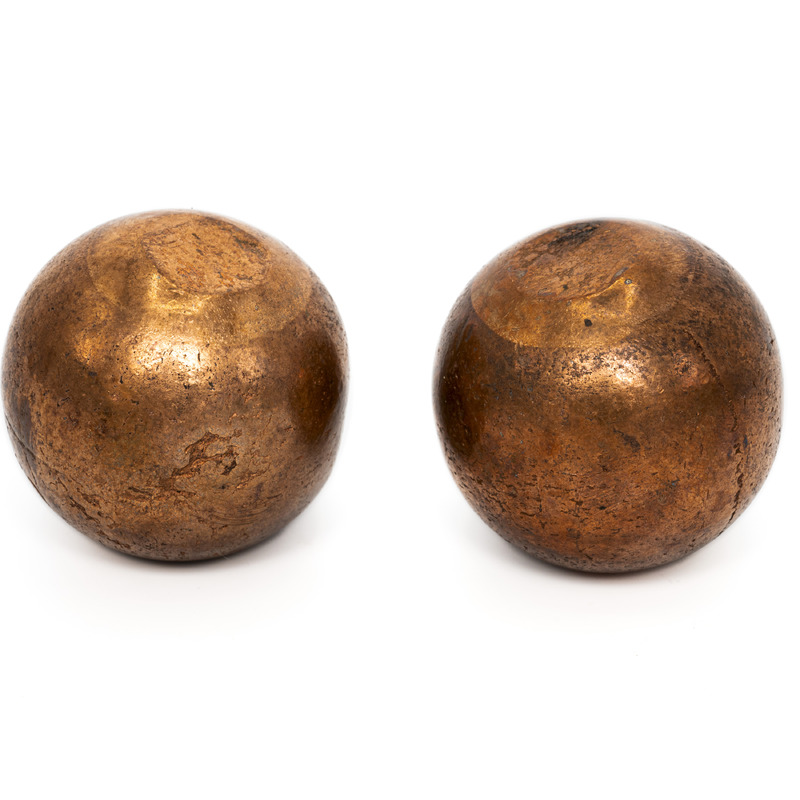
These copper balls represent Barry Sharpless’s passion for chemistry. The element copper is particularly dear to him. The pure metal has a beautiful colour and sheen, and copper ions have a fantastic ability to drive chemical reactions. This characteristic of being a catalyst plays an important part in his research on how molecules can be joined effectively.
Barry Sharpless donated the copper balls to the Nobel Prize Museum in 2022.
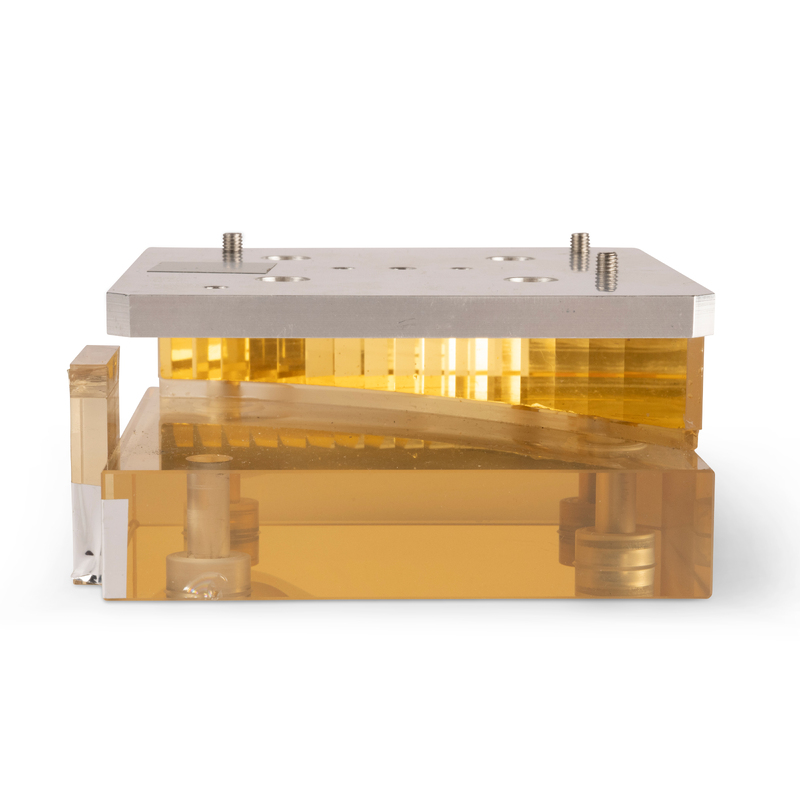
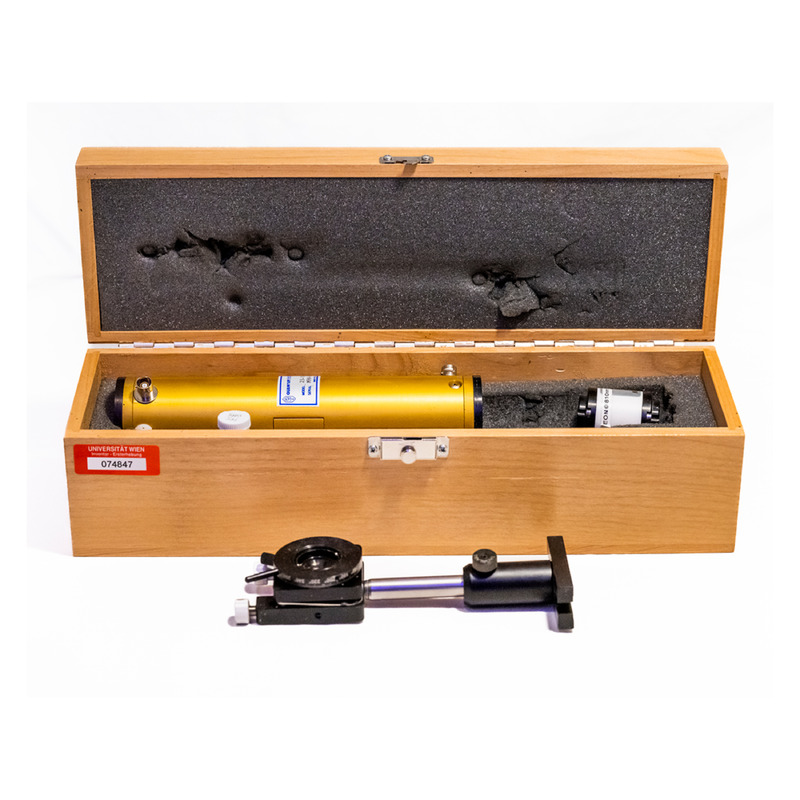
This apparatus was used to produce entangled photons in Anton Zeilinger’s experiment on quantum entanglement. A crystal for down conversion is in the round hole. This was used to produce photon pairs from a beam of photons. The larger metal tube is a Pockels cell used to change the polarisation of the light passing through the tube. It was used in experiments in the late 1990s. The smaller tube is a newer type of Pockels cell.
More specifically, Zeilinger’s experiment was about how unknown quantum states can be transferred from one particle to another: quantum teleportation.
Anton Zeilinger donated the apparatus to the Nobel Prize Museum in 2022.
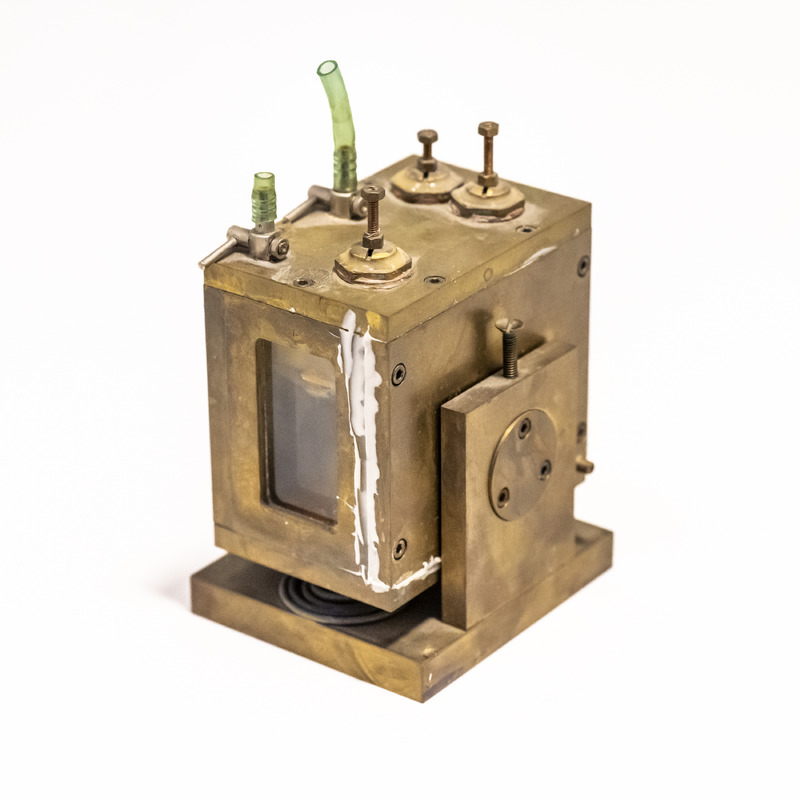
The metal box is an optical switch and was the crucial component in Alain Aspect’s experiment on the phenomenon of quantum entanglement in the early 1980s. The experiment was to create entangled photons. When Aspect was planning to conduct the experiment, he could not find a company that could deliver an optical switch with the right specifications. So, he was forced to build this switch. His experiment confirmed that quantum entanglement is a real phenomenon.
Alain Aspect donated the optical switch to the Nobel Prize Museum in 2022.
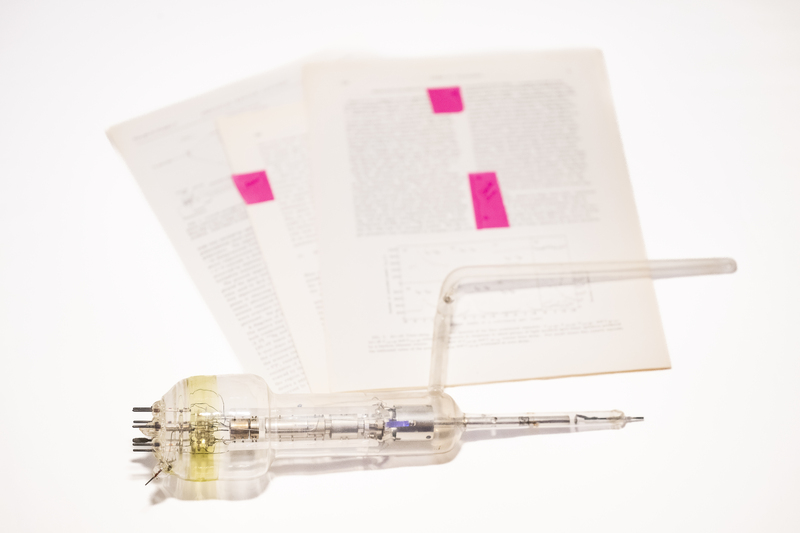
This glass tube was an important part of the apparatus for John Clauser’s experiment on quantum entanglement. Clauser made pioneering contributions to prove that quantum entanglement is a real phenomenon. He made the actual tube and used it to produce entangled photons in experiments in 1974 and 1976. The publication next to the test tube describes experiments and findings.
Quantum entanglement is one of the strangest predictions of quantum physics. It means that what happens to one particle in an entangled pair determines what happens with the other particle. Even if they are separated by great distances, they can influence each other. More specifically, the 1976 experiment measures correlations for the linear polarisation of photon pairs emitted in a three-level cascade in mercury.
John Clauser donated the glass tube and the publication to the Nobel Prize Museum in 2022.
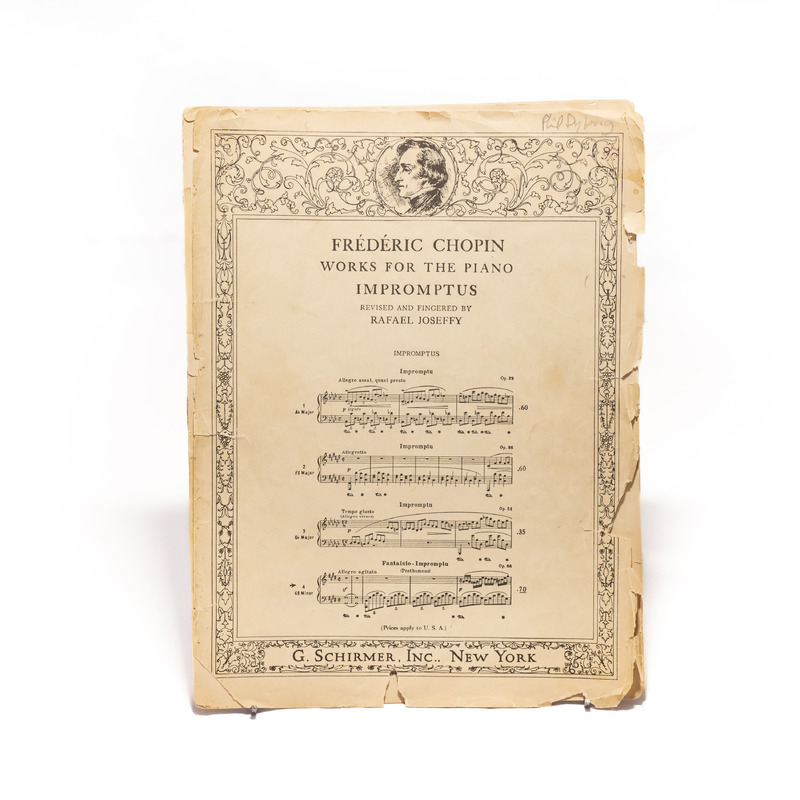
Philip Dybvig used these notes to a piano piece by Frédéric Chopin when he was in his early teens. He appreciated Chopin for the passionate style. Dybvig feels that music, along with the games and puzzles he played as a child, are important because they develop the mind. His love of music remains strong alongside his research in economics. He still plays, especially keyboard instruments.
Philip Dybvig donated the notes to the Nobel Prize Museum in 2022.
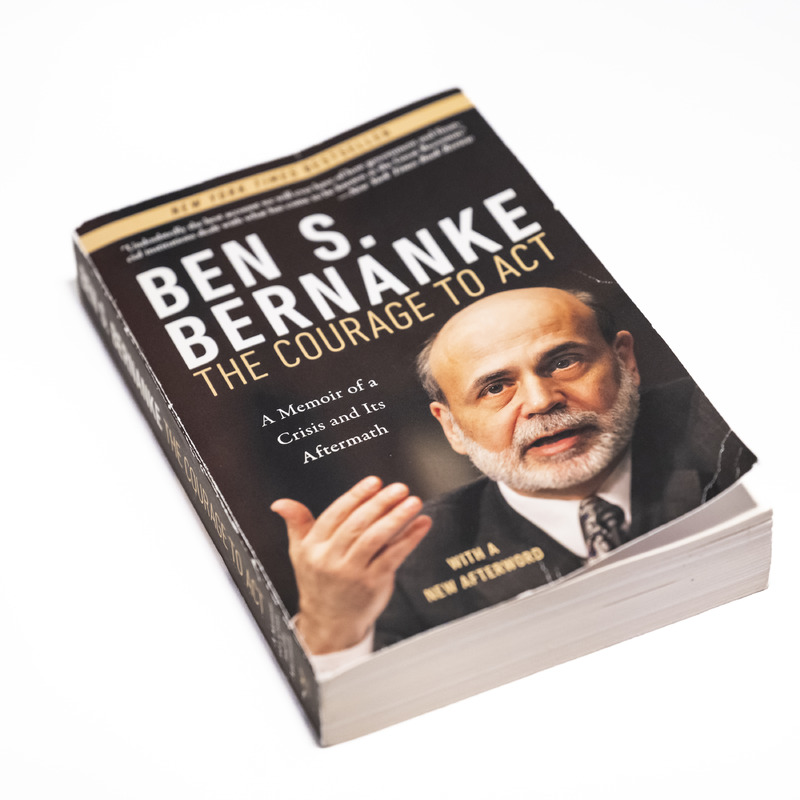
In this book, Ben Bernanke writes about his time as chairman of the US Federal Reserve. In his research, Bernanke had studied the role of the banks in the global depression of the 1930s. When the 2008 financial crisis struck, it was his job as chairman of the Fed to tackle the problem.
Ben Bernanke donated the memoirs to the Nobel Prize Museum in 2022.
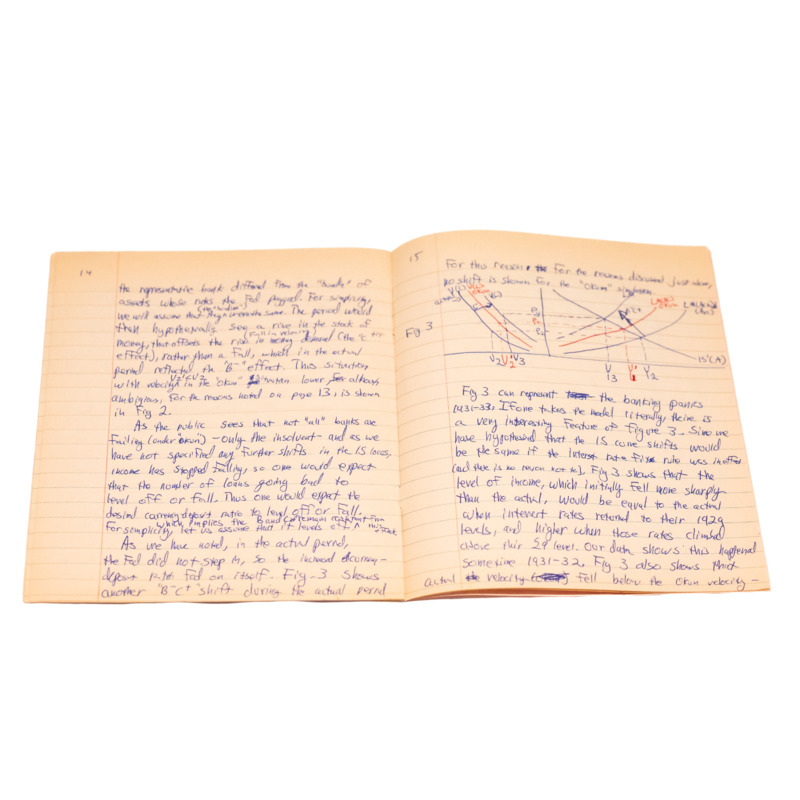
This booklet is a final examination that Douglas Diamond took as a 22-year-old student, and which came to influence his research interests. The course was based on the book A Monetary History of the United States, 1867-1960 by Milton Friedman and Anna Schwartz.The exam assignment was to write about what would have happened if interest rates in the United States had remained constant in the years 1929–1933, the early phase of the Great Depression. Diamond’s answer focused on the impact of bank bankruptcies on the economy in general. At the time, Diamond was unaware that he would later devote his research to the importance of banks in the economy.
Douglas Diamond donated the examination to the Nobel Prize Museum in 2022.
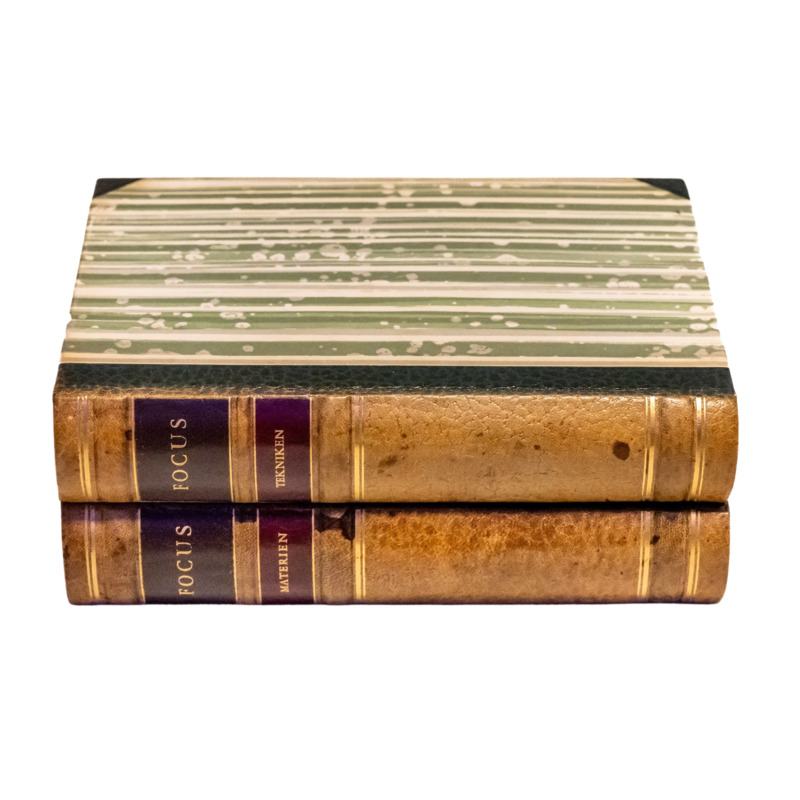
When Svante Pääbo began high school in 1971, his father gave him this two-volume encyclopaedia of technology and science. His father, Sune Bergström was a professor of chemistry and would later receive the Nobel Prize in Physiology or Medicine. Perhaps he was disappointed that his son had chosen to study the humanities instead of the natural sciences. Could the encyclopaedia be a nice way of saying goodbye to science? But things worked out differently. Svante Pääbo returned to the sciences. Forty years after his father, he was awarded the Nobel Prize in Physiology or Medicine for his research on the relationship between modern humans and long-extinct hominins.
Svante Pääbo donated the books to the Nobel Prize Museum in 2022.
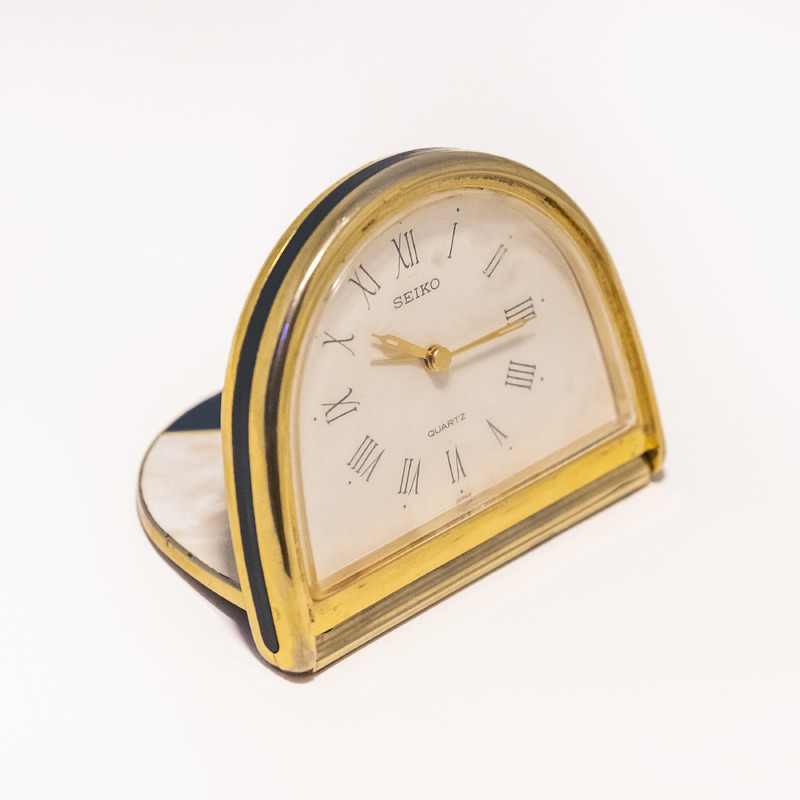
The passing of time is a central theme in Annie Ernaux’s writing and life. And this alarm clock is symbolic to her. This beloved treasure has also had a more concrete purpose. When she was writing her novel The Years, it was set to wake her up so she would get out of bed and keep working on her book.
Annie Ernaux donated the alarm clock to the Nobel Prize Museum in 2022.
A container of laundry detergent reminds Guido Imbens of his research process. One of his most important works began with conversations with Joshua Angrist about econometrics and interesting questions in that field. Many of their conversations took place in offices and cafes, but because both lived in apartments without washing machines and dryers, they started coordinating their laundry days and spent many Saturday mornings discussing research in the local laundromat among the whirring washers and dryers. Not only were these discussions very enjoyable, they also cemented an enduring friendship and triggered the research that gave them the prize in economic sciences.
Guido Imbens donated the item to the Nobel Prize Museum in 2022.
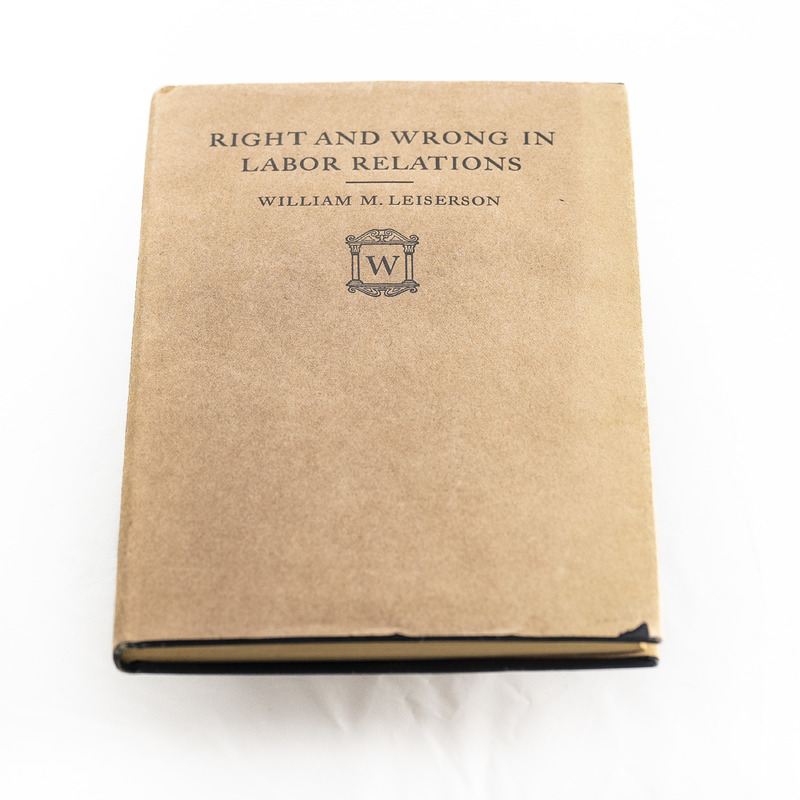
Christopher Sims’s maternal grandfather, William M. Leiserson, died when Sims was fifteen years old, but Sims saw him fairly often and was prompted by him to take an interest in economics and public affairs in general. Leiserson’s book _Right and Wrong in Labor Relations_ was published in 1938, four years before Sims was born. This copy belonged to Sims’s grandmother, Emily B. Leiserson, and was donated to the Nobel Prize Museum by Sims in 2022.
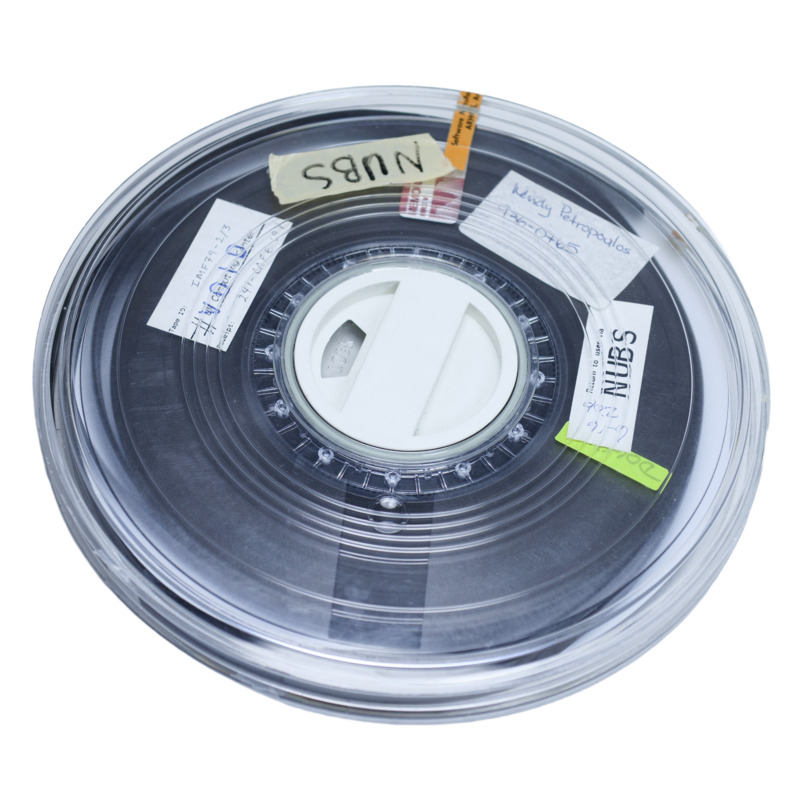
Before researchers had access to large-capacity hard drives, magnetic tapes were used for storing and analysing data. Around 1990, David Card used this tape for his studies in labour economics.
David Card donated the magnetic tape to the Nobel Prize Museum in 2022.
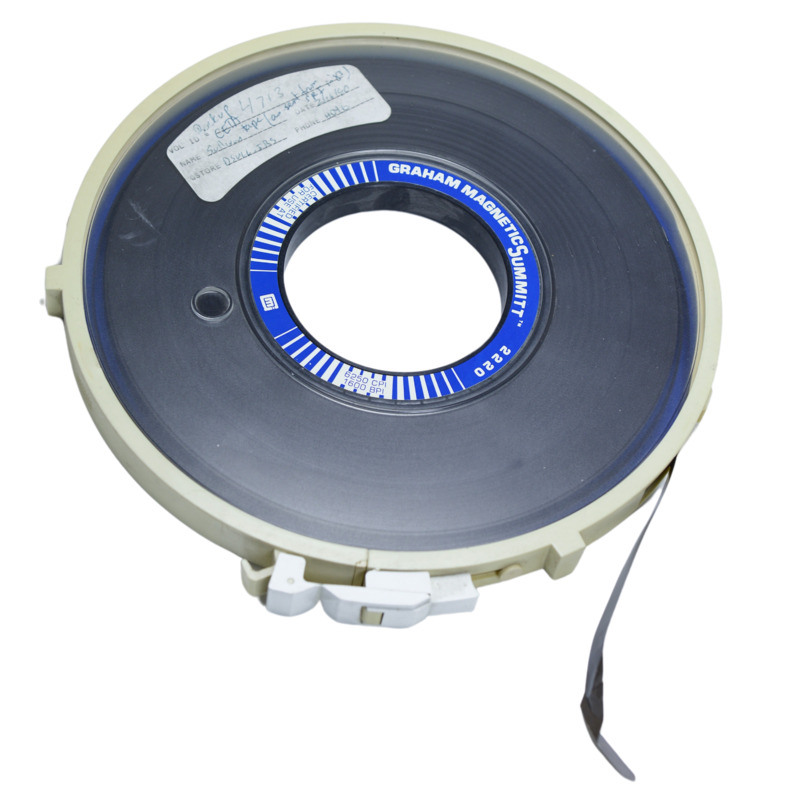
In the 1980s and 1990s, researchers had no access to the large-capacity hard drives that are common today. Instead, magnetic tapes were used. Joshua Angrist used this tape for applied microeconometric analysis and data storage.
“Applied econometrics was much more physical. Tapes were mounted and threaded by hand, a sometimes tricky process.”
This 9-track magnetic tape has a yellow "write ring" on the back. To write to a tape (as opposed to simply reading its contents) the user was required to install the yellow ring. According to Angrist, researchers also used to play frisbee with the cases.
Joshua Angrist donated the magnetic tape to the Nobel Prize Museum in 2022.
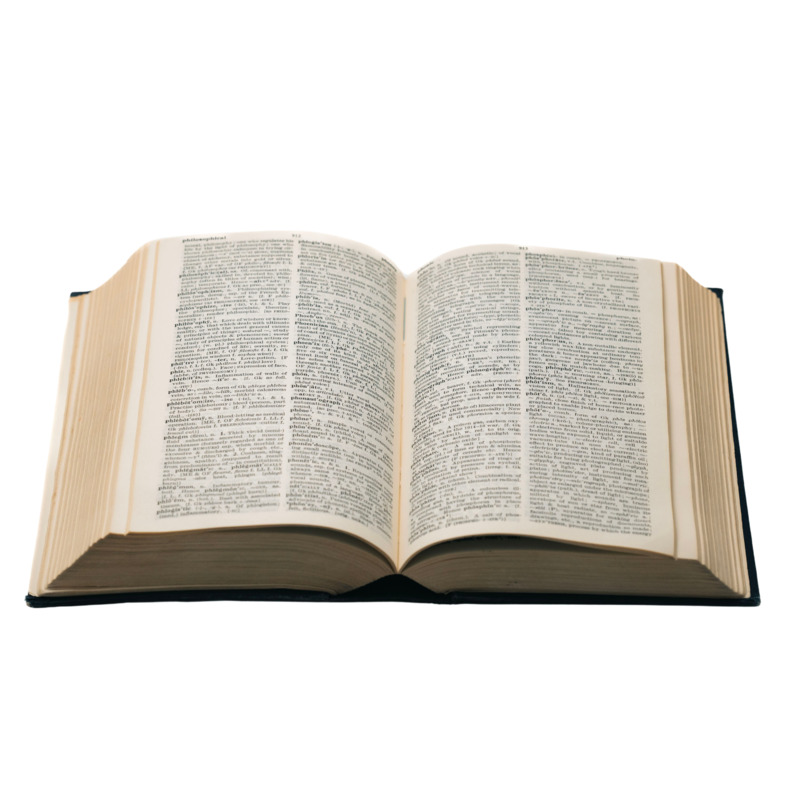
For many years, Abdulrazak Gurnah used this English dictionary all the time when writing. Gurnah grew up in Zanzibar, and his first language was Swahili. During the Zanzibar Revolution in the 1960s, he fled to the UK, and English became his literary language. He acquired the dictionary in the early 1980s. Nowadays, computers have made physical dictionaries obsolete, and Gurnah donated his dictionary to the Nobel Prize Museum.
Abdulrazak Gurnah donated the dictionary to the Nobel Prize Museum in 2022.
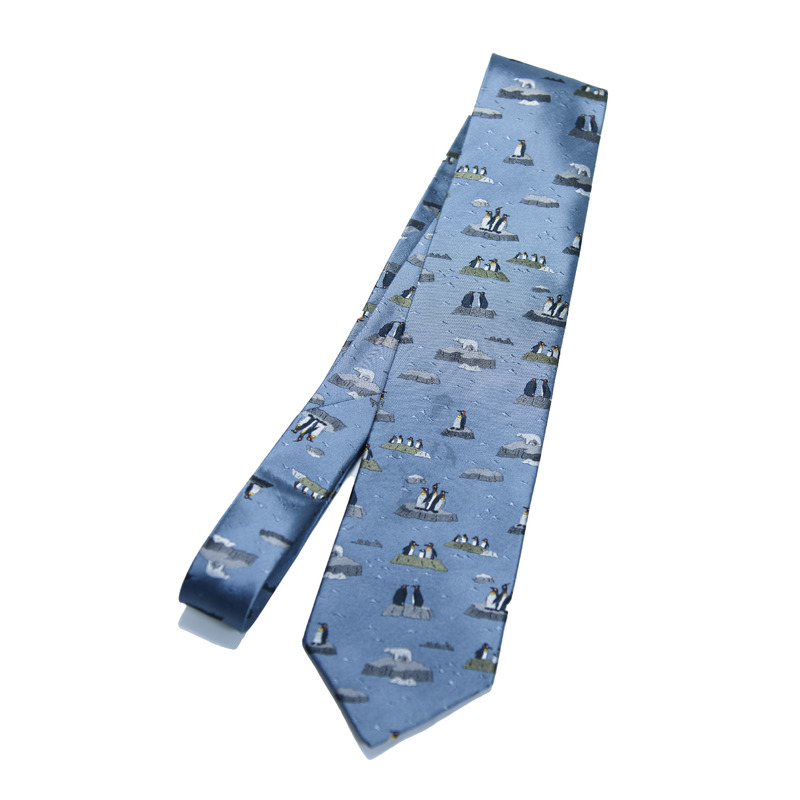
When Syukuro Manabe visited his former homeland Japan, his wife Nobuko bought him a tie with a pattern of tiny polar bears and penguins. Since Manabe’s ground-breaking research was on climate models, she wanted to give him a tie that featured two species that are threatened by climate change.
Manabe embarked on his work with computer-based climate models in the 1960s. But it was not until recent decades that climate change has become perhaps the most urgent issue for humanity.
Syukuro Manabe donated the tie to the Nobel Prize Museum in 2022.
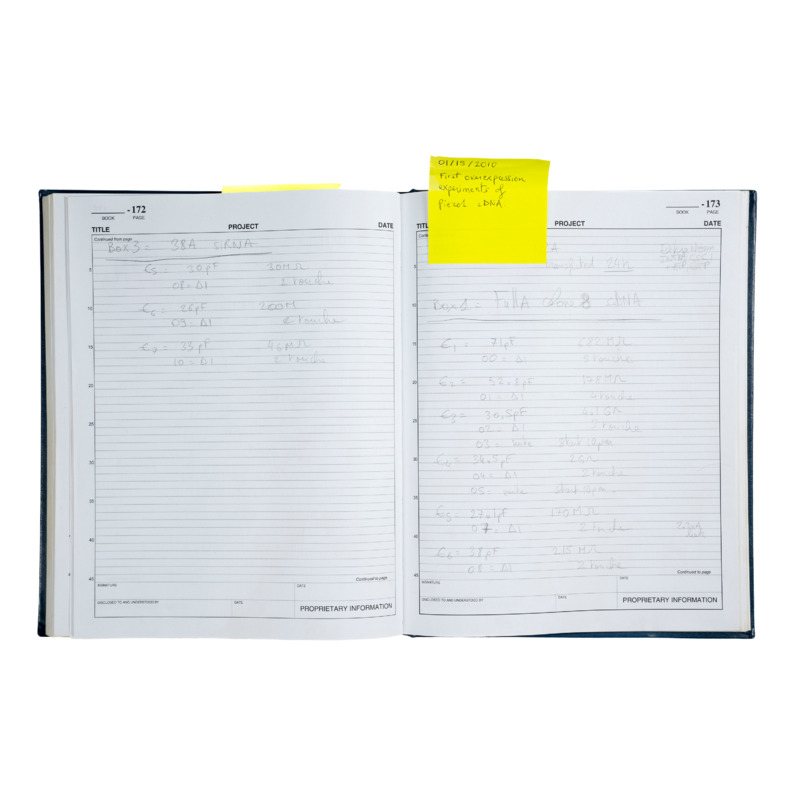
This lab notebook contains notes from Ardem Patapoutian's experiments. His research explores how nerve impulses are initiated so that touch and pressure can be perceived.
Ardem Patapoutian donated the lab book to the Nobel Prize Museum in 2022.
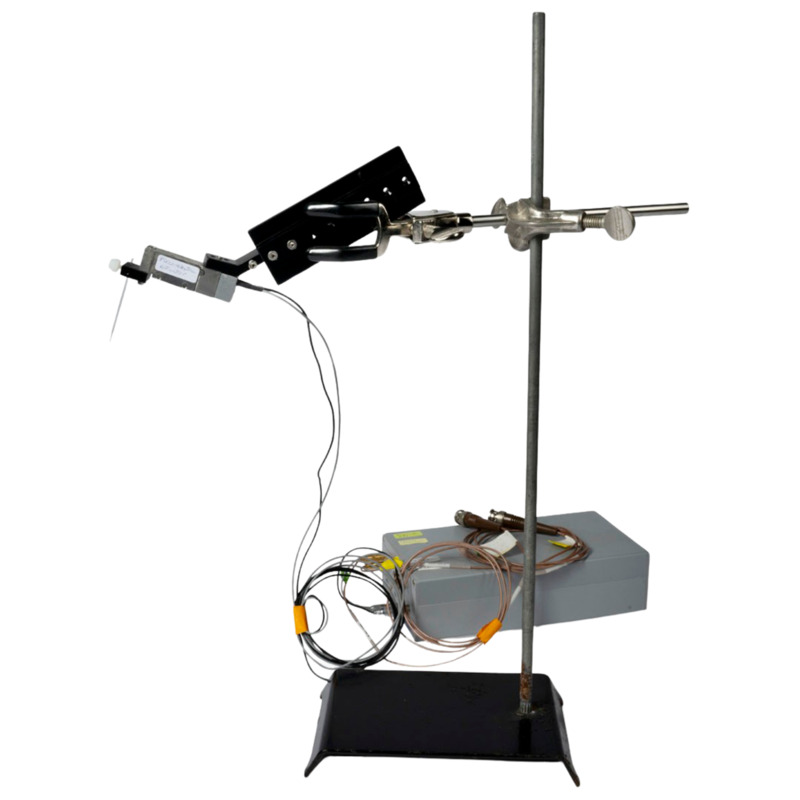
Ardem Patapoutian’s research explores how touch and pressure are translated into nerve signals. He and his research team used equipment combining a microscope to visualise the cell, a system to stimulate it mechanically and another to record its response to the stimulation. These items are part of the equipment.
Ardem Patapoutian donated the equipment to the Nobel Prize Museum in 2022.
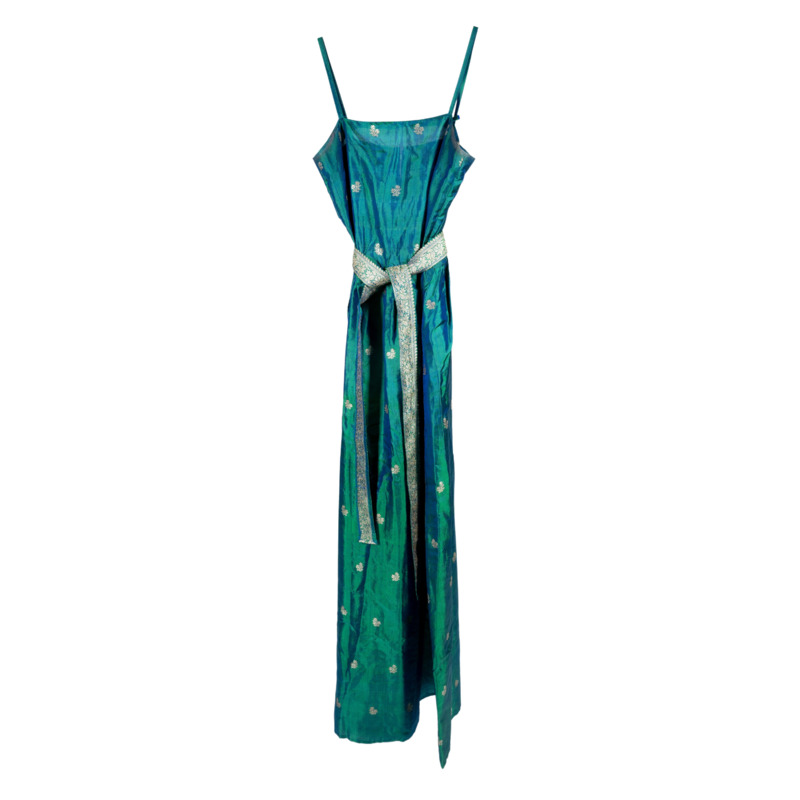
Jennifer Doudna made this silk dress when she was 16 for her high school prom, using silk her mother had bought years before on her travels abroad.
Jennifer Doudna donated the dress to the Nobel Prize Museum in 2021.
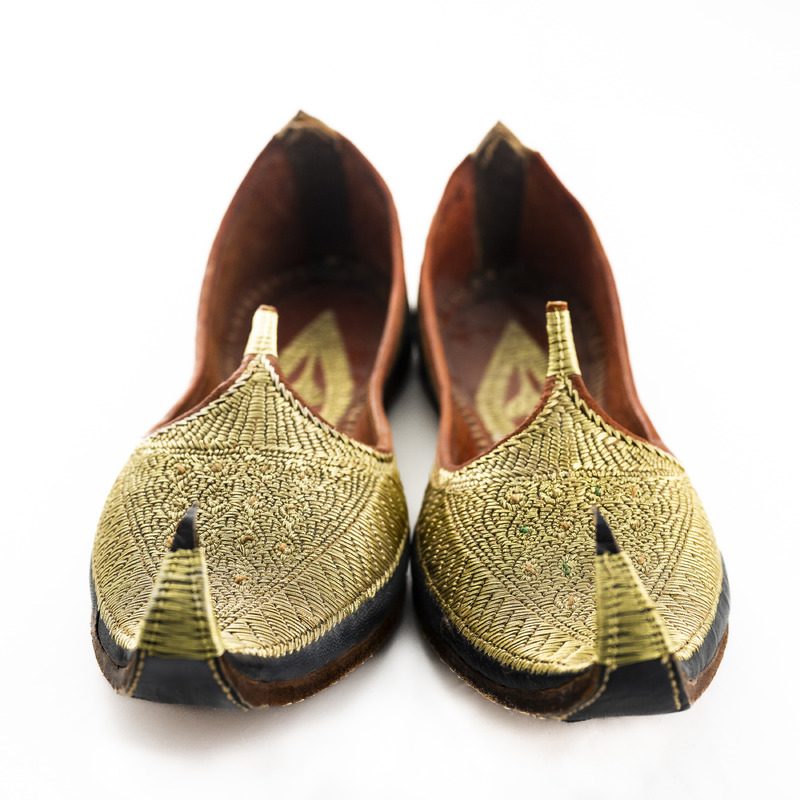
At the Nobel Prize award ceremony in 1979, one of the physics laureates, Abdus Salam, wore Pakistani formal attire. Joan Glashow, the wife of Sheldon Glashow, one of his co-laureates, expressed her admiration for his beautiful shoes. Salam then gave the Glashows a pair.
Sheldon and Joan Glashow donated the shoes to the Nobel Prize Museum in 2021.
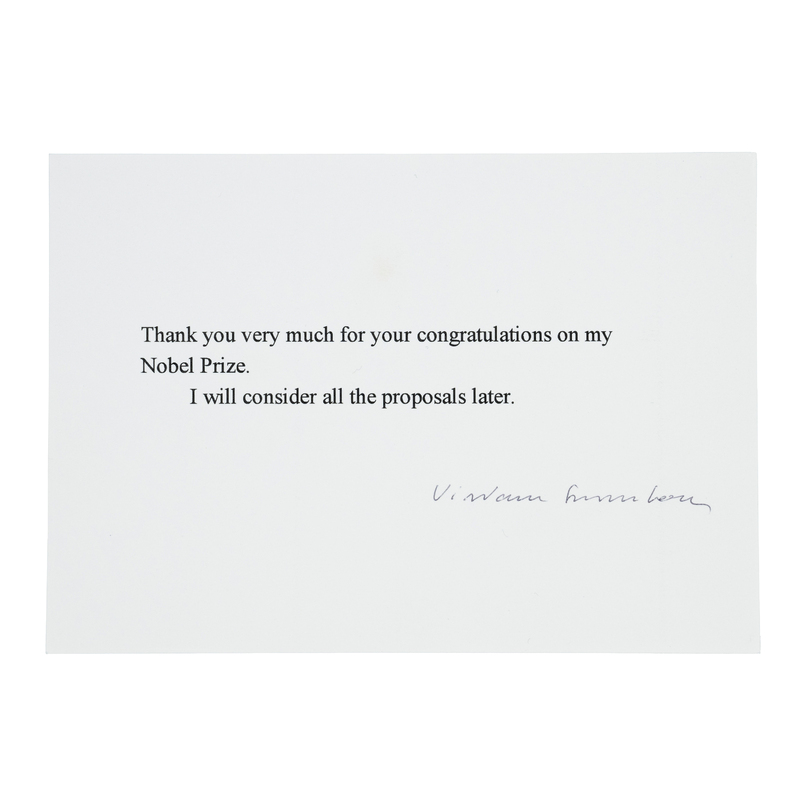
Szymborska put a great deal of energy into demonstrating for everyone that the Nobel Prize had not gone to her head. She sent handwritten thank you cards to all of her old friends and acquaintances who congratulated her on the prize. But when she was overwhelmed by congratulations from unknown people, she decided to print official thank you cards, both in Polish and English, which she simply signed.
The thank you card was donated to the Nobel Prize Museum by the Wisława Szymborska Foundation in 2021.