
Objects and stories
Objects are an important part of the Nobel Prize Museum's physical and digital exhibitions. Here you can explore the objects and the stories about them.
The Nobel Prize Museum's objects primarily reflect the different areas of the Nobel Prize and the activities, interests and personalities of the Nobel Prize laureates. They also shed light on Alfred Nobel and his activities, as well as the various procedures surrounding the Nobel Prize.
The objects have varying origins, but most of them have been donated to the museum by the laureates themselves or their families. Some ended up in the museum in other ways.
-
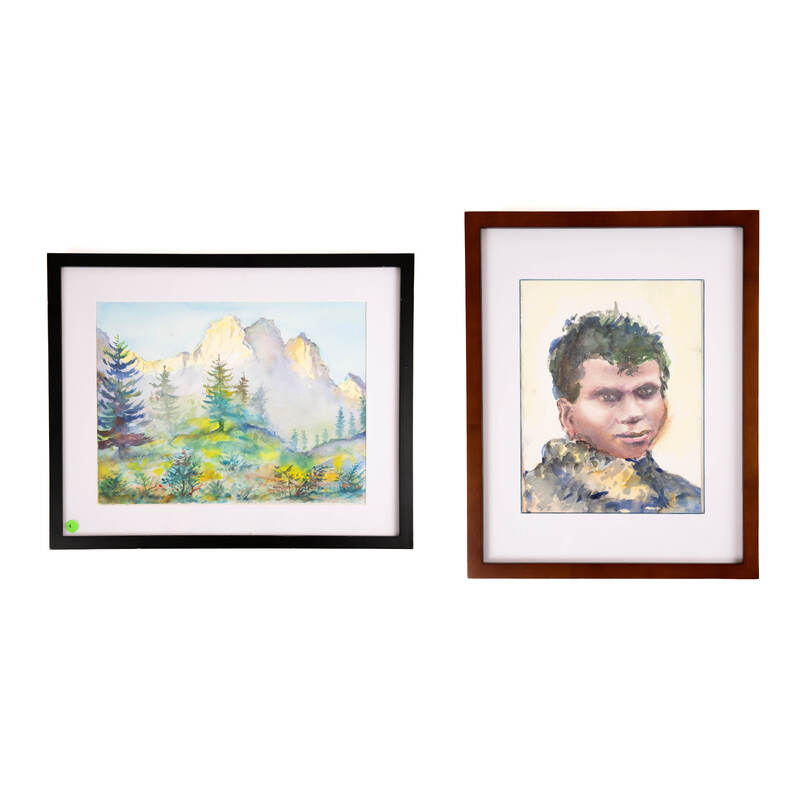 AkvarellerThese watercolours were painted by Jerome Friedman around 2020. He was then in his nineties, but had not yet lost too much of his eyesight to be able to paint. Drawing and painting were important to Friedman throughout his life. In high school, he attended an art programme and intended to become an artist. He did not take many courses in mathematics and physics, but at a museum he bought a book by Albert Einstein on the theory of relativity. He did not fully understand it, but became fascinated by it. He therefore accepted a scholarship to the University of Chicago and turned down one to the Art Institute of Chicago. He then continued with graduate studies in physics, with Enrico Fermi as an inspiring supervisor. He never lost his interest in art, however, and continued painting during his career as a physicist. The watercolours are titled Tushar’s Brother and Mountains in the Morning Mist. They are based on photographs. Jerome Friedman donated the paintings to the Nobel Prize Museum in 2026.
 -
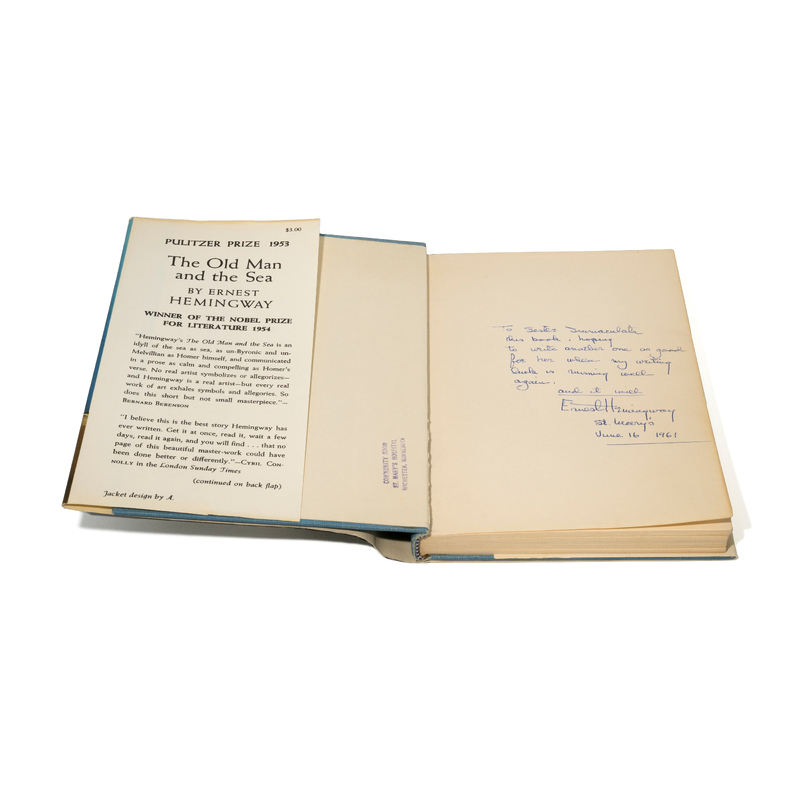 Book with inscriptionIn this copy of The Old Man and the Sea, there is an inscription by Ernest Hemingway to a nurse who cared for him for a time shortly before his death. The Old Man and the Sea was published in 1952 and is mentioned specifically in the Swedish Academy’s prize citation for the Nobel Prize in Literature in 1954. Due to poor health, Hemingway was unable to travel to Stockholm to accept the prize. During a trip to the Congo and Uganda earlier that year, he had barely survived two plane crashes and would suffer from the aftereffects of the accidents for the rest of his life. To ease his pain, he increased his already high consumption of alcohol. He also suffered from several other health problems. At times, he was able to continue his writing, but in 1960 he was struck by deep depression. He was treated for his psychological problems on two occasions at Saint Marys Hospital, Mayo Clinic in Rochester, Minnesota. Serving there were Franciscan sisters, members of the Catholic congregation Sisters of Saint Francis. One of the nurses who cared for Hemingway was named Helen Hayes and was also known as Sister Immaculata. The inscription in the book is addressed to her: To Sister Immaculata this book, hoping to write another one as good for her when my writing luck is running well again, and it will. Ernest Hemingway St. Mary’s June 16 1961 Hemingway’s writing luck, however, would never return. On June 30 he was discharged and returned to his home in Ketchum, Idaho, where he took his life on July 2. The inscription in the book is probably the last written words by Hemingway that have been preserved. The book was donated to the Nobel Prize Museum by the Franciscan Sisters of Rochester in 2026. The initiative for the donation was taken by Hemingway expert Curtis DeBerg.
 -
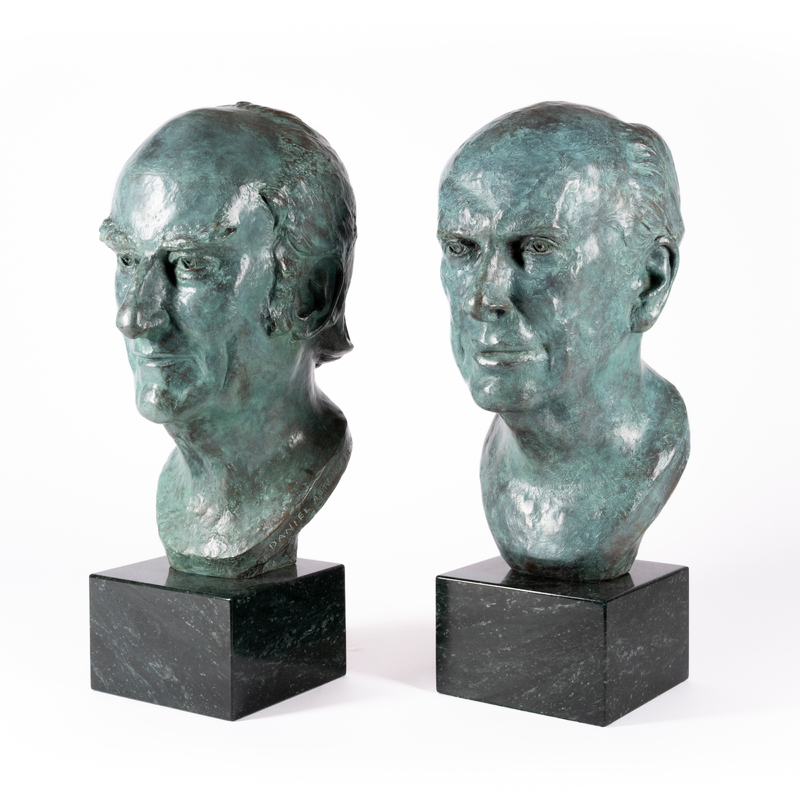 Portrait bustsThese portrait busts depict Francis Crick and James Watson, who in 1953 discovered the structure of the DNA molecule. In 2012, marking 50 years since Crick and Watson, together with Maurice Wilkins, were awarded the Nobel Prize in Physiology or Medicine, the Nobel Prize Museum contacted James Watson with a request for a contribution to the museum’s collections. Watson then suggested that the sculptor Daniel Altshuler could be commissioned to create two portrait busts of him and Crick. The result was these two bronze busts. The busts were made possible through a financial contribution from Hans Rausing in 2012.
 -
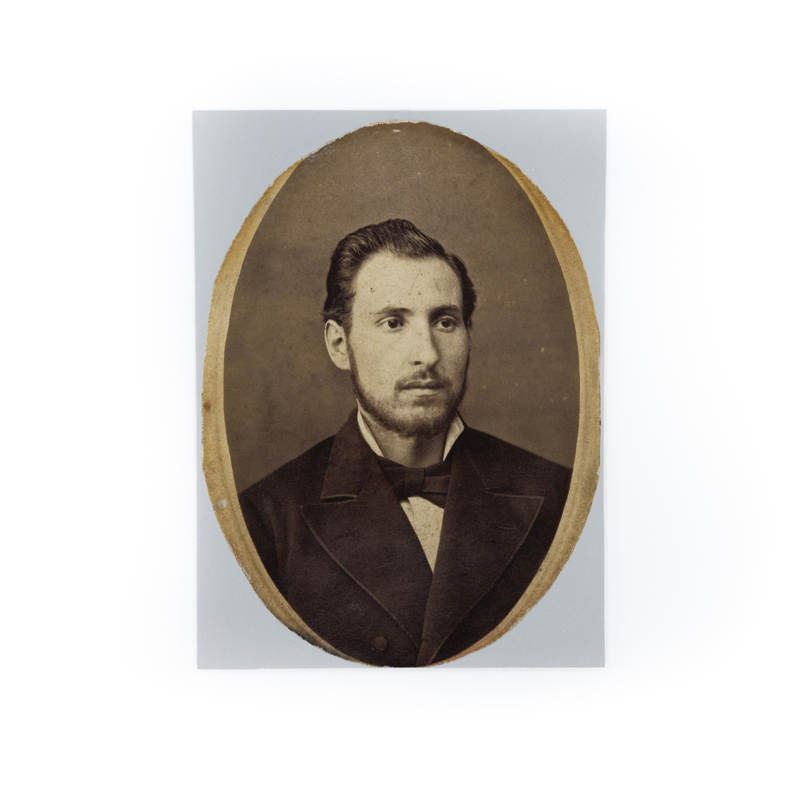 Photograph (replica)This image is a copy of a rarely reproduced photograph of Santiago Ramón y Cajal as a young man. The image was donated to the Nobel Prize Museum by Santiago Ramón y Cajal’s family in 2025.
 -
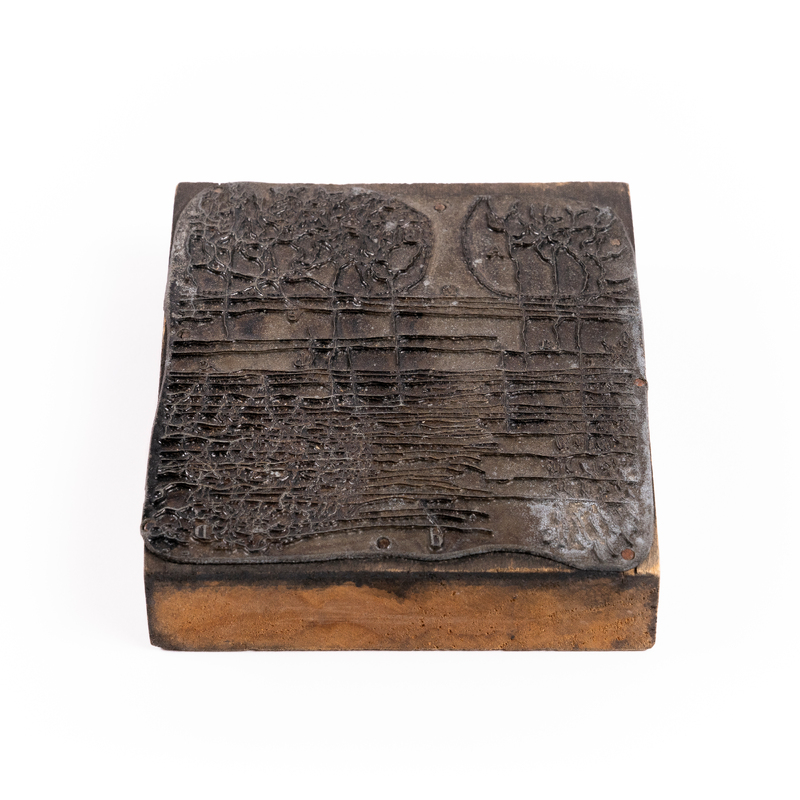 Printing blockThis wooden printing block bears an illustration of Santiago Ramón y Cajal. It is probable that he not only executed the original drawing but also engraved the image into the block himself. Commissioning such work from a professional engraver was costly, so Cajal learned the craft of engraving the image into the wood. The block is made of boxwood, which is very hard and lacks distinct growth rings. The illustration depicts a cross-section of the midbrain of a newborn mouse. The section is a sagittal cut—a vertical slice that divides the brain into a left and a right side. The printing block was donated to the Nobel Prize Museum by Santiago Ramón y Cajal’s great-grandson, Ángel Cañadas Bernal, in 2025. He presented the gift on behalf of the family.
 -
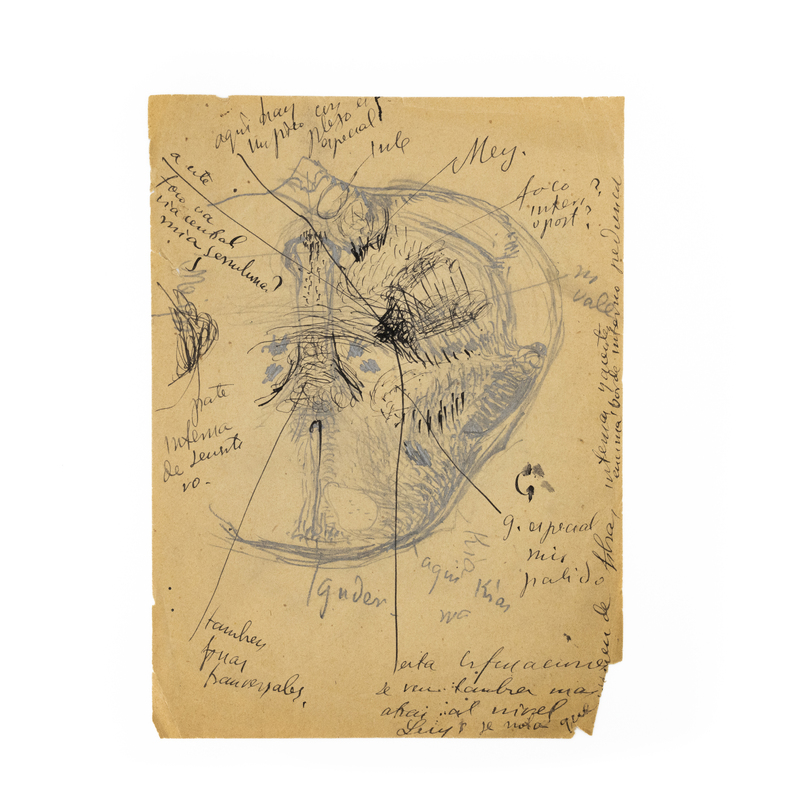 DrawingThis drawing is a preparatory sketch for an illustration in one of Santiago Ramón y Cajal’s scientific works on the brain and nervous system. The image shows a vertical cross-section of the thalamus, a part of the midbrain, in an eight-day-old mouse. Ramón y Cajal created his images after studying a thin slice of the brain under a microscope. To make the nerve cells visible, Cajal stained them using a method developed by Camillo Golgi, who shared the 1906 Nobel Prize in Physiology or Medicine with Cajal. After the preparatory drawing, he produced a clean, finalized version that was used for the printed image in the scientific work. Ramón y Cajal’s images are characterized by clarity, precision, and rich detail, demonstrating great artistic talent. In his youth, Ramón y Cajal wanted to become an artist but was encouraged by his family to pursue medicine. His artistic skill and interest proved invaluable in his exploration of the brain, the nervous system, and its various types of cells. The drawing was donated to the Nobel Prize Museum by Santiago Ramón y Cajal’s great-grandson, Ángel Cañadas Bernal, in 2025. He presented the gift on behalf of the family.
 -
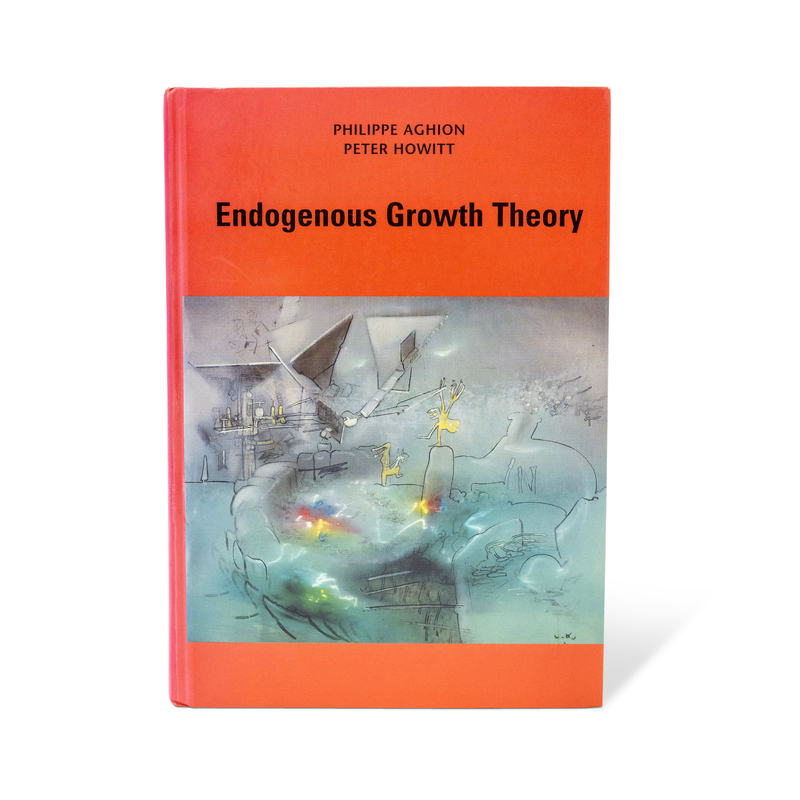 Bok: Endogenous Growth TheoryThe book _Endogenous Growth Theory_ from 1998 is the result of a collaboration over many years between Peter Howitt and Philippe Aghion. Their research addresses how new technology replaces older technology, and this also informed their collaborative process. While working on the book, they lived in different countries, but had frequent contact with each other. At the start of the project, they communicated through faxes, but used e-mail towards the end. Peter Howitt donated the book to the Nobel Prize Museum in 2025.
 -
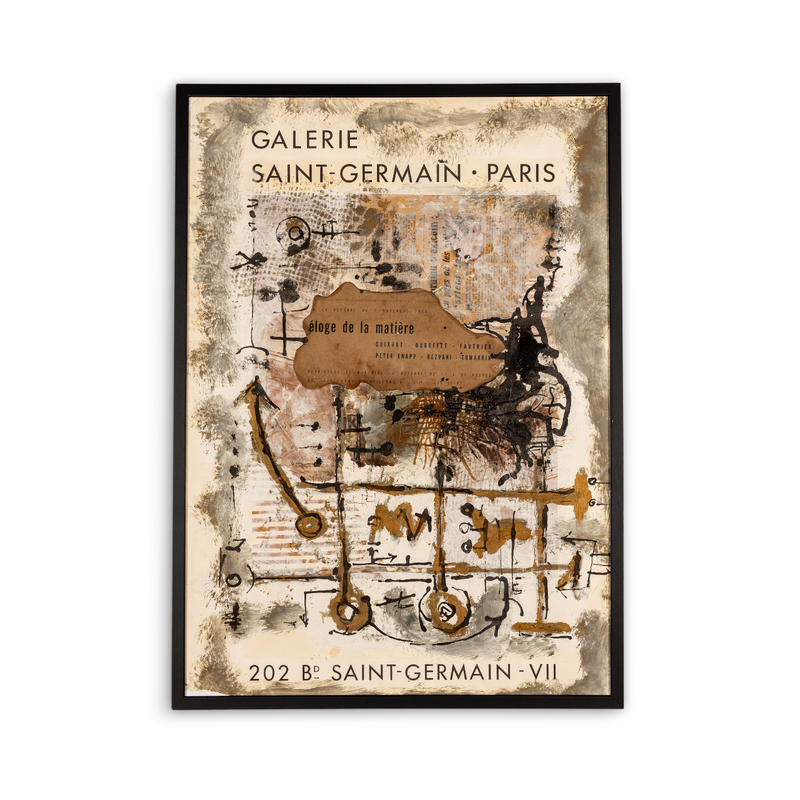 AffischThis poster presents an art gallery that was run by Phillippe Aghion’s father, Raymond Aghion in 1956–1966. The gallery was in Saint-Germain-des-Près in Paris, a neighbourhood with a vibrant art scene. The family moved in artist circles. The names of some of the artists who exhibited at the gallery are featured on this poster. It was designed by the Israeli artist Igael Tumarkin around 1960. Tumarkin believed it was crucial with a dialogue between Israel and Palestine, and Aghion shared his opinion. Aghion’s parents were both from Jewish families in Alexandria, Egypt, and moved to Paris when they were young. His mother, Gaby Aghion, became a famous fashion designer and founded the Chloé label. His father, Raymond, was a politically active communist and worked for a social revolution in his native Egypt. One of his aims was that everyone should have access to new technology, in a better and more equal society. Technological development and economic growth are what Philippe Aghion’s research is about. Phillippe Aghion donated this poster to the Nobel Prize Museum in 2025 as a tribute to his parents.