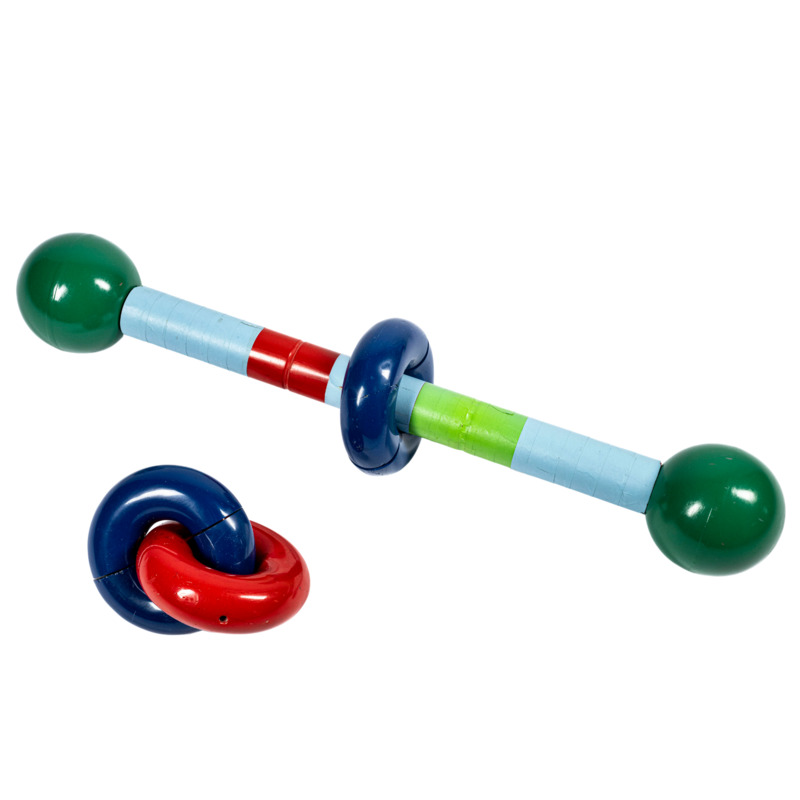
These are models of two types of molecular machines: they are composed of interlinked molecules that can rotate in relation to each other. The model with two interlinked rings represents two catenane molecules. The model with a ring on an axle represents a rotaxane molecule. The colours represent different electric charges. These determine the motion of the different parts can move in relation to one another. Fraser Stoddart used the models to explain his research results. The models were made at Sheffield University, and Stoddart has had them with him throughout his career at various universities.
Fraser Stoddart donated the models to the Nobel Prize Museum in 2016.
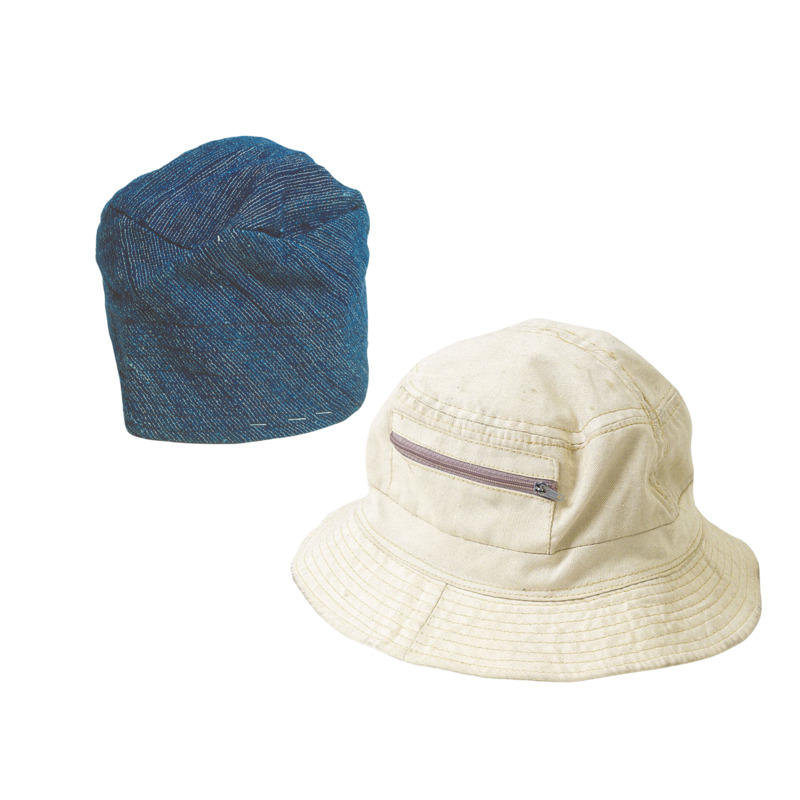
In certain situations in the past, Wole Soyinka used hats to hide his characteristic bushy hair when he wanted to avoid being recognised.
This is how Soyinka describes these two hats:
Peripeteia (from the Hunter to the Hunted)
Floppy Hat
Peripeteia is the Greek expression (used especially in drama) for a reversal of fortunes. At home, my favourite form of relaxation is hunting, and I wore the faded khaki hat when I undertook my final hunt in Nigeria in November 1994, ‘got lost’ in the forest and surfaced in the neighbouring Republic of Benin – a fugitive from the dictatorship of Sanni Abacha. Later – on my exile circuit in African countries, Europe, the US etc – the hat was pressed into service as part of a prudent disguise as I continued to evade the dictator’s rather persistent agents – my head of hair being the most obvious giveaway.
Yoruba Cap
The black Yoruba cap was part of my formal attire – mostly retained in my hand - when I received the Nobel Prize in 1986. It surfaced again among the wardrobe which joined me later in exile, so I added it to the other head camouflage. (I still wear a headgear on occasion, despite the end of the dictatorship, but only to enjoy some anonymity).
While working on a project of the International Parliament of Writers, the setting up of a network of Cities of Asylum for persecuted writers, I received a complimentary ticket of a $1000 (!!!) ringside seat for a boxing match from a casino-hotelier-cum-bibliophile who was once an aspiring writer. He had spearheaded the creation of the first such city in the United States in – of all places! – Las Vegas! Again, I wore this very cap – to avoid easy recognition. After this novel and extravagant addition to its mixed fortunes, what else is left but to retire the cap, in grand style, from active service!
Wole Soyinka
Wole Soyinka donated the hats to the Nobel Prize Museum in 2000.
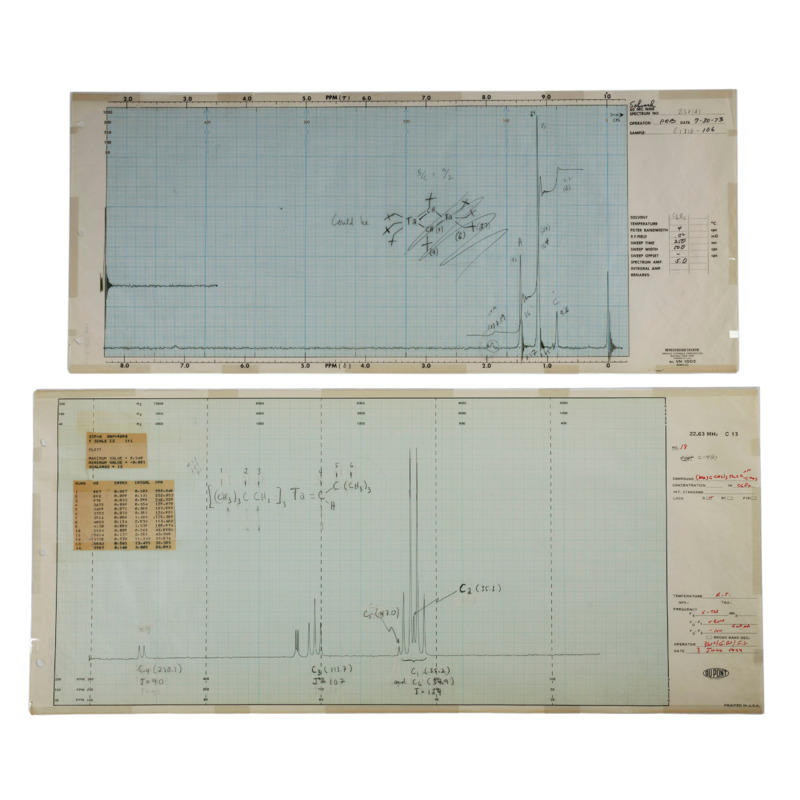
These spectra carry information about a chemical compound that Richard Schrock produced in 1973. The spectra are produced with nuclear magnetic resonance (NMR), a method where radio waves are used to map molecular structure and composition. This chemical compound was a decisive step in the development of new ways of assembling organic molecules. Schrock’s methods amounted to facilitating metathesis. This means that the double bonds between carbon atoms are broken and reorganised at the same time as atomic groups change place.
Richard Schrock donated the spectra to the Nobel Prize Museum in 2018.
With a small barometer and a 1913 scholarly publication, Peter Ratcliffe draws attention to an important scientific forerunner. Mabel Purefoy Fitzgerald, a female pioneer scientist, participated in John Scott Haldane’s expedition to Pike’s Peak in Colorado to study changes in the body at high elevations. Her study became the first to show that the amount of haemoglobin in the body increases as oxygen levels decline, which happens at high elevations. The barometer was used to measure atmospheric pressure during the experiments. Ratcliffe’s own research has made a decisive contribution to understanding the molecular biological mechanism underlying Purefoy Fitzgerald’s discovery.
Following the request of Peter Ratcliffe, the barometer was donated to the Nobel Prize Museum by David Paterson in 2019.
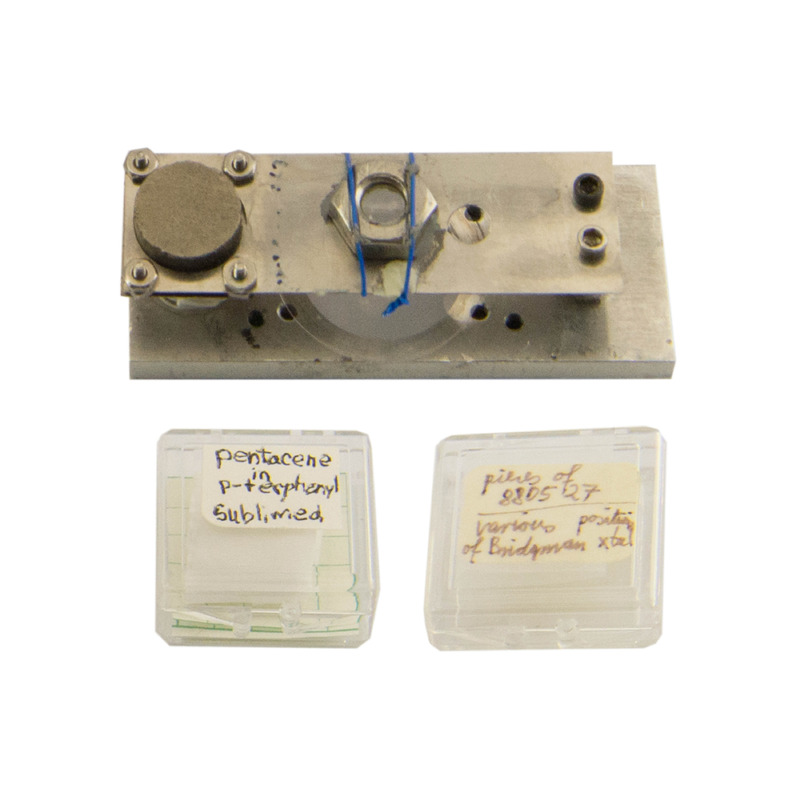
Two samples, and a holder that held the samples in place in the equipment were used in experiments by William E. Moerner. The experiments led to the development of microscopes capable of showing levels of detail that had previously been impossible.
William E. Moerner donated the samples and the sample holder to the Nobel Prize Museum in 2014.
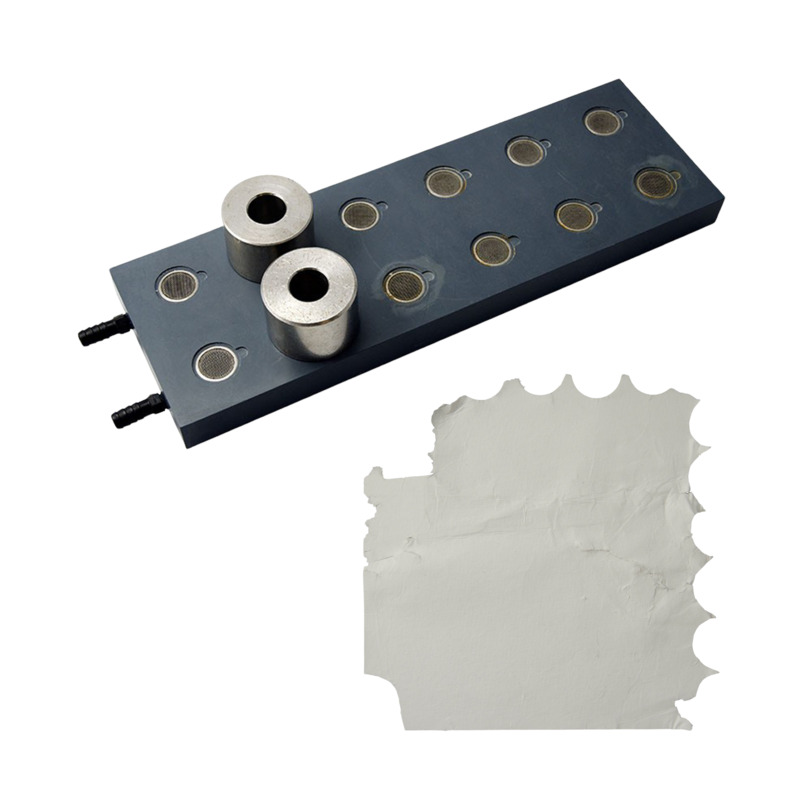
This filter manifold and this filtration paper were used by Robert Lefkowitz and Brian Kobilka in their studies of cell surface receptors. To study the receptors, they developed radioligand binding methods. After incubating membrane fractions from tissue with radioactively labelled ligands, they would pass them through small glass fibre filter discs which captured the membranes and let everything else pass through. In the filtration manifold could hold twelve filters. The filters were then washed, the radioactivity measured and the receptors found.
Robert Lefkowitz donated the filter manifold and the filtration paper to the Nobel Prize Museum in 2012.
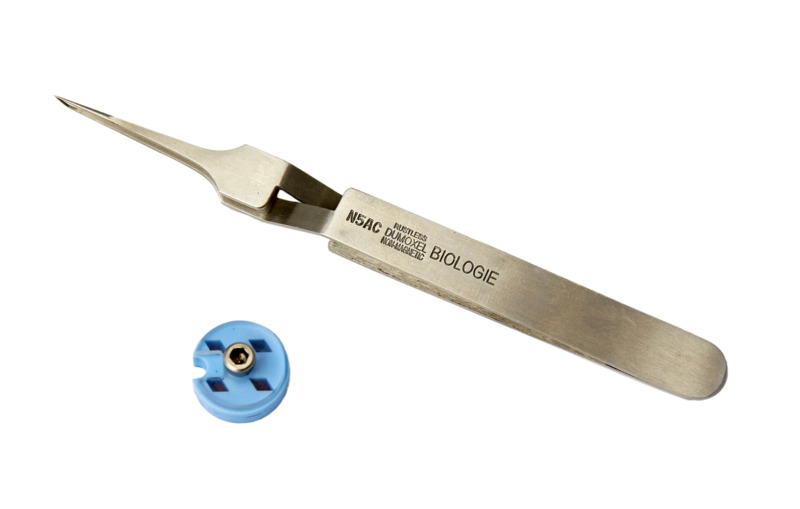
The cassette and tweezers were used by Brian Kobilka in his research on “beta-adrenergic receptors” on the surface of our cells. These receptors are sensitive to the hormone adrenaline and transmit signals into our cells via G proteins. To map the structure of the molecular complex that these receptors form with G proteins, Kobilka and his colleagues used electron microscopy. Samples of the molecular complex were placed inside this pill-like cassette, which was inserted into the electron microscope using tweezers.
Brian Kobilka donated the cassette and tweezers to the Nobel Prize Museum in 2012.
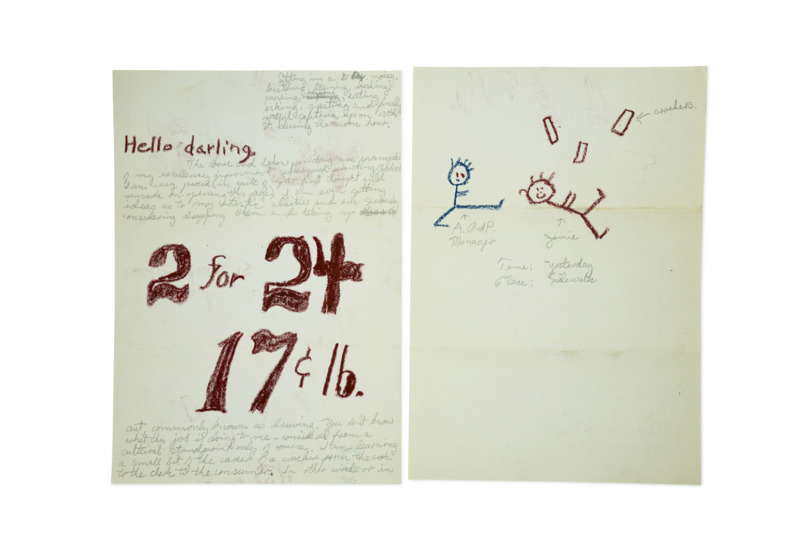
In a 1939 illustrated letter to his fiancée, Jean Turner, 20-year-old Donald Cram writes that he is thinking of giving up his chemistry studies in favour of drawing. Cram was working that summer for the National Biscuit Company (NABISCO), selling crackers to stores in New York. The job was demanding, and the drawings in the letter illustrate a scene in which Cram trips on the pavement and all the crackers fly in the air while his boss looks on. During a couple of following summers, he worked as a chemist in NABISCO’s laboratory. And his career as a chemist was destined to continue.
The letters were donated to the Nobel Prize Museum by Jean Turner Trueblood’s family in 2017.
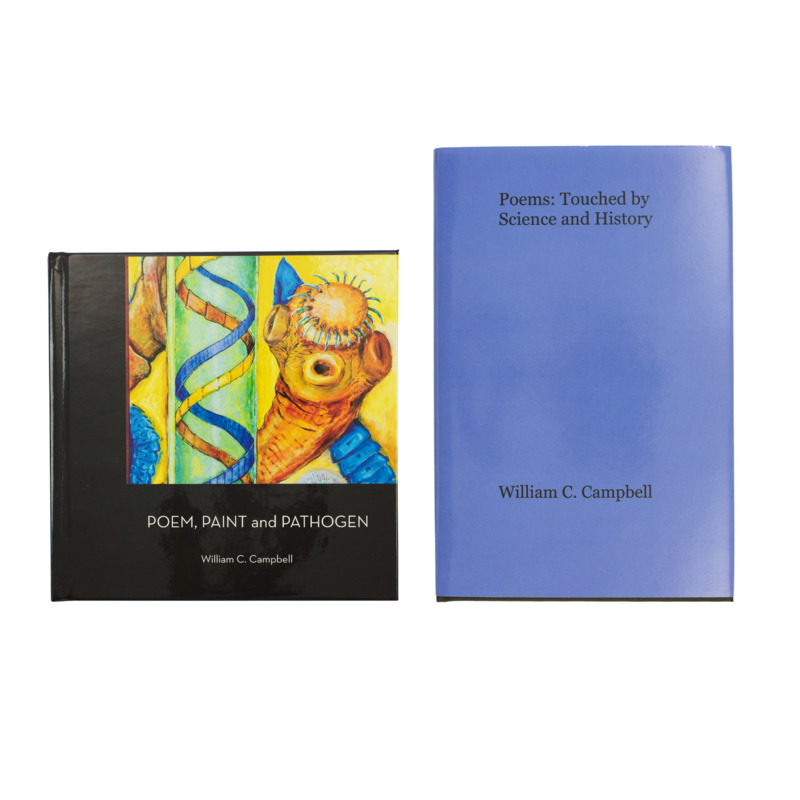
William Campbell’s paintings and poetry have resulted in books that he sees as an expression of the relationship between work and play. As a child, Campbell loved writing and painting. He had no knowledge of science before the age of thirteen but later developed an interest in medical research. Until he was in his 50s, he focused entirely on research, but then he began to paint again. His subject matter is associated with his work— parasites often feature in his paintings. Campbell also writes poetry. His poems also often have scientific connections and have been used in teaching, both by himself and others.
William Campbell donated the books to the Nobel Prize Museum in 2015.
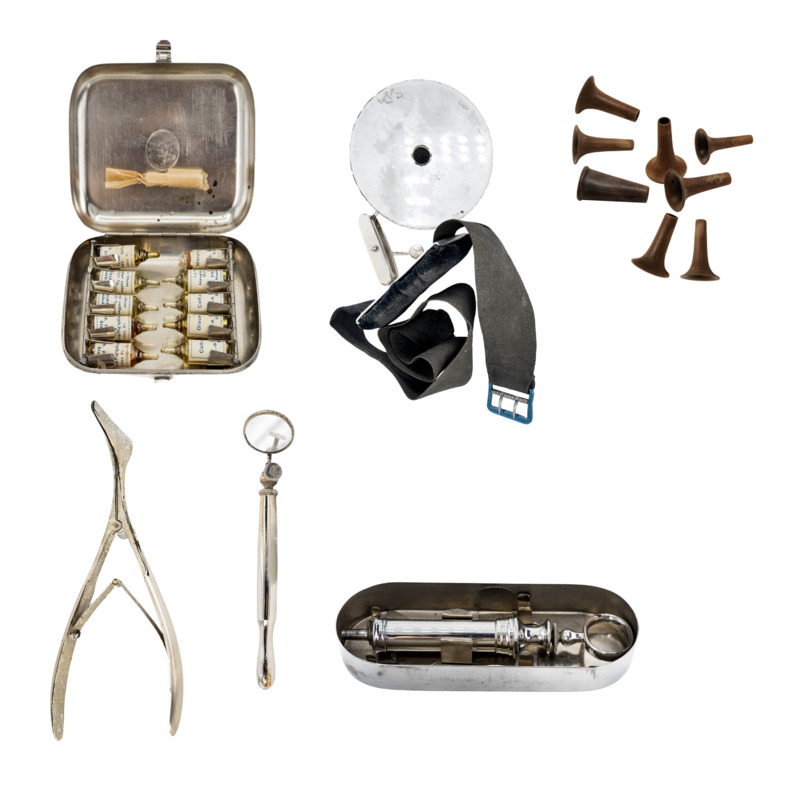
These instruments were used by Robert Bárány in his work as a physician and researcher. His most important scientific contribution concern the construction and function of the inner ear.
During the First World War, Bárány was a volunteer surgeon in the Austrian army on the Eastern Front. He was a prisoner of war in Russia in1915, when it was announced that he had won the 1914 Nobel Prize in Physiology or Medicine. Thanks to negotiations headed by Sweden’s Prince Carl on behalf of the Red Cross, he was released in 1916. After receiving the Nobel Prize, Bárány remained in Sweden. From 1917 he worked at Uppsala University.
The instruments were donated to the Nobel Prize Museum by the Bárány family in 2007.
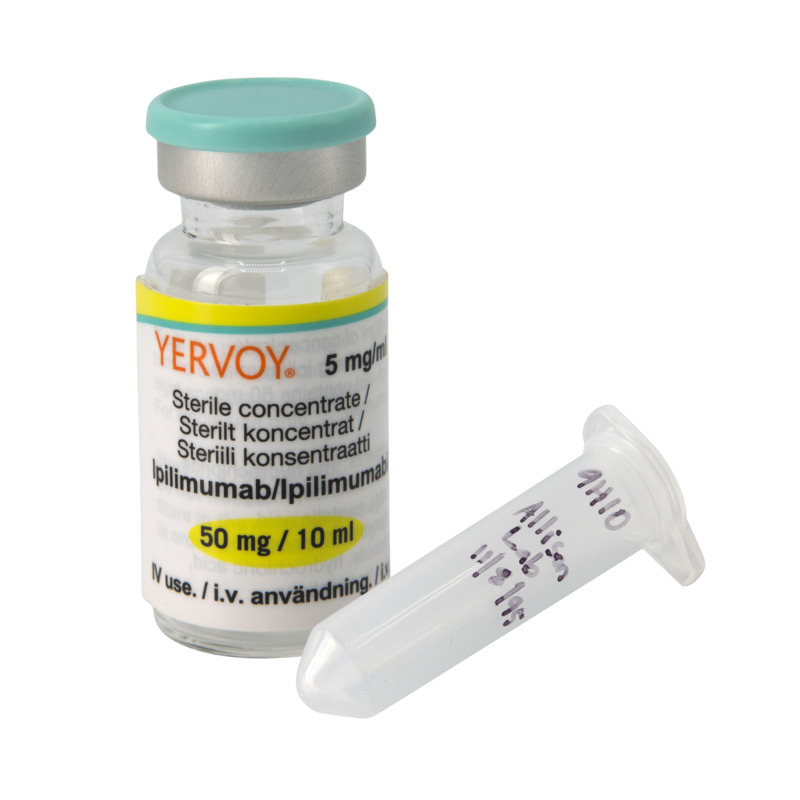
This test tube contains a solution with antibodies from mice that neutralise the CTLA-4 protein. James Allison discovered that the antibody can make the immune system more responsive so it can neutralise cancer tumours. After the discovery, a corresponding antibody was found in humans. Based on the results, a pharmaceutical could then be developed to treat some types of cancer. The vial contains this drug.
James Allison donated the test tube and the vial to the Nobel Prize Museum in 2018.
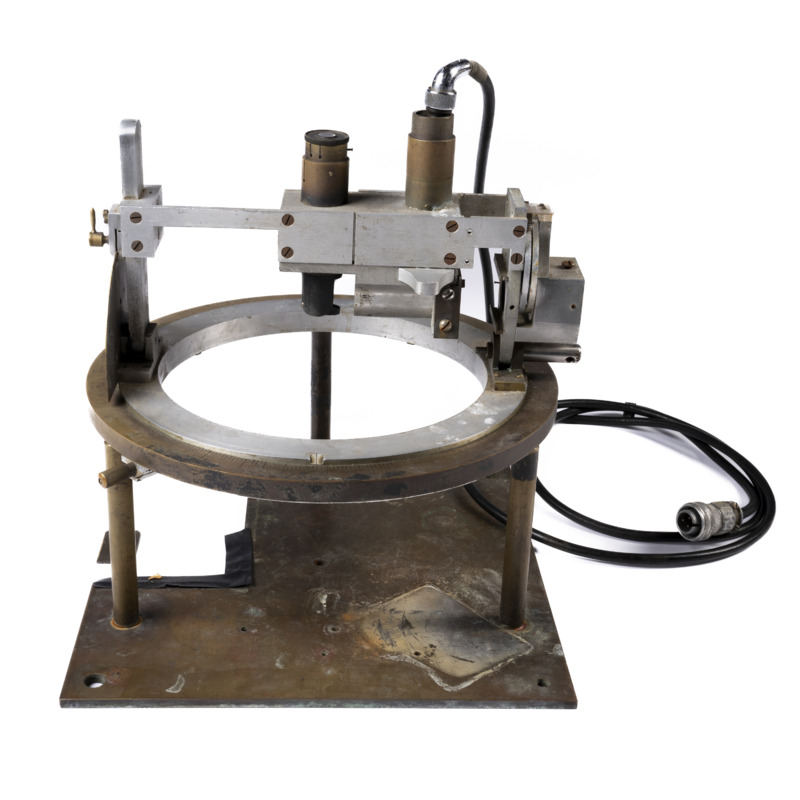
This instrument, an ophthalmoscope, was used by Torsten Wiesel and David Hubel in their early research on how light is transformed into nerve signals when it hits the retina, which are then converted into visual impressions in the brain. The ophthalmoscope was developed by Stephen Kuffler and S. A. Talbot in the early 1950s. When Wiesel came to Johns Hopkins University as a young researcher, Kuffler became his mentor. For Wiesel, the instrument represents the importance of mentorship in science. He only used it for a few months around 1958, but it accompanied him throughout his subsequent research career.
An ophthalmoscope can be used to shine light on and view the back of the eyeball. With this particular ophthalmoscope, the retina can also be stimulated with different patterns. Wiesel and Hubel used cats in their experiments. The cat's head was fixated under the ring-shaped stand, and its retinas were then stimulated and observed using optical instruments attached to the bar across the ring. Nerve cell activity was recorded using small electrodes.
After their first studies, Wiesel and Hubel moved on to project patterns on the retina in other ways that did not require an ophthalmoscope.
This ophthalmoscope was donated to the Nobel Prize Museum by Torsten Wiesel in connection with his 100th birthday in June 2024.
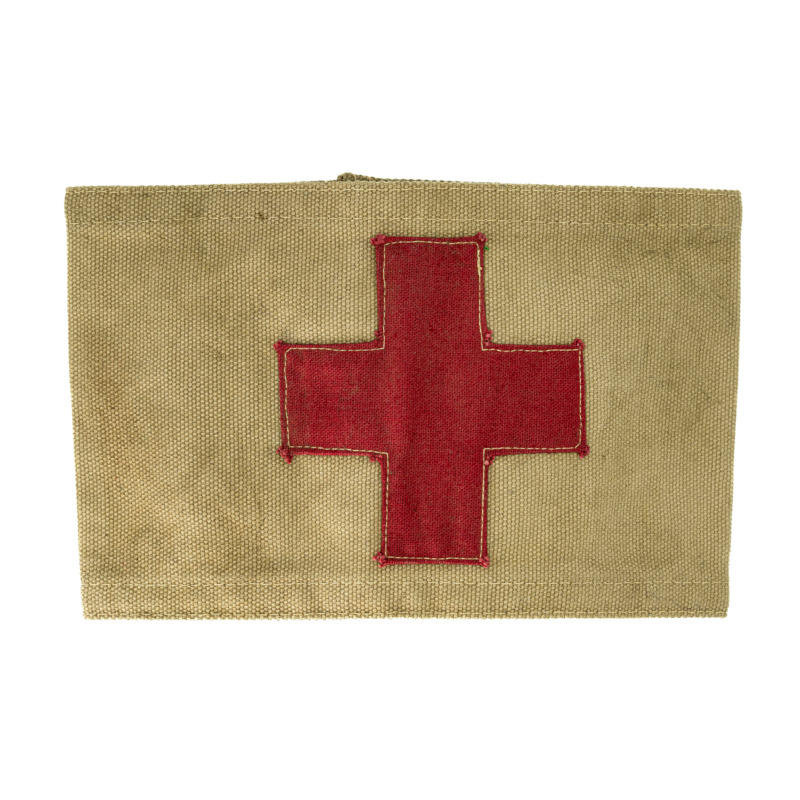
This armband was used by personnel in the British Royal Army Medical Corps during the First World War. The use of a red cross on a white background as a symbol of neutrality and protection in armed conflict was established in the first Geneva Convention in 1864. The convention regulates the rights and protection of wartime prisoners, civilians and military personnel. The background to the convention is Henry Dunant's founding of the international Red Cross movement in 1863. The Red Cross emblem has since that time been the distinctive mark of Red Cross personnel and the medical services of the armed forces.
The armband was acquired by the Nobel Prize Museum in 2023.
After receiving the call about the Nobel Prize in 2021, Ardem Patapoutian and his colleagues had caps made for everyone who had contributed to the work. The cap shows the molecular structure for the piezo channels that their discovery involved. Piezo channels are found in cells that feel pressure. The numeral 1 in 2021 is shaped like a dynamite stick, as a reference to Alfred Nobel.
Ardem Patapoutian donated the cap to the Nobel Prize Museum in 2023.
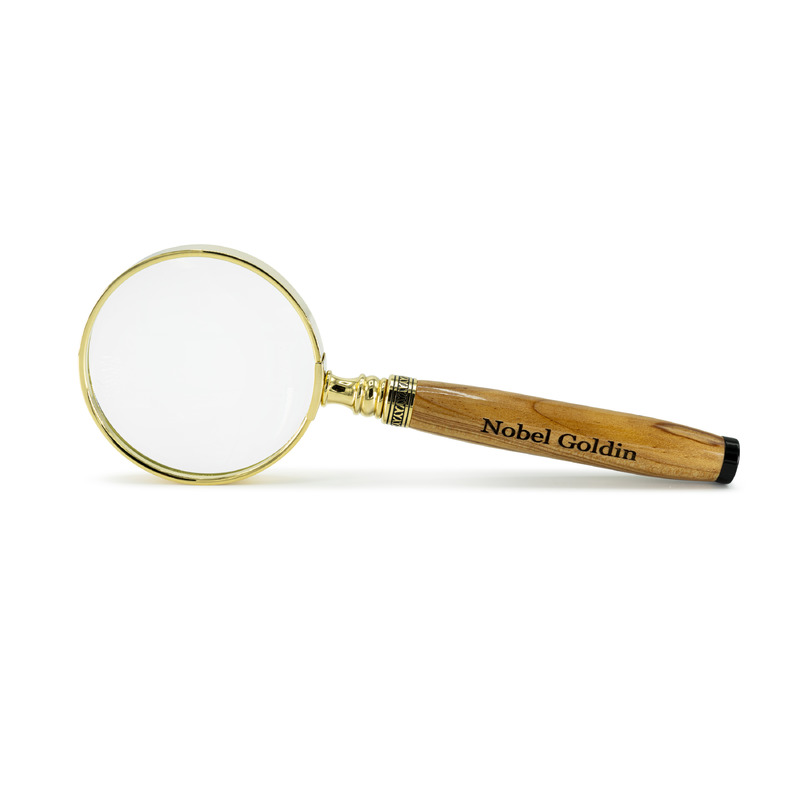
In the Royal Swedish Academy of Sciences' popular information of Claudia Goldin's research, she was depicted as a detective with a magnifying glass. Her research on differences between men and women in terms of wages and employment rates is based on extensive archival studies. Goldin thought the image of her as a detective was apt and had a magnifying glass made with her name on it.
Claudia Goldin donated the magnifying glass to the Nobel Prize Museum in 2023.
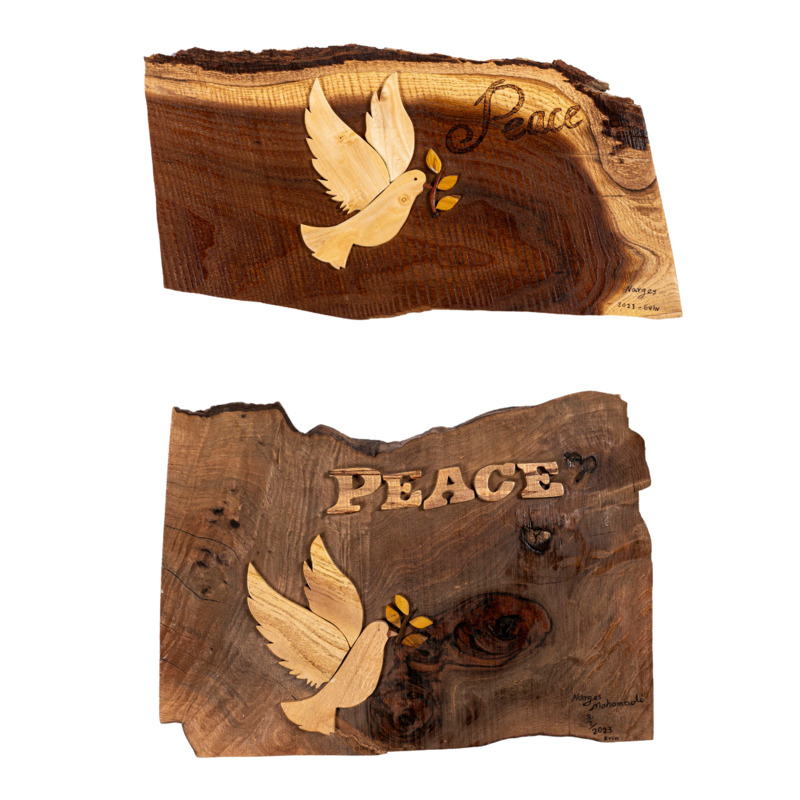
These pictures were made by Narges Mohammadi in 2023 in Evin Prison, where she was previously held. She was transferred back to Evin in 2022 after periods of freedom and after having been held in other prisons:
“My return to Evin was strange, nostalgic and simultaneously exciting. The whole prison was familiar and full of memories to me. I went to the mosaic workshop and sat right in the same chair as I was sitting eight years ago, holding the little saw and picking up the wood and smelling it. I said myself I'd fly the same bird that was seeking peace eight years ago. And I sent these two birds into peace with an olive branch on the beak. The birds have now arrived at the Nobel Prize Museum. Well done.”
Narges Mohammadi donated the pictures to the Nobel Prize Museum in 2023.
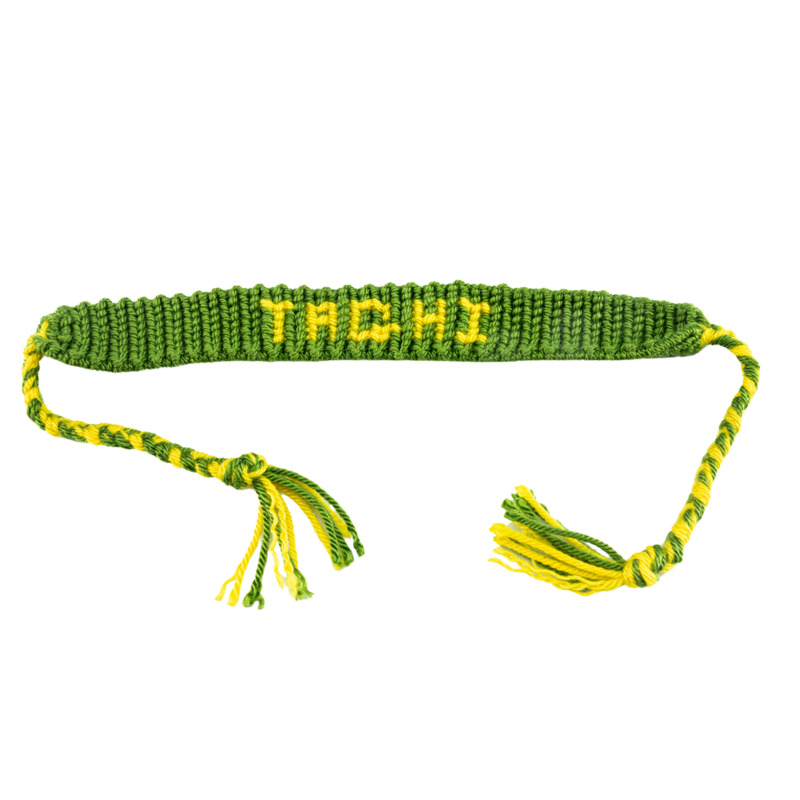
This bracelet was weaved as a gift to Narges Mohammadi by her fellow prisoner Sedigheh Moradi. The first time Mohammadi saw Moradi in 2012, she suspected that Moradi had been in prison for a long time. This proved true. When Moradi shared her story, she revealed that she had lived most of her life in prison. She and many of her friends had been arrested and imprisoned in the 1980s. It was then that she came to know Mohammadi’s husband, Taghi Rahmani, whose name is on the bracelet. He is also a human rights activist and has been imprisoned periodically.
Narges Mohammadi donated the bracelet to the Nobel Prize Museum in 2023.
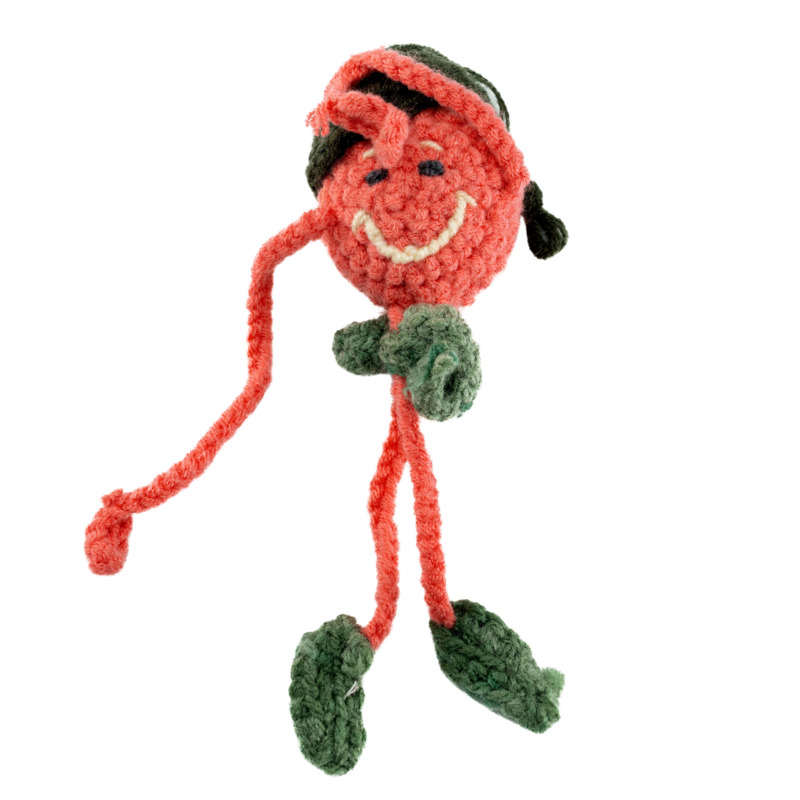
This doll was given to Narges Mohammadi by a women, who was her cellmate between 2015 and 2017. The woman was a member of a spiritual group led by her husband. The husband treated her badly, and she was followed by the regime’s security service. Her husband was arrested and executed. She was also sentenced to death. In 2017, she was transferred to another prison where she spent months in solitary confinement and was badly injured. She sent this doll to Narges Mohammadi with the help of another prisoner who was being transferred: “Every time I saw this suspended doll, I was reminded of my dear cellmate, who was suspended under the patriarchal religious tyranny at home, in society, and in prison, awaiting her death sentence.”
Narges Mohammadi donated the doll to the Nobel Prize Museum in 2023.
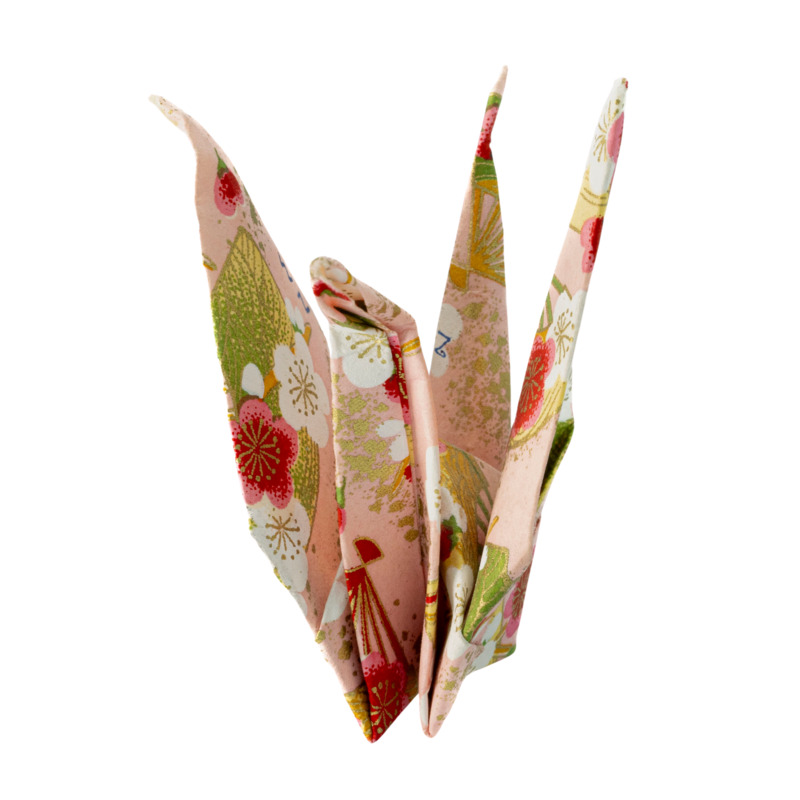
This paper bird is a birthday present to Narges Mohammadi from her fellow prisoner Nazanin Zagari, who made it together with her daughter, Gisu, in the visitor’s room in 2018. At the time, Zagari had been in prison for just over two years and each Monday Gisu would visit together with her grandmother. When Mohammadi was transferred to the prison in Zanjan, her mementos remained in Evin Prison. After she was released in 2020, she was surprised to be given these back, when another prisoner on leave was allowed to bring them to her.
Narges Mohammadi donated the paper bird to the Nobel Prize Museum in 2023.
Narges Mohammadi’s fellow prisoner Golrokh Iraee made Mohammadi this strap for her glasses in 2017. Mohammadi would hide her glasses in different places since she lacked a strap to hold them around her neck. Iraee made the strap from a piece of leather that was left over from her work. The strap wasn’t long enough to reach around her frizzy hair and hung from her hair instead of her neck. Her fellow prisoners thought it humorous and one, Atena Daemi, would imitate Mohammadi often.
Narges Mohammadi donated the glasses strap to the Nobel Prize Museum in 2023.
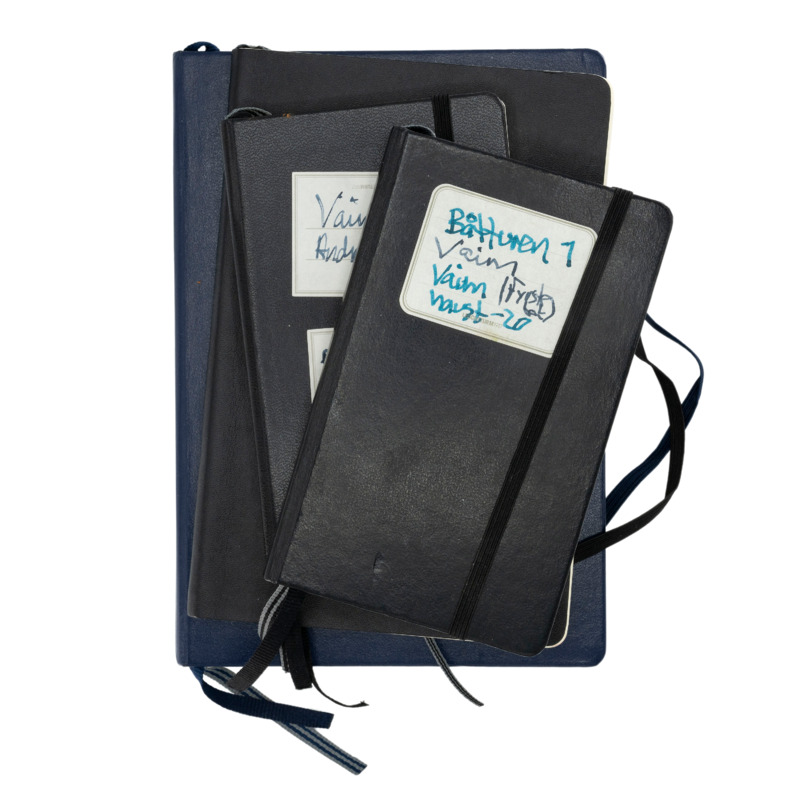
These notebooks contain the first draft of a yet unpublished novel entitled Vaim by Jon Fosse. The title is a fictional place name, and the book is planned for publication in 2025.
In the beginning of his career as an author, Fosse would type his manuscripts on a typewriter, but he then switched to writing entire books by hand in different coloured inks. Once they were written, he would then type and revise them on a computer. Now that the manuscript for Vaim has been transcribed on a computer, Fosse is able to donate the notebooks to the Nobel Prize Museum.
Jon Fosse donated the manuscript to the Nobel Prize Museum in 2023.
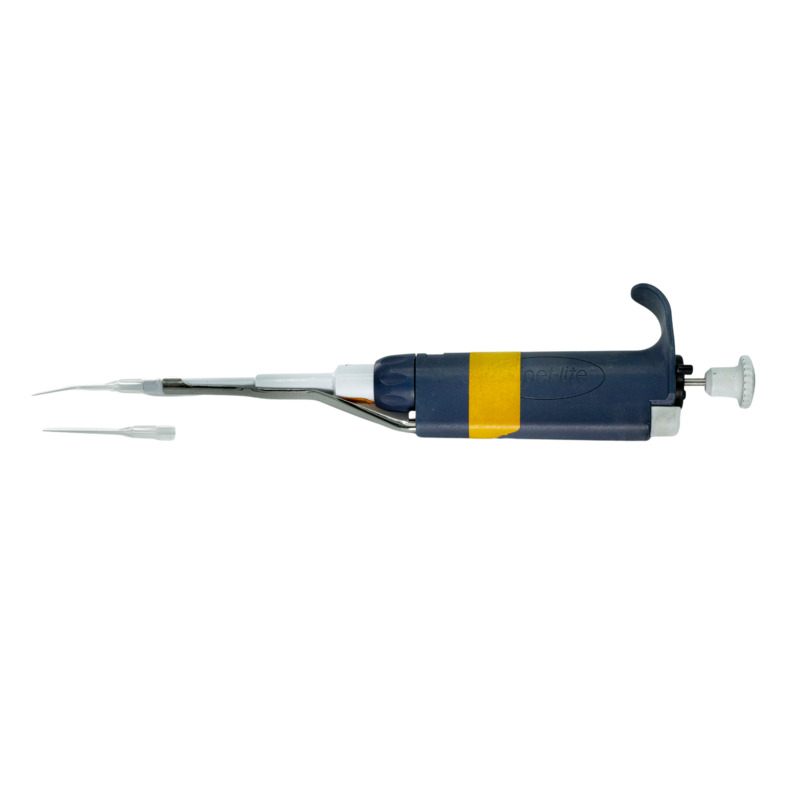
Katalin Karikó believes that she has been her most used tool in her research career. It is used to draw small amounts of liquids. This particular pipette, marked with a piece of tape, is her favourite. She used it for about 10 years from the early 2000s. She sees it as a symbol of her research findings that set the stage for the mRNA vaccine.
Katalin Karikó donated the pipette to the Nobel Prize Museum in 2023.
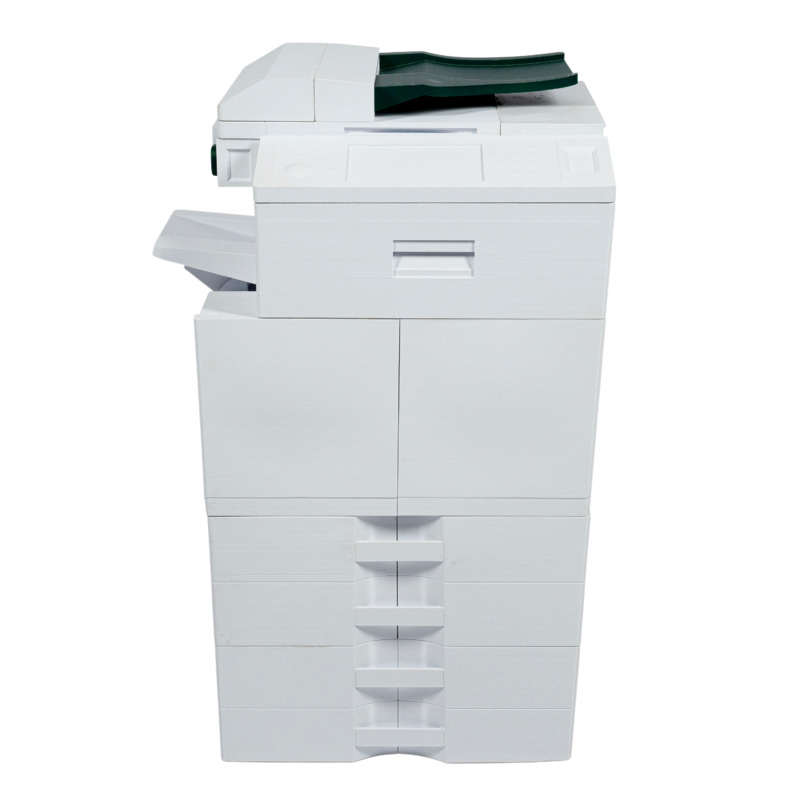
Drew Weissman’s and Katalin Karikó’s collaboration began at a copying machine. They were both avid readers of scientific articles that they photocopied from journals. Weissman was researching immunology and Karikó mRNA, but since there was only one copying machine, it became their meeting point and where they began discussing their research. These discussions led to a collaboration that laid the groundwork for mRNA vaccines. Weissman had this 3D printed copy of a copying machine made to celebrate the inspiration of their collaboration.
Drew Weissman donated the copying machine to the Nobel Prize Museum in 2023.
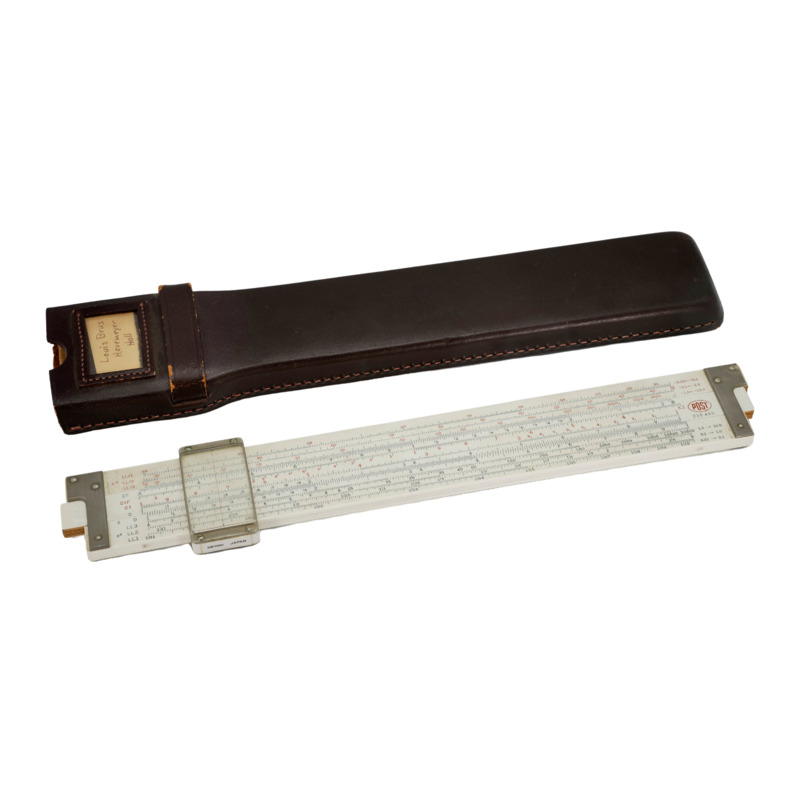
Louis Brus purchased this slide rule during his studies at Rice University in Houston, Texas in the early 1960s. Later, he replaced the slide rule with pocket calculators and computers.
Louis Brus donated the slide rule to the Nobel Prize Museum in 2023.
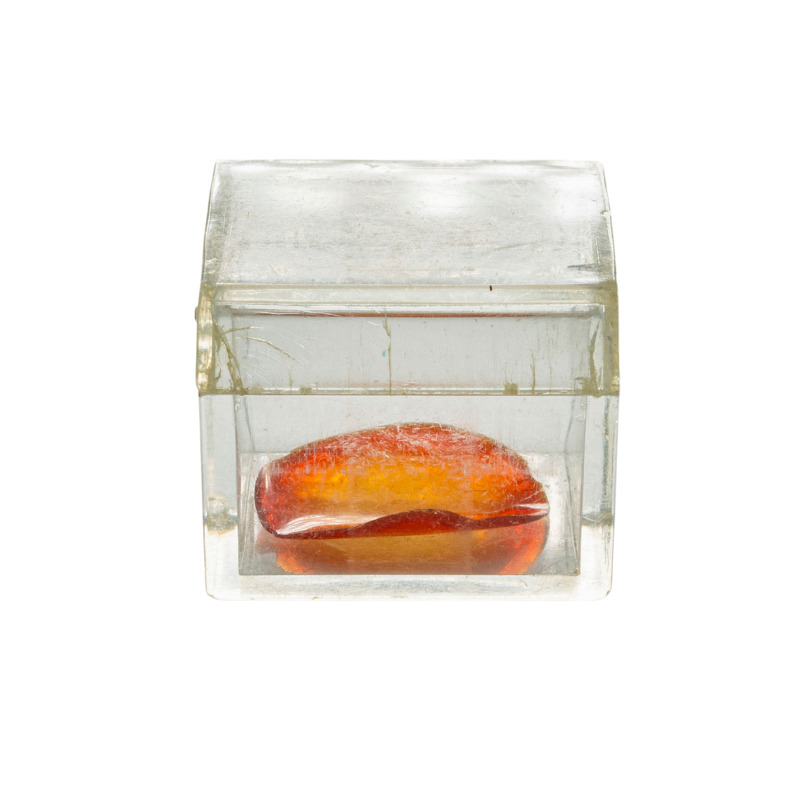
This sample was taken during Moungi Bawendi’s research on quantum dots in the early 1990s. Bawendi experimented with injecting different substances into solvents to form small crystals of semiconductor particles, quantum dots. This sample consists of quantum dots in a plastic material. The sample was used when conducting physical experiments. Bawendi has saved his samples in his own small museum in his office but has kindly agreed to give this sample to the Nobel Prize Museum.
Moungi Bawendi donated the sample to the Nobel Prize Museum in 2023.
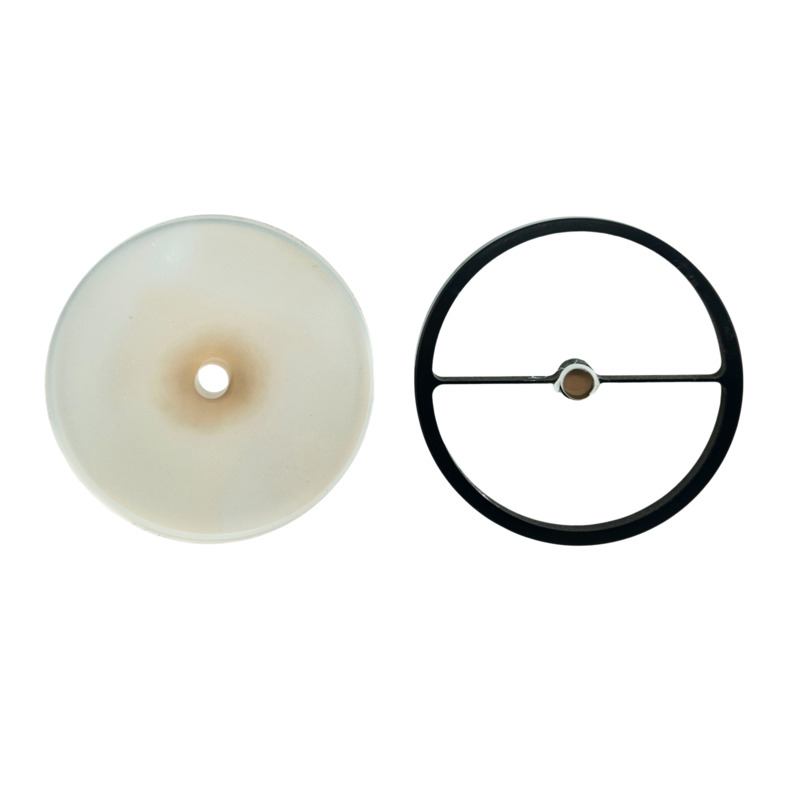
These glass plates are replicas of the plates used by Pierre Agostini when he first succeeded in creating extremely short pulses of laser light. The plates were used in a crucial step of the experiment to delay some of the laser light. Both plates are equally thick since the smaller one has been cut from the larger one. Positioning the plates just right, splitting the laser into two parts, and letting each part pass through its own plate delays one laser pulse in relation to the other with very high precision.
Agostini’s used harmonics in the laser light’s wavelengths to create and study laser pulse trains. By combining the pulse trains with a delayed part of the original laser pulse, Agostini and his colleagues were able to study how the harmonics were in phase with each other.
Pierre Agostini donated the delay plates to the Nobel Prize Museum in 2023.
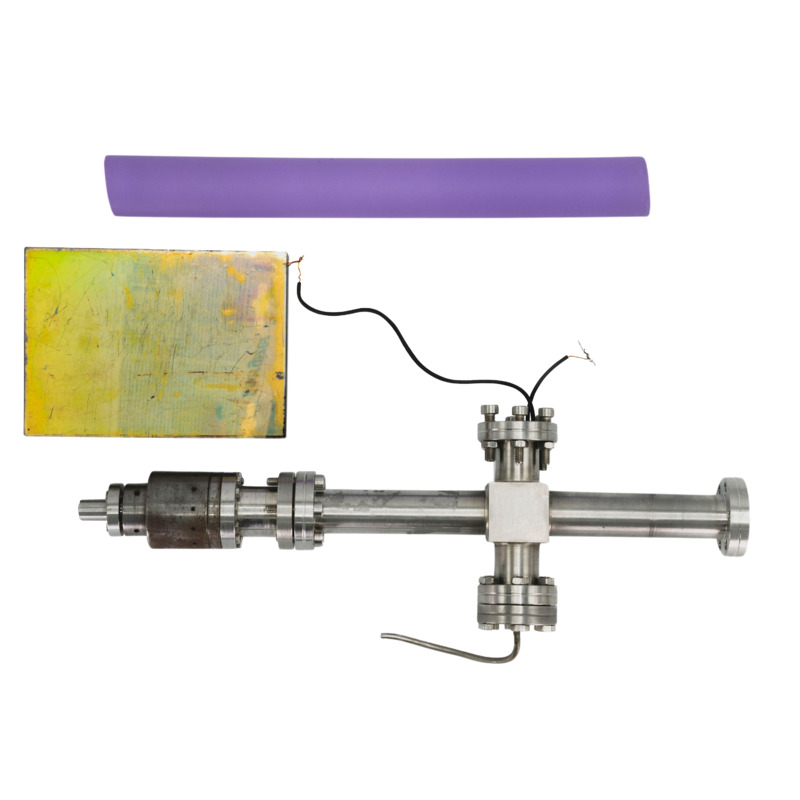
These instruments were used by Anne L’Huillier in her early research on laser harmonics. A laser beam was created using the rod, which consists of glass with a layer of neodymium atoms. The metal parts were used to create a gas stream of noble atoms that the laser beam passed through. This created the laser harmonics. The shiny metal plate is a diffraction grating. The reflecting surface has many microscopic slits that split the light into wavelengths. This allows the study of how the light’s different wavelengths are composed. Laser harmonics allows the creation of laser pulses that are so short that they are measured in attoseconds.
Anne L'Huillier donated the instruments to the Nobel Prize Museum in 2023.
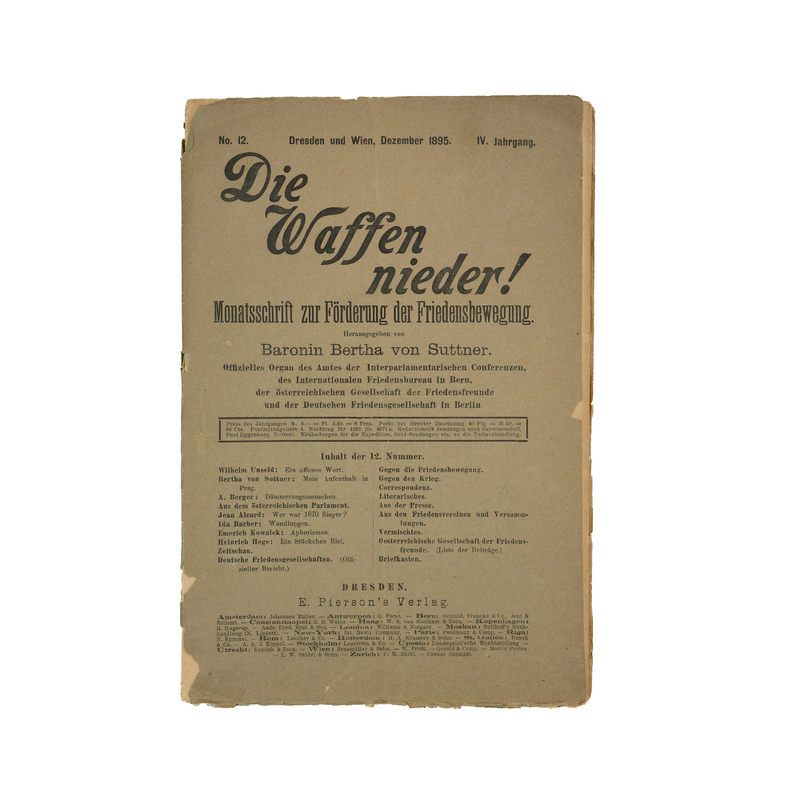
This copy of the periodical Die Waffen nieder! is from Alfred Nobel’s own library. The magazine was published in 1892–1899, and Bertha von Suttner was its editor. The magazine was named after Suttner’s novel from 1889.
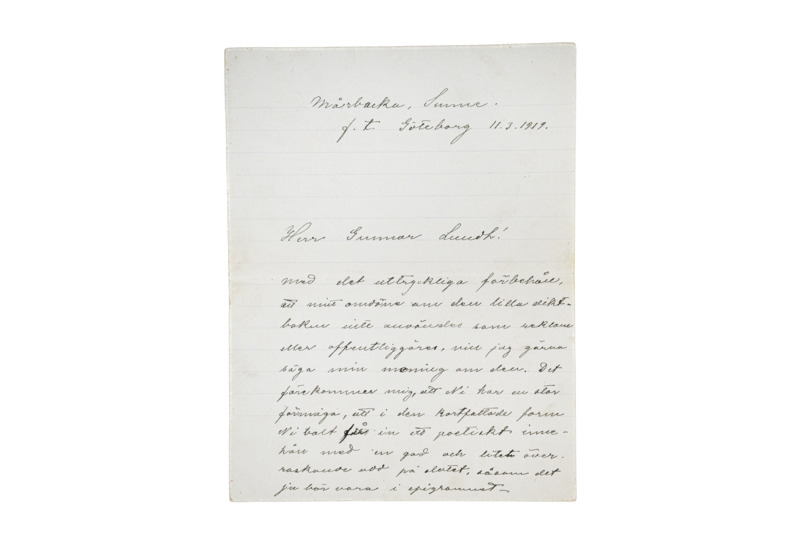
I ett brev från 1919 ger Selma Lagerlöf sitt omdöme om en samling dikter som 20-årige Gunnar Lundh skickat till henne.
Selma Lagerlöf var när brevet skrevs en mycket välkänd och älskad författare i dåtidens Sverige. Hon var dessutom Nobelpristagare i litteratur och ledamot i Svenska Akademien. Det var inte ovanligt att människor som gjorde egna litterära försök hörde av sig till henne för att få ta del av hennes uppfattning.
Lagerlöfs svar till Lundh var vänligt och uppmuntrande:
”Med det uttryckliga förbehållet att mitt omdöme om den lilla diktboken inte användes som reklam eller offentliggöres, vill jag gärna säga min mening om den. Det förekommer mig att Ni har en stor förmåga att i den kortfattade form Ni valt fått in ett poetiskt innehåll med en god och litet överraskande udd på slutet, såsom det bör vara i epigrammet. I vad mån ni står på självständig grund vågar jag inte döma om, men gör ni det så bör Ni komma att skänka oss många vackra saker.”
Gunnar Lundh blev aldrig någon känd författare. Däremot blev han en framstående fotograf. Mest känd blev han kanske för de bilder som publicerades i samband med författaren Ivar Lo-Johanssons reportageresor om statarnas liv i Sverige under 1930- och 1940-talen.
Brevet förvärvades av Nobelprismuseet 2024.
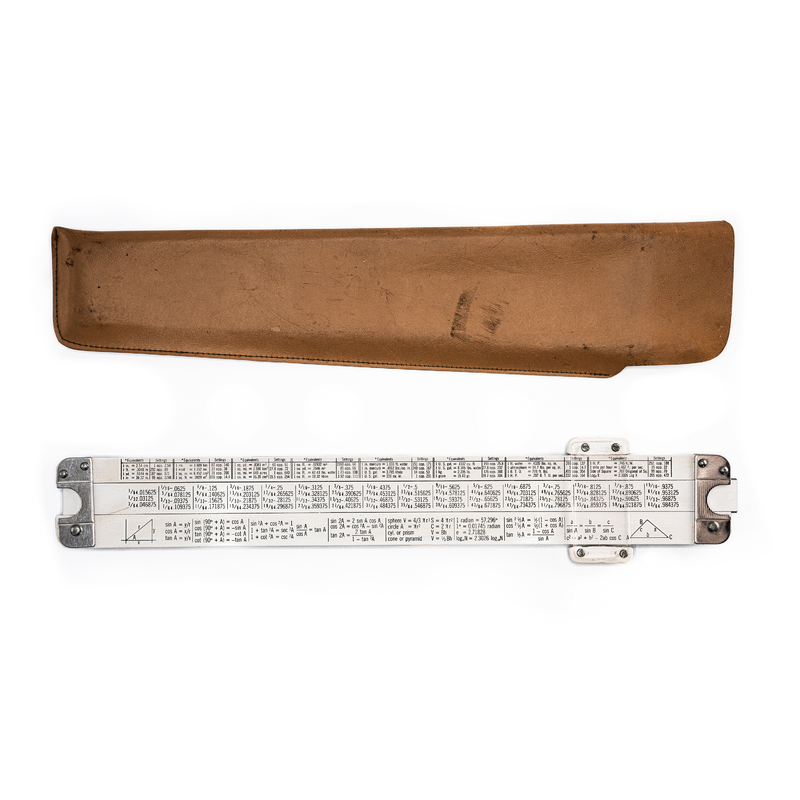
William Phillips was given this slide rule in 1963, just before his 15th birthday when he was going to study physics at school. He used it for calculations for his homework and exams. He recalls one time when he had made a mistake in a task even though he understood the question. He had added it up wrong, and told the teacher he had trusted the slide rule but that it couldn't do addition, only multiplication and division. The teacher told him to try to design a slide rule that could do addition. This prompted Phillips to examine how the slide rule worked. It can be used for multiplication since the scale is logarithmic, but with a linear scale it could also be used for addition. He presented his idea to the teacher. It was never implemented in practice, but his teacher was impressed.
When Phillips started at university, he found a more sophisticated slide rule, and he also had access to larger mechanical calculators and eventually an electronic one. When pocket calculators were introduced, this changed the potential entirely.
William Phillips donated the slide rule to the Nobel Prize Museum in 2024.
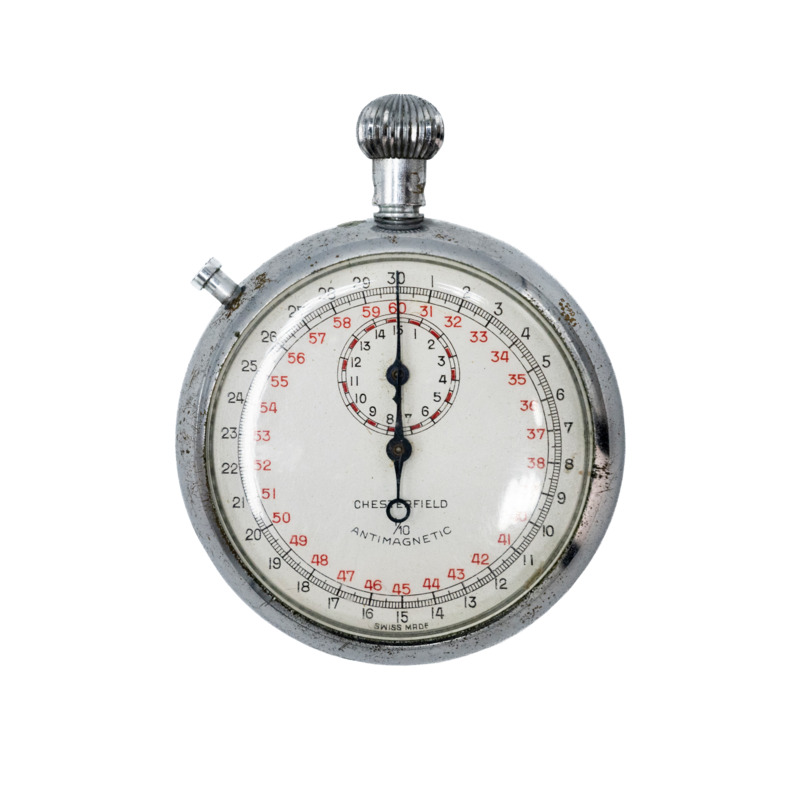
When William Phillips was eleven, his parents gave him this stopwatch. He wanted it in order to perform simple experiments, such as measuring the time it took for pendulums and swings to oscillate, and objects to fall to the ground. He also used the stopwatch to time runners.
As a physicist, Phillips later developed methods for cooling atoms with laser beams. This method made it possible to create even more precise atomic clocks. Their uncertainty is one second per 300 million years.
William Phillips donated the stopwatch to the Nobel Prize Museum in 2024.
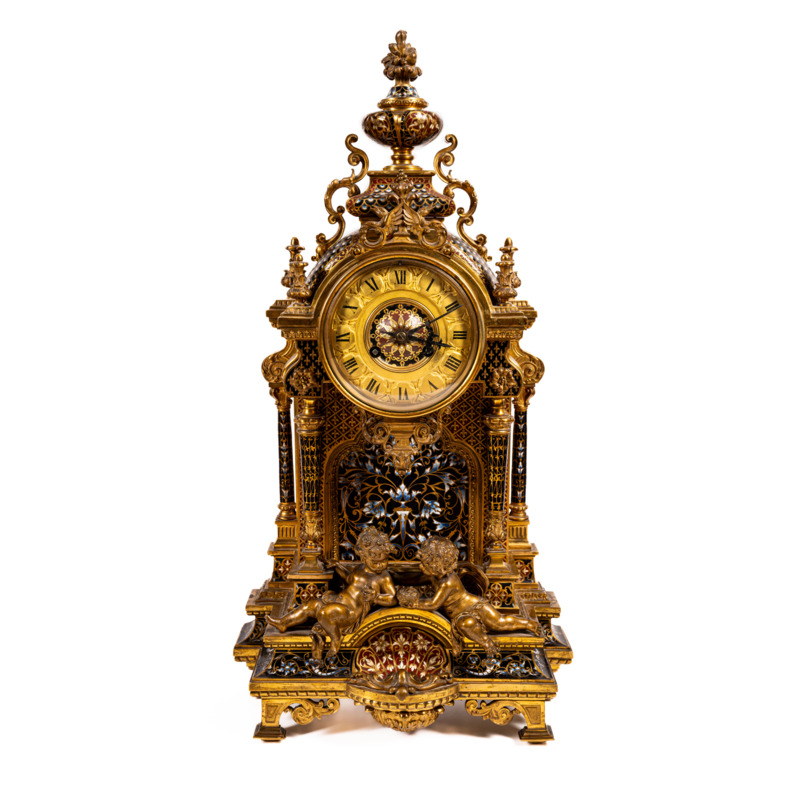
Alfred Nobel's brother Ludvig Nobel gave this table clock to the shipbuilder Sven Almqvist around 1880. It was a token of his gratitude for Almqvist's contribution to the development of oil tankers for the Nobel brothers' oil industry in Baku, Azerbaijan.
Sven Almqvist and Ludvig Nobel together designed the world's first oil tanker, Zoroaster. At the time, Almqvist was the technical manager of Motala verkstad. He had to cancel his honeymoon to travel at short notice to Russia to meet Nobel and discuss the new ship's construction. Zoroaster was built at Motala varv in 1878, under Almqvist's management. Zoroaster was named after the prophet and philosopher Zarathustra, whose teachings were widely read in Baku. The order was followed by several more for tankers for the Nobel brothers' oil company.
The Nobel family often gave generous gifts to their friends and business associates. The table clock is just one example. It was probably made in Saint Petersburg.
The clock was donated to the Nobel Prize Museum by Sven Almqvist's granddaughter Karin Lange in 2024.
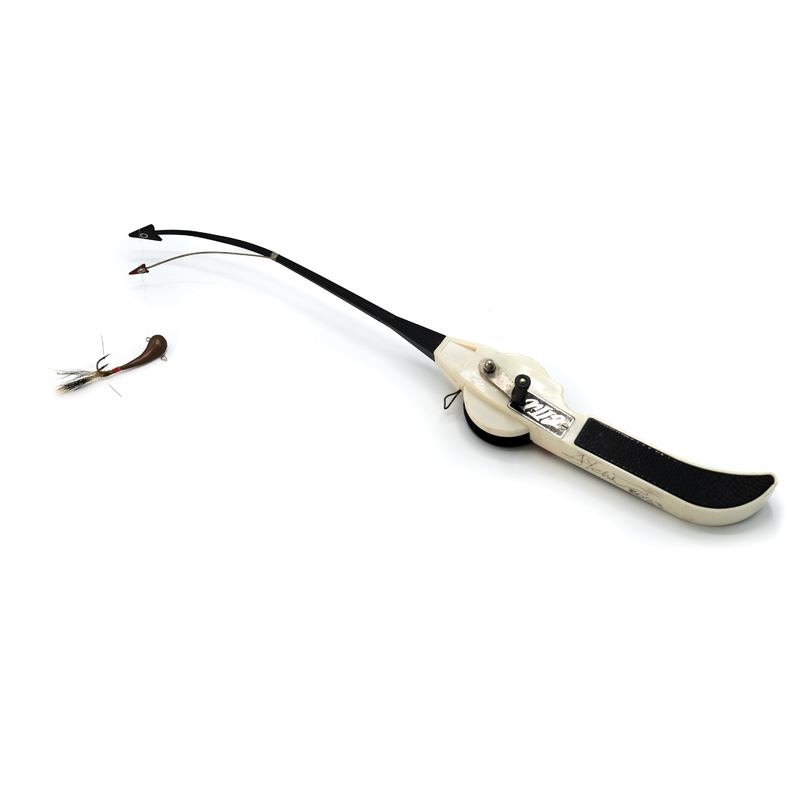
This fishing rod for winter fishing belonged to Aleksey Yekimov. Fishing is one of Yekimov's favourite pastimes.
Aleksey Yekimov donated the fishing rod to the Nobel Prize Museum in 2024.
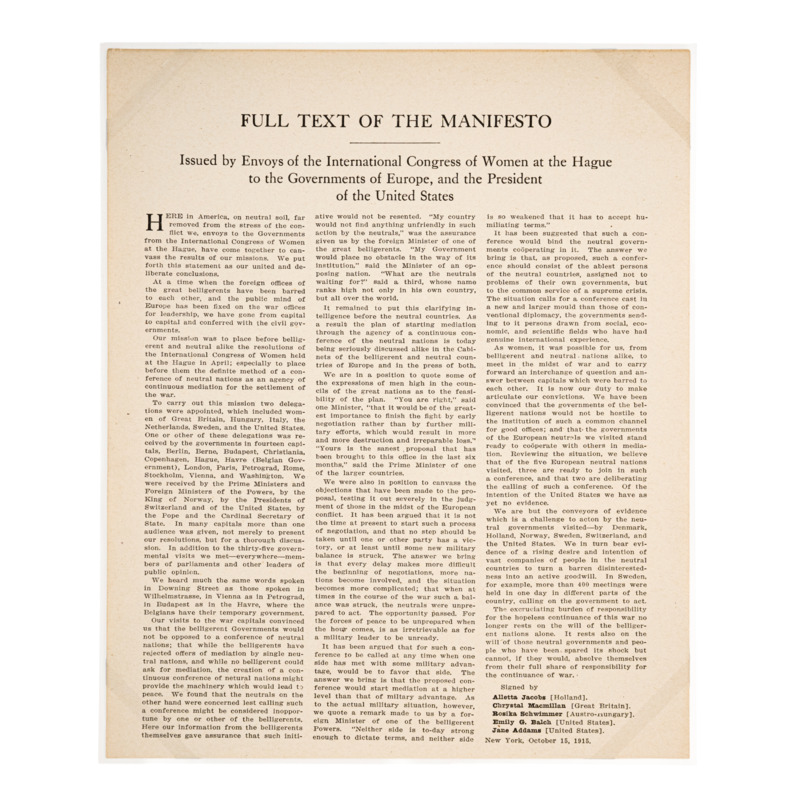
In this manifesto from October 1915, women from different countries call for immediate peace negotiations in the ongoing First World War. Among the five signatories are two future Nobel Peace Prize laureates: Jane Addams and Emily Greene Balch.
The Manifesto originated in the International Women's Congress in The Hague in 1915. The Congress had more than 1,100 participants and led to the formation of the Women's International League for Peace and Freedom with Jane Addams as its first president. The manifesto describes how, after the congress, delegations visited 14 capitals of belligerent and neutral countries to try to bring about peace negotiations.
"As women, it was possible for us, from belligerent and neutral nations alike, to meet in the midst of war and to carry forward an interchange of question and answer between capitals which were barred to each other."
The manifesto emphasized that the countries that were outside the war also had a responsibility:
"The excruciating burden of responsibility for the hopeless continuance of this war no longer rests on the wills of the belligerent nations alone. It rests also on the will of those neutral governments and people who have been spared its shock but cannot, if they would, absolve themselves from their full share of responsibility for the continuance of war."
The manifesto was acquired by the Nobel Prize Museum in 2024.
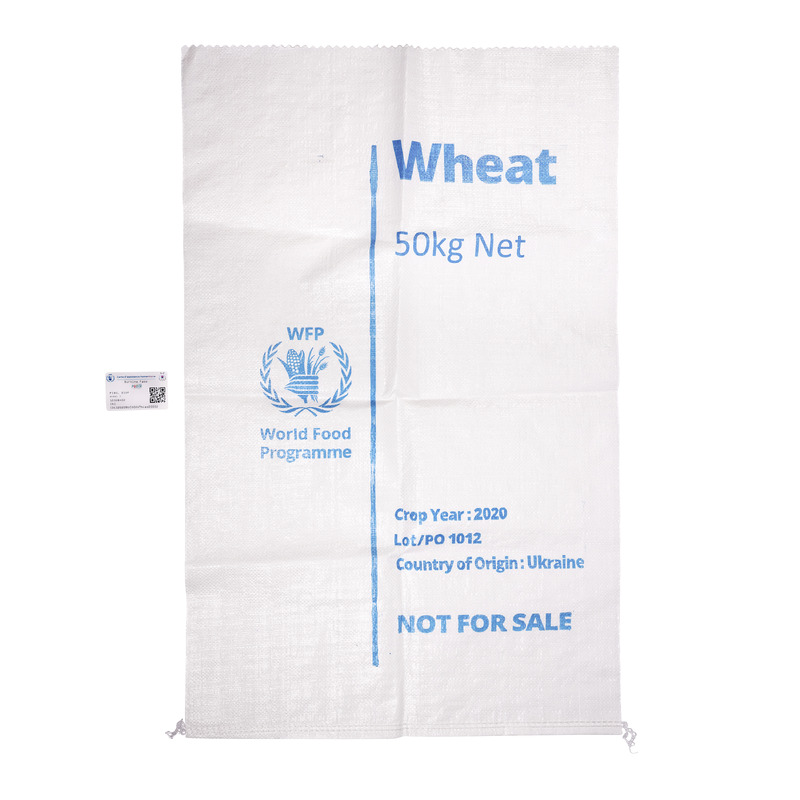
A wheat sack and a food ration card show us how the UN World Food Programme helps people who are suffering food shortages due to war, conflicts or other crisis situations. The sack is labelled as wheat harvested in Ukraine in 2020. It symbolises the traditional way of providing aid by distributing food rations. The ration card is a newer way of distributing food to those in need. It serves as a voucher or coupon that can be used to pay for food in a shop or market. This gives the recipients more independence and dignity, while supporting local communities and businesses. The ration cards are usually handed out to women, who are responsible for the children in families that need aid.
The sack and the ration card were donated to the Nobel Prize Museum by Cindy McCain when she visited the Museum as the executive director of the WFP in 2024.
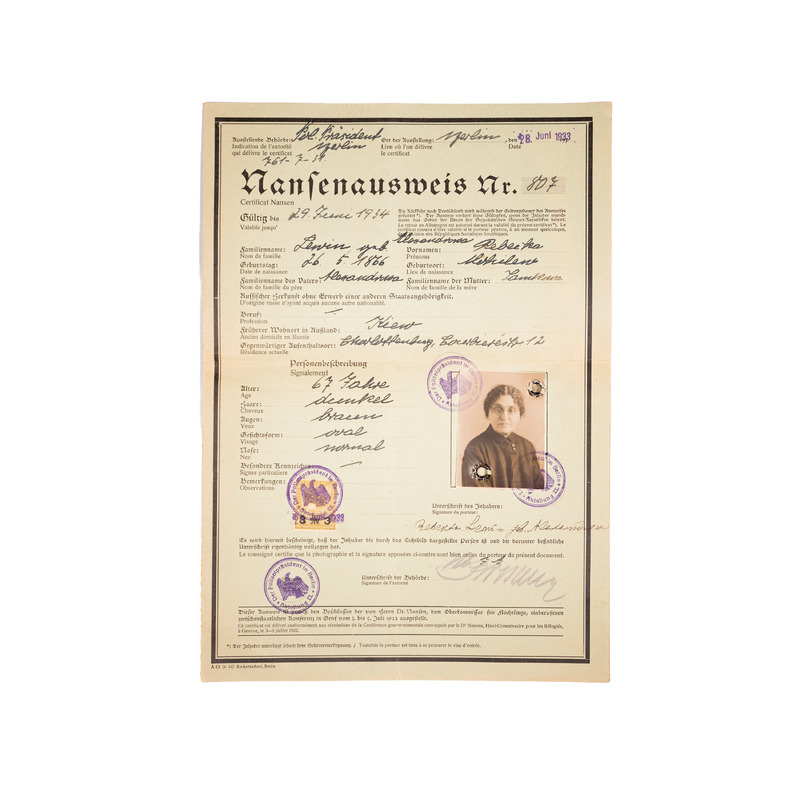
This Nansen passport was issued in Germany in 1933 to a woman born in Russia.
The Nansen passports, created according to an idea by Fridtjof Nansen, enabled many refugees in the 1920s and 1930s to travel.
After the First World War, conditions were chaotic in many places in Europe. National borders were redrawn and hundreds of thousands of people were displaced. Most of them were Russians who had become stateless and could not obtain passports to travel. Nansen was assigned by the League of Nations to negotiate with the various parties and promoted his idea for special passports to be issued. The Nansen passports were largely recognised internationally.
This Nansen passport was acquired by the Nobel Prize Museum in 2024.
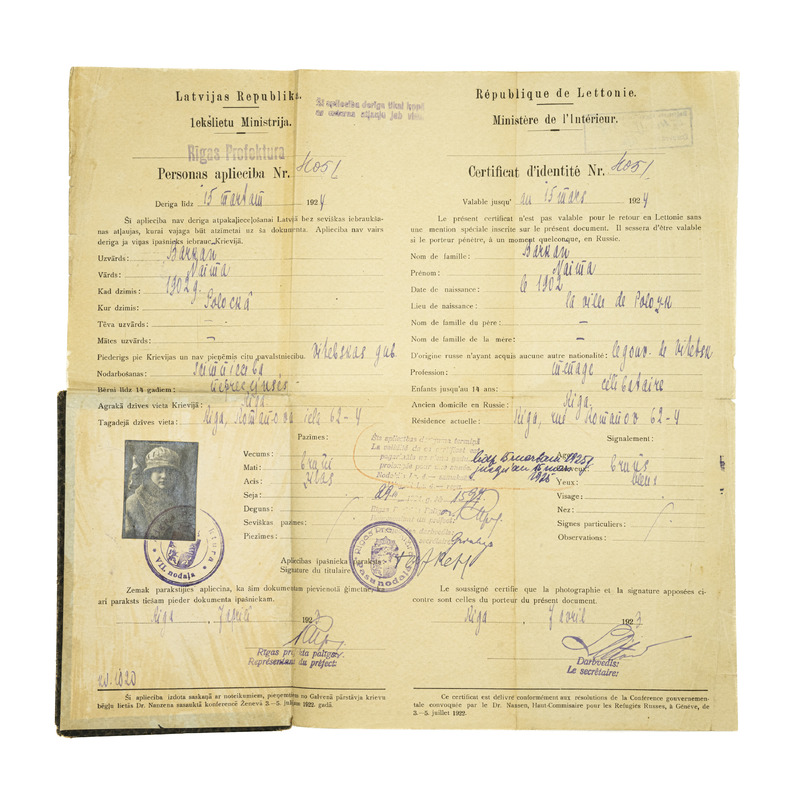
This passport was issued in Latvia in 1923 to a young woman born in Russia.
The Nansen passports, created according to an idea by Fridtjof Nansen, enabled many refugees in the 1920s and 1930s to travel.
After the First World War, conditions were chaotic in many places in Europe. National borders were redrawn and hundreds of thousands of people were displaced. Most of them were Russians who had become stateless and could not obtain passports to travel. Nansen was assigned by the League of Nations to negotiate with the various parties and promoted his idea for special passports to be issued. The Nansen passports were largely recognised internationally.
This Nansen passport was acquired by the Nobel Prize Museum in 2024.
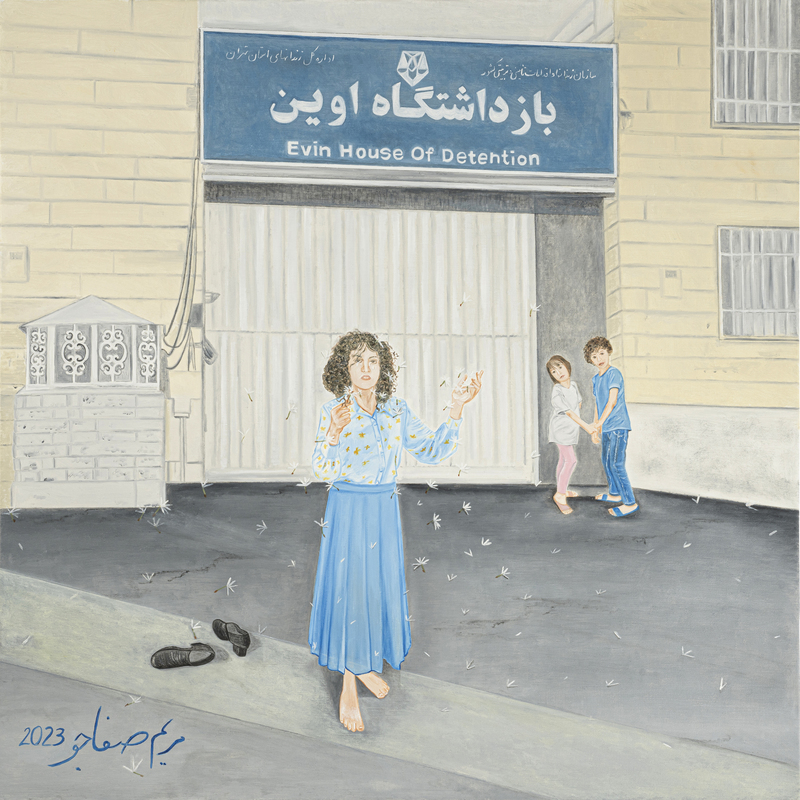
The subject of the painting "A Multitude of Separations" by the artist Maryam Safajoo is Narges Mohammadi and her two children, from whom she was separated during her time in prison. It was made after talking to people who are close to Mohammadi. Safajoo cites a letter from Mohammadi, written in prison:
“More than 8 years have passed since I last laid eyes on Kiana and Ali, and it's been a year and a half since their voices graced my ears. When they departed, they were merely 8 years old; now, they stand at the ripe age of 16. The moment I bid farewell to Ali and Kiana felt akin to a personal demise amidst the lush, tree-adorned courtyard of Evin. I meticulously gathered dandelions from the expansive stretch of Evin's garden. Standing barefoot on the July 14 asphalt, my feet scorched while my heart blazed with fervor. I released the dandelions into the sky, their hands, feet, and innocent countenances fading from my sight as my tears flowed like the gentle rain of spring descending upon the earth. If I peer at the prison through the window of my heart, I have become an estranged soul, more foreign than any outsider, to my beloved daughter and son. I've relinquished the prime years of existence, knowing that what's bygone shall never return. Nevertheless, I am unwavering in my belief that a world devoid of freedom, equality, and peace isn't a life worth living or even beholding.”
After Maryam Safajoo had finished the painting, she was informed that Narges Mohammadi had seen a picture of the painting in prison and was very grateful.
The painting was donated to the Nobel Prize Museum by Maryam Safajoo in 2024.
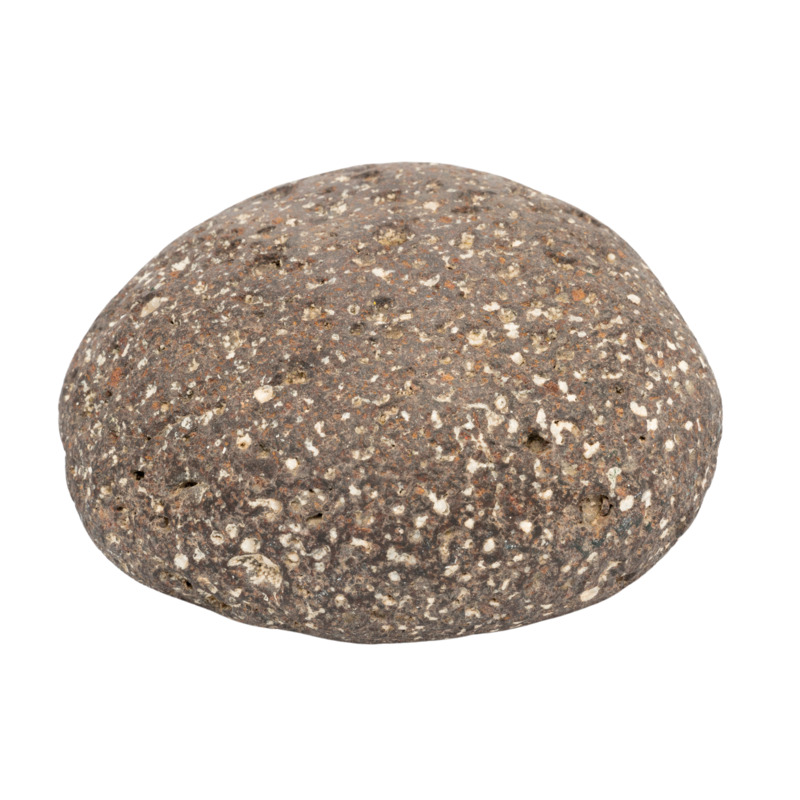
This stone was very important to José Saramago. Made of volcanic rock, he found it on Lanzarote, where he lived. It had a symbolic meaning to Saramago. He said that up to and including his book Blindness, he was describing people as statues, metaphorically speaking, but then he began to take an interest in the stone, the material that statues are made of.
The stone was donated to the Nobel Prize Museum by the José Saramago Foundation and Pilar del Río in 2024.
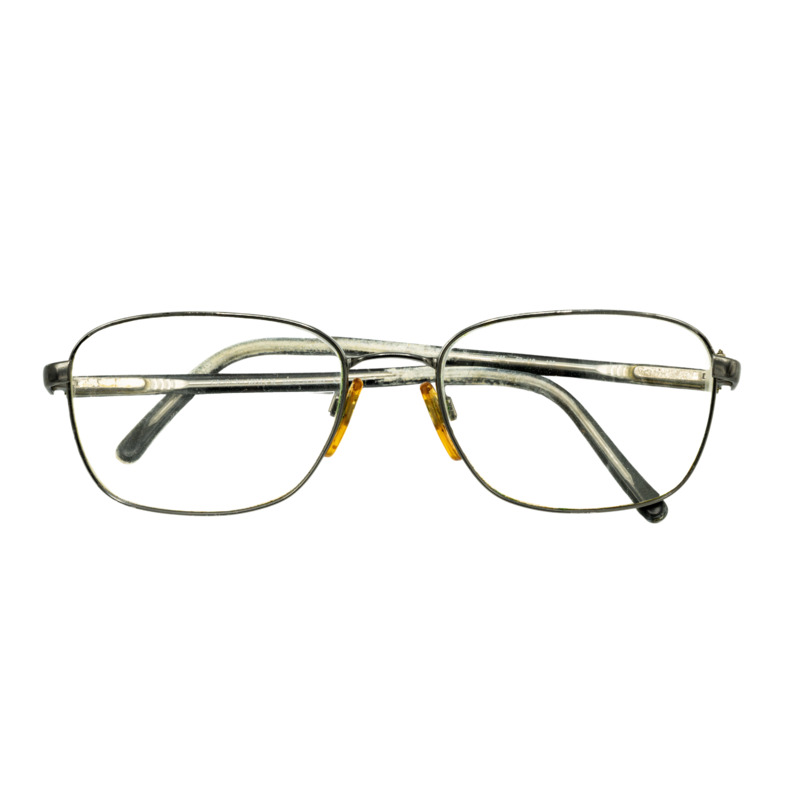
Through these glasses, José Saramago observed the world and the people who lived in it. Perhaps you could say that the images that passed through these lenses eventually appeared in his books!
For Saramago’s nearest and dearest, however, these spectacles are associated with memories and grief. Saramago wore them on his deathbed, and when he died, his wife Pilar del Río removed them.
The glasses were donated to the Nobel Prize Museum by the José Saramago Foundation och Pilar del Río in 2024.
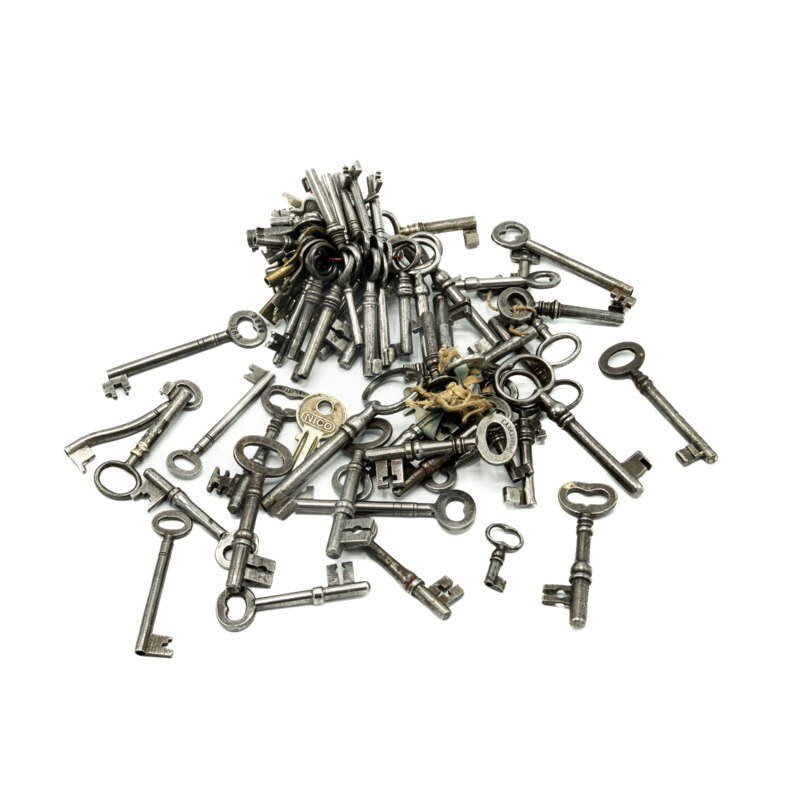
This collection of keys was in an envelope in Eyvind Johnson’s desk drawer. That was where his family found them after his death, and they kept them ever since. His daughter Maria Ekman writes,
“Nobody had known for ages what they went to – they were simply left, like sediments from previous phases in Eyvind’s life. (All of us will have a bunch of keys or two lying around that hasn’t been thrown out yet…) Our family referred to them as “Krilon’s keys”, after a long passage in Krilon själv, the last part of the Krilon trilogy, called “Johannes Krilon’s keys”, where Krilon sists contemplating his life based on a box of old keys.
Now, Eyvind’s keys weren’t in a box. When I eventually took care of them, they were in a plain envelope from the National Library of Sweden, stamped 1966 and addressed to Herr Doktor Eyvind Johnson. And these keys hadn’t belonged to Krilon in real life, but to Eyvind.
One thought that this hoard of keys triggers, with its reality and its simultaneous fictitious link to Krilon, so to speak, is that the Krilon trilogy was written approximately mid-career, after a number of autobiographical books, and before the series of historical novels, thereby pointing both ahead and back in his long literary practice.”
The keys were donated to the Nobel Prize Museum by Eyvind Johnson’s estate in 2024.