
Netsuke
- ID-nummer
- 2025.023.000
- Titel
- Netsuke
- Publik beskrivning
-
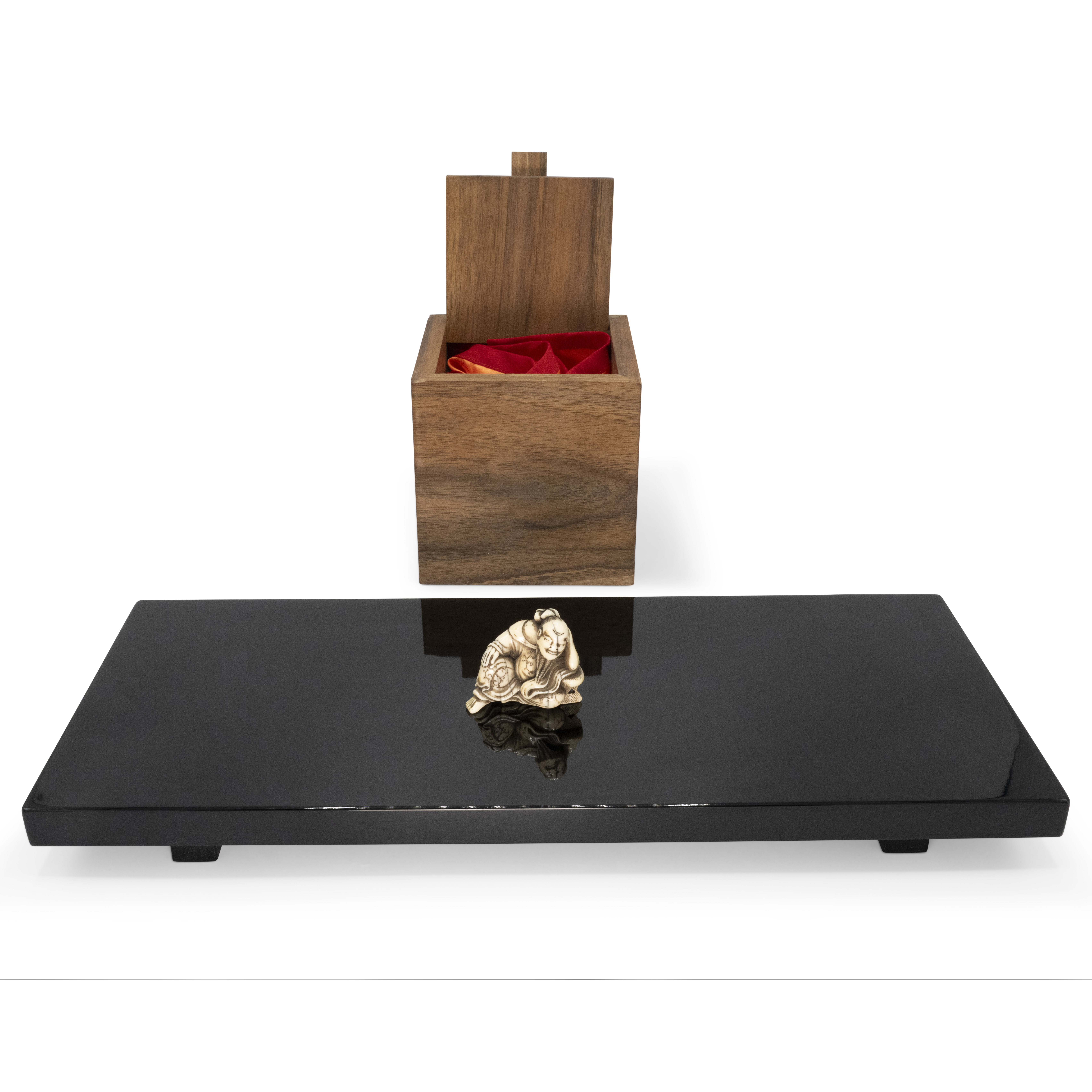
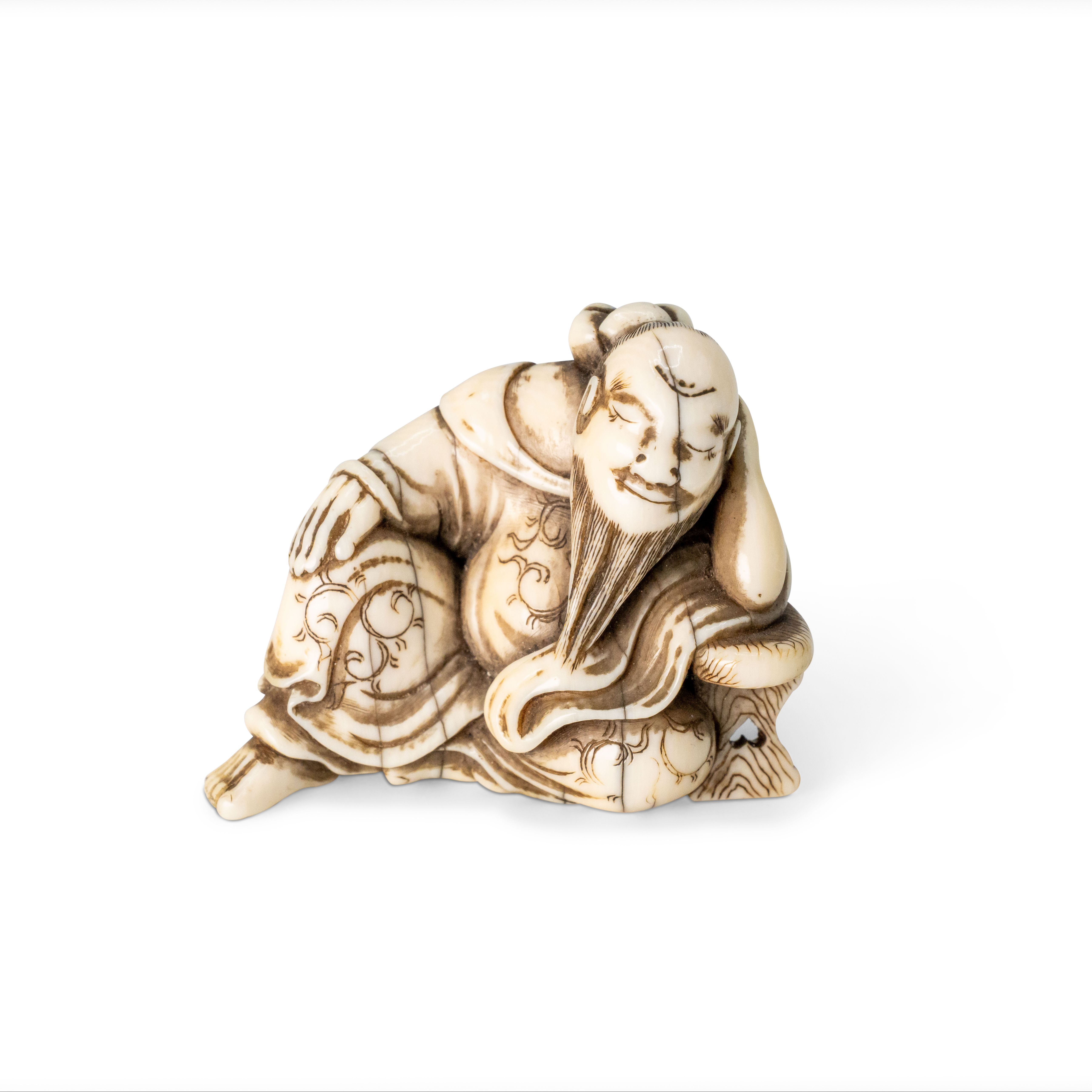

László Krasznahorkai has made numerous trips to China and Japan and written several stories that are set in Japan. On one of his visits, he bought this netsuke, a Japanese miniature sculpture, which has been very important to him.
The netsuke represents a wise old man. The wise man is very calm. The artist has not portrayed him as someone who is contemplating. Instead, he seems to be beyond thinking, since there is no longer any reason for him to think. To be at one with existence is sufficient for him, and this is why the wise man is so peaceful and happy. This also gave Krasznahorkai new insights. After writing his novel War and War, Krasznahorkai experienced a personal crisis and thought he could never write again. Without the wise man, he could never have resumed his writing.
A netsuke was originally a kind of button – it was used to hold clothing such as kimonos together. From the 19th century, netsukes became more ornately crafted. It is not entirely easy to identify the artist who made this netsuke, since several artists worked under the name of Mazakasu. But the originator was probably Mazakasu Sawaki, who was born in Nagoya but lived and worked in Osaka for most of the late 1800s. Krasznahorkai bought the netsuke from the artist’s family.
László Krasznahorkai donated the small figurine of the wise man to the Nobel Prize Museum in 2025, thanking the museum for keeping it safe even when he is no longer alive.
“It is so vulnerable, so small. It can be lost, it can be broken. But if it can remain here, I will be at peace.” - Pristagare
- László Krasznahorkai
Part of Netsuke