-
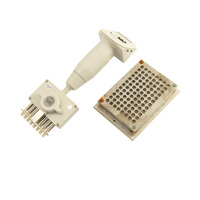 Test plate and pipette
 This plate with wells for 96 different samples was especially made for Frances Arnold’s experiments with enzymes. By lowering the plate into a water bath near boiling point, the test series could be kept hot, to examine the ability of the various enzymes to facilitate chemical reactions at high temperatures. The distances between the wells correspond to those between the tips of a pipette that was used to produce eight samples simultaneously. In later experiments, plates with wells could be purchased ready-made. The researchers then used this plate simply as a weight to hold down materials in the water bath.
Frances Arnold donated the test plate and the pipette to the Nobel Prize Museum in 2018.
-
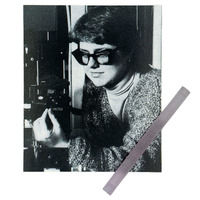 Photograph and laser rod
 Donna Strickland’s Nobel Prize-awarded work involves creating extremely short and intense laser pulses. She used this laser rod in her experiments. It consists of glass treated with neodymium and was used to create infrared laser light. Strickland did her work when she was still a doctoral student at the University of Rochester.
Donna Strickland donated the photograph and laser rod to the Nobel Prize Museum in 2018.
-
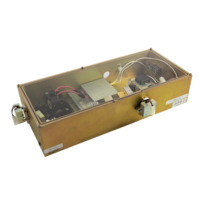 Laser amplifier
 During an experiment, a laser beam happened to hit one of Gerard Mourou’s students in the eye. When a doctor examined the damage, he asked which laser had caused it. When Mourou wondered why, he replied: “The injury is perfect!” The idea of using this type of laser as a precision instrument for eye surgery was born. This laser amplifier for use in eye surgery was developed at the University of Michigan in 1998.
Gerard Mourou donated the laser amplifier to the Nobel Prize Museum in 2018.
-
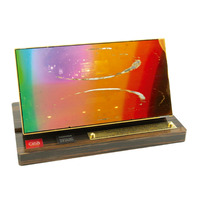 Diffraction grating
 This “diffraction grating” is a glass sheet covered with a thin film of gold. The many microscopic lines in the surface split light into various wavelengths when it is reflected. Gerard Mourou used this diffraction grate to first spread out a laser pulse, then amplify it, and finally transform it into a short laser pulse far more intense than the original. The damage to the surface is from experiments with laser light that was too powerful.
Gerard Mourou donated the diffraction grating to the Nobel Prize Museum in 2018.
-
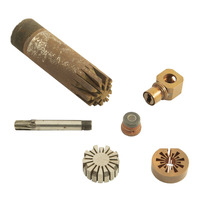 Magnetrons
 Even in his youth, Arthur Ashkin was fascinated by the possibility of moving objects using light. In the early 1940s, he worked on building magnetrons for the U.S. military radar system. Magnetrons produce microwaves, which, like visual light, are a form of electromagnetic radiation. Ashkin tried to move objects using radiation but did not achieve any unequivocal results. Many years later, he succeeded by using laser light instead. These experiments gave rise to optical tweezers.
Arthur Ashkin donated the magnetrons to the Nobel Prize Museum in 2018.
-
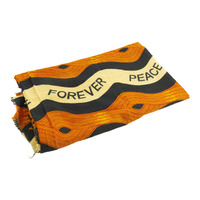 Clothing fabric
 Leymah Gbowee used this fabric in protests to put an end to a devastating civil war in Liberia. In 2002, she assembled women of different ethnic and religious affiliations to protest against violence. The women gathered at a fish market in Monrovia, all wearing white T-shirts and lappas, a traditional Liberian clothing wrapped around the midriff. This is a lappa of that kind.
Leymah Gbowee donated the fabric to the Nobel Prize Museum in 2018.
-
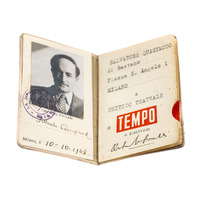 Journalist ID
 Salvatore Quasimodo’s journalist ID has him down as a theatre critic at the magazine Tempo. Quasimodo first studied to be an engineer and worked a few years in that field, but he had always been writing poetry and focused entirely on literature from 1938, as a poet, translator and editor.
The journalist ID was donated to the Nobel Prize Museum by the Quasimodo family in 2018.
-
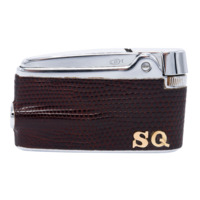 Lighter
 This lighter belonged to Salvatore Quasimodo and bears his initials in gold.
The lighter was donated to the Nobel Prize Museum by the Quasimodo family in 2018.
-
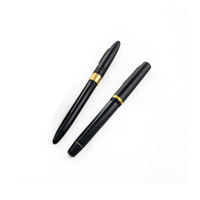 Fountain pens
 These pens belonged to Salvatore Quasimodo.
The pens were donated to the Nobel Prize Museum by the Quasimodo family in 2018.
-
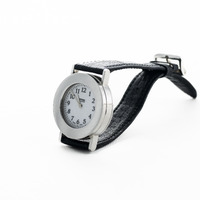 Wristwatch
 Armbandsuret är ett av många som ingick i Gabriel García Márquez samling. De olika utformningarna och materialen var en referens för de armbandsur som han lät sina karaktärer bära.
Armbandsuret donerades till Nobelprismuseet av Gabriel García Márquez efterlevande 2018.
-
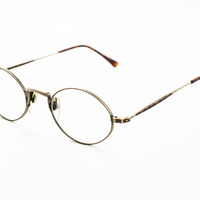 Glasses
 Gabriel García Márquez’ sons convinced their father to wear these small bifocals. They would tell him that these glasses were more modern and youthful. He wore them on several occasions, but he preferred larger glasses.
The eyeglasses were donated to the Nobel Prize Museum by Gabriel García Márquez’ family in 2018.
-
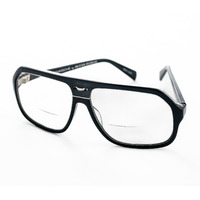 Glasses
 Gabriel García Márquez used this type of large bifocals while working. According to him, these eyeglasses made him forget he had presbyopia, which causes poor near vision, because they covered his entire field of vision.
The eyeglasses were donated to the Nobel Prize Museum by Gabriel García Márquez’ family in 2018.
-
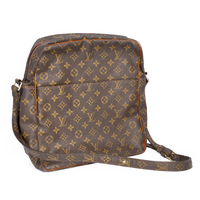 Handbag
 Väskan har tillhört Gabriel García Márquez. Väskan väckte många minnen till liv hos hans hustru Mercedes Barcha: ”I mer än 30 år såg jag honom bära denna väska på varenda en av våra resor. I väskan lade han alltid en bok, dagens tidning. ett anteckningsblock och en penna.”
Väskan har donerats till Nobelprismuseet 2018.
-
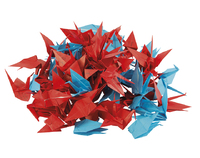 1000 paper cranes
 These 1,000 paper cranes are hand-folded by schoolchildren. They were donated by ICAN, the International Campaign to Abolish Nuclear Weapons. On the 468 red paper cranes are the names of ICAN’s member organisations. Paper cranes have become a symbol of the innocent victims of nuclear weapons. The reason is the story of Sadako Sasaki, who suffered from leukaemia after the atom bomb was dropped on Hiroshima. According to Japanese folklore, folding 1,000 paper cranes will grant you a wish and good luck. When Sadako became ill, she started folding cranes. Despite folding more than a thousand cranes, she passed away when she was only 12 years old.
ICAN donated the paper cranes to the Nobel Prize Museum in 2017.
-
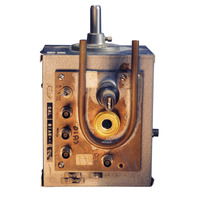 Photodetector
 Rainer Weiss var en pionjär inom projektet LIGO där gravitationsvågor studeras. I ett tidigt skede av projektet byggde han denna prototypdetektor för att mäta hur laserstrålar förskjuts i förhållande till varandra på grund av gravitationsvågor.
Begreppet gravitationsvågor har sin grund i Einsteins allmänna relativitetsteori. Gravitationsvågor innebär att rumtiden utvidgas och krymper, men förändringar är mycket små och svåra att mäta.
Rainer Weiss donerade prototypdetektorn till Nobelprismuseet 2017.
-
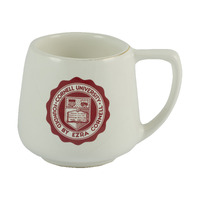 Mug
Mug Richard Thaler’s research demonstrates that we do not always think and act in a completely rational way in economic matters. This mug is one of several mugs used for an experiment in 1991 about how we value things. Some research subjects received mugs as gifts while others did not. When the research subjects were asked to evaluate the mugs, it turned out that those who received a mug gave it a higher value than those that did not receive one. This mug was never given away and is the only one remaining of those used in the experiment.
Richard Thaler donated the mug to the Nobel Prize Museum in 2017.
-
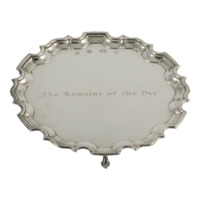 Tray
Tray At the filming of _Remains of the Day_, this tray was used as a prop. The story is set in an upper-class environment, and the main character is a butler. The film was based on Kazuo Ishiguro’s same-titled book. When Ishiguro visited the film set, he took the tray with him as a memento. Another memory from the filming was that Ishiguro had lunch with the actors and was seated behind two of cinematic history’s most legendary actors: Anthony Hopkins (the serial killer Hannibal Lecter) and Christopher Reeve (Superman).
Kazuo Ishiguro donated the tray to the Nobel Prize Museum in 2017.
-
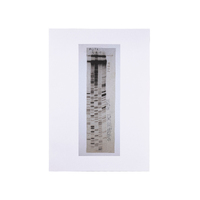 DNA sequencing images, photographic copies
 DNA molecules contain the code for the properties of an organism. These images were created by Frederick Sanger, who devised a method for determining the genetic code. More precisely, the sequence of nucleotides in DNA is determined by reading the bands in the picture.
The photographs were presented to the Nobel Prize Museum in 2017 by Richard Henderson, chemistry laureate this year. Sanger and Henderson were both affiliated to the MRC Laboratory of Molecular Biology in Cambridge, UK.
-
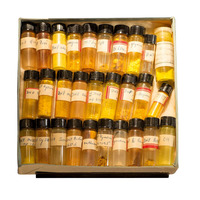 DNP-derivatives of amino acids
 Frederick Sanger used this set of 29 DNP-derivatives of different amino acids to study the composition of the insulin molecule. They have different colours, and can be used to determine which amino acids a sample is composed of. These samples were used to calibrate the measuring instruments.
Proteins are large molecules that are essential to the life processes of our cells. They consist of chains of amino acids.
The samples were presented to the Nobel Prize Museum in 2017 by Richard Henderson, chemistry laureate this year. Sanger and Henderson were both affiliated to the MRC Laboratory of Molecular Biology in Cambridge, UK.
-
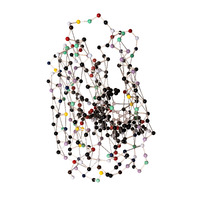 Model of bacteriorhodopsin
 The molecular model shows the structure of the protein bacteriorhodopsin, which was discovered by Richard Henderson.
Bacteriorhodopsin is embedded in the bacterium’s cell membrane. Its function is to pump hydrogen ions from the inside to the outside of the membrane.
Richard Henderson donated the model and the map to the Nobel Prize Museum in 2017.
-
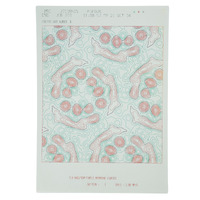 Map of bacteriorhodopsin
 This map shows the structure of the protein bacteriorhodopsin. The map was created in 1974 by Richard Henderson, using groundbreaking methods.
Richard Henderson donated the map to the Nobel Prize Museum in 2017.
-
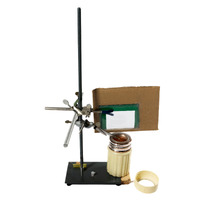 Apparatus
 This apparatus was used by Jacques Dubochet in the 1980s in experiments to create images of biological molecules.
With the electron microscope, it is possible to create images of objects as small as molecules. One problem with biological molecules, however, is that they dry out and are destroyed in the vacuum needed in the electron microscope. Ice crystals also distort the image. To avoid this, Dubochet designed this apparatus, which freezes water so quickly that ice crystals do not have time to form. The samples were lowered into a cold liquid using an arm with a pair of tweezers. At first, liquid nitrogen was used, but this was later replaced by liquid ethane.
Jacques Dubochet donated the apparatus to the Nobel Prize Museum in 2017.
-
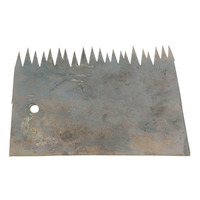 Light baffle
 Kip Thorne has mainly worked on the theoretical aspects of how gravitational waves can be observed in the large LIGO facilities. This metal plate is a more practical contribution to the experiments, however. The plate is used as a baffle to screen off intrusive light during the observations. The heights of the plate’s “teeth” are random in a conscious way; they vary according to statistical normal distribution. This makes it possible to effectively eliminate intrusive light.
Kip Thorne donated the light baffle to the Nobel Prize Museum in 2017.
-
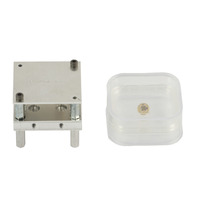 Photodetectors from LIGO
 Barry Barish var ledare för LIGO-projektet där detektorer som registrerar förskjutningar i laserljus är centrala delar i instrumenten. Detta är de två detektorerna som användes i de två LIGO-anläggningarna i Hanford, Washington och Livingston, Louisiana, när gravitationsvågor 2015 registrerades för första gången.
Barry Barish donerade detektorerna till Nobelprismuseet 2017.
-
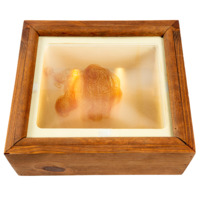 Contour maps of a ribosome
 This stack of contour maps represents the first clear three-dimensional image of the large subunit of the ribosome from the E. coli bacterium. Ribosomes are large molecules in the cells of all organisms. Their function is to make proteins by translating the genetic messages. The stack of maps was reconstructed in 1986 from many electron microscope images of individual large subunits lying in random orientations, using ideas and computer programs that Frank and his colleagues had developed over a period of 10 years. For a long time, these plastic maps lay around in Frank’s office until the husband of one of his postdoctoral students, a craftsman, offered to mount them in this wooden box for back-lit display.
Joachim Frank donated the contour maps to the Nobel Prize Museum in 2017.
-
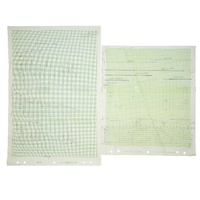 Graph
Graph These graphs are the result of Michael Young’s research into how the circadian rhythm of organisms is regulated by particular genes in our cells. In his studies, Michael Young used fruit flies. The graphs, from 1984, show the cyclical nature of activity and rest in fruit flies with different genomes.
Michael Young donated the graphs to the Nobel Prize Museum in 2017.
-
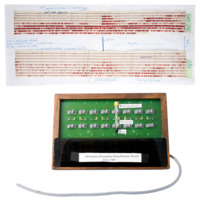 Experiment apparatus
 Jeffrey Hall designed this device in the early 1980s to study how fruit flies follow the fluctuations of day and night. The circadian rhythm is rooted in the genes of both animals and plants. With this device, Hall and Michael Rosbash could record the activity of fruit flies with genetic variations. The flies were placed in small compartments. To register their movements, the researchers used beams of infrared light that were broken when a fly passed.
The graph shows the activities of the fruit flies.
Jeffrey Hall and Michael Rosbash donated the apparatus and the graph to the Nobel Prize Museum in 2017.
-
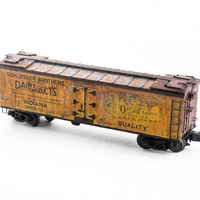 Freight car from model train set
 Does playing provide vital stimulus for both young and old? This is how Louis Ignarro describes a model train car that he made:
“This is a freight car from my current toy train set. As a very inquisitive young child growing up in New York City, I was fascinated with model toy trains. My father bought me my first train set when I was 8 years old. Being a carpenter by trade, my dad built a large table in our basement for me to build a model train layout. Dad was quite impressed with my ability to learn electrical wiring, modelling scenery, and weathering objects at the age of only 8 years. He fuelled my passion for this hobby by buying me more trains on a regular basis over the next few years, which led to expansion of my layout throughout the entire basement. Such a technically demanding hobby motivated me to study hard in school, especially science and mathematics. After a time lapse of 55 years, I’ve taken up the demanding hobby once again, and love it. Represented here is a freight boxcar, which I’ve weathered to simulate the original 1944 vintage boxcar.”
Louis Ignarro donated the freight car to the Nobel Prize Museum in 2017.
-
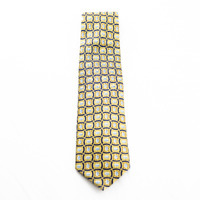 Silk tie with Viagra pills pattern
 This is how Louis Ignarro describes this tie with a pattern of Viagra tablets:
“This special tie was fabricated just for me and presented to me by a representative of the Pfizer Pharmaceutical Company in New York City. The tie subtly depicts dozens of blue ‘VIAGRA’ tablets scattered throughout the tie. The significance of the tie is that my laboratory, in 1992, reported that the long sought-after neurotransmitter that causes penile erection is nitric oxide (NO). Based on our work, Pfizer developed and marketed Viagra, which works by increasing the erectile action of NO. Interestingly, Viagra was approved and marketed in April 1998, and the Nobel Prize for our research on nitric oxide was announced only a few months later, in October 1998. Amusingly, I am often referred to as the Father of Viagra.”
Louis Ignarro donated the tie to the Nobel Prize Museum in 2017.
-
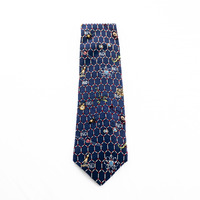 Silk tie with nitric oxide pattern
 This is how Louis Ignarro describes this tie with a pattern of chemical structures:
“This special tie was fabricated just for me and presented to me at a Nitric Oxide conference held in 1999 in celebration of the 1998 Nobel Prize in Physiology or Medicine. The tie depicts a pattern of chemical structures, also showing the chemical symbol for nitric oxide, which is NO. I wore this tie at many nitric oxide conferences that followed. The significance of the tie is that my laboratory originally discovered in 1986 that our bodies produce NO to maintain cardiovascular health. This discovery resulted in the Nobel Prize.”
Louis Ignarro donated the tie to the Nobel Prize Museum in 2017.
-
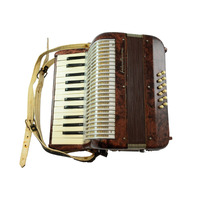 Accordion
 Music and science play an important part in Louis Ignarro’s life. This is how he describes his accordion:
“This is a 1944 model Fontanella Pesaro accordion made originally in Napoli, Italy, the birthplace of my father. My parents presented it to me on my 6th birthday in May of 1947 in New York City, where we resided. After quickly learning to play by ear without any instruction, my parents had me take professional lessons. Within a few years, I became proficient enough to play at traditional Italian weddings and parties. Playing the accordion in front of large crowds gave me greater confidence to interact with adults. Moreover, learning to play music composed by Vivaldi, Mozart, and Bach led me to appreciate the scientific approach taken by such scholars in composing their masterpieces. Playing such music on my accordion motivated me toward the field of science. In the 40 plus years of my scientific career, I routinely listened to the compositions of Vivaldi, Mozart and Bach while working. I attribute my career success in large part to that little accordion that I started playing at the age of 6 years.”
Louis Ignarro donated the accordion to the Nobel Prize Museum in 2017.
-
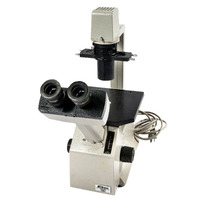 Microscope
 During a period in the 1970s, Ralph Steinman used this microscope several times a day to study the reactions of white blood cells. Steinman’s research related to how our immune system defends the body against foreign substances and microorganisms. The study in which he used the microscope was part of the work that was awarded the Nobel Prize.
Ralph Steinman died a couple of days before the Nobel Prize was announced in October 2011. It was decided long ago that a Nobel Prize can only be awarded to people who are alive, but word of his death had not reached the Nobel Assembly at the Karolinska Institute, and the decision was made to let Steinman be represented by his family at the Nobel Prize ceremony.
The microscope was presented to the Nobel Prize Museum in 2017 by Maggi Pack, a colleague of Ralph Steinman at Rockefeller University.
-
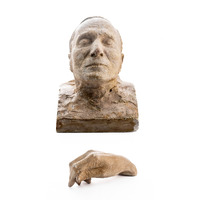 Death mask and hand casting
 This is a sculpture of Boris Pasternak, who died at his dacha in Peredelkino outside Moscow in May 1960. The family agreed they wanted a sculptor to capture his final facial expression. They contacted a family acquaintance, the sculptor Zinovi Vilensky. Alone in the room with the deceased, Vilensky made these sculptures of Pasternak’s face and hands over the ensuing days.
The sculptures were donated to the Nobel Prize Museum by Vera Kovalskaya, a great-grandchild of Pasternak, and her husband Artem Platov. Kovalskaya sees capturing the final facial expression of a person as a contribution to history rather than anything personal. For this reason, she felt it was appropriate to donate the sculptures to the Nobel Prize Museum.
-
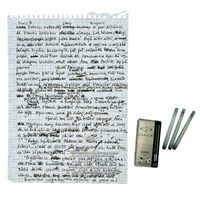 Manuscript page and ink cartridges
 On a visit in 2017, Orhan Pamuk donated ink cartridges and a manuscript page from the book he was writing to the Nobel Prize Museum. Boken heter Nights of Plague and was published in 2021. At the time, the Covid-19 pandemic was underway, but work on the book had begun several years earlier.
Pamuk writes his books in longhand with a fountain pen. He writes slowly, one or two sentences at a time, and then thinks for several minutes about the next sentence. He uses black ink and makes corrections in other colours. This makes it easier to follow the writing process, as he has the old versions available and can easily compare them.
-
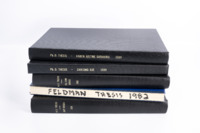 Theses
 Avhandlingarna är tillkomna vid Molecular Biology Institute vid University of California Los Angeles. Ett fruktbart utbyte med doktorander och andra kolleger var av stor vikt för den forskning som gav institutets förste föreståndare, Paul Boyer, Nobelpriset. Avhandlingarna handlar liksom Boyers Nobelprisbelönade forskning om hur den energirika molekylen ATP (adenosintrifosfat) bildas i kroppens celler. I sin Nobelföreläsning refererade Boyer bland annat till artiklar han producerat tillsammans med avhandlingarnas författare: Karen Justine Guerrero, Richard I Feldman, Jill Ann Myers, Gary Rosen och Zhixiong Xue.
Avhandlingarna överlämnades till Nobelprismuseet 2017 av professor Steve Clarke, University of California Los Angeles, vars kontor en gång var Paul Boyers kontor.
-
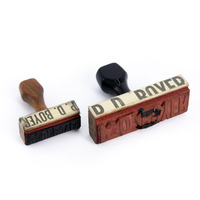 Rubber stamps
 Stämplarna användes av Paul Boyer i arbetet på hans kontor. Som föreståndare för ett stort forskningsinstitut hade Paul Boyer många dokument att signera och hålla reda på. Stämplarna gjorde förmodligen arbetet mer effektivt.
Molekylärbiologin blev under 1960-talet allt mer storskalig. Boyer ledde verksamheten vid Molecular Biology Institute vid University of California Los Angeles från dess grundande 1965 till 1983. Uppbyggnaden av institutet innefattade såväl ett forskarutbildningsprogram gemensamt för flera institutioner som en ny byggnad.
Stämplarna överlämnades till Nobelprismuseet 2017 av professor Steve Clarke, University of California Los Angeles, vars kontor en gång var Paul Boyers kontor.
-
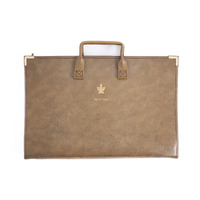 Briefcase
 Portföljen användes av Paul Boyer för att ta med sig anteckningar och dokument till möten vid University of California Los Angeles. Som föreståndare för ett molekylärbiologiskt forskningsinstitut behövde Boyer delta i många möten vid sidan av den egna forskningen. Troligen hade han fått väskan vid en vetenskaplig konferens utomlands.
Portföljen överlämnades till Nobelprismuseet 2017 av professor Steve Clarke, University of California Los Angeles, vars kontor en gång var Paul Boyers kontor.
-
 Stone from the bridge on the Drina
 The stone comes from the large stone bridge in Višegrad in Bosnia-Herzegovina. The bridge is at the heart of Ivo Andrićs most important work, The Bridge on the Drina. In the novel the bridge is the backdrop for a series of stories spanning several centuries. The book captures a range of human destinies and casts light upon the encounters and frictions between different cultures and religions.
The stone was presented to the Nobel Prize Museum by Igor Crnadak, Minister of Foreign Affairs of Bosnia and Herzegovina in 2017.
-
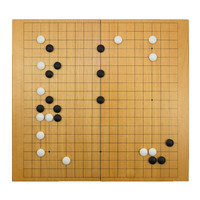 Go board
 Go is an ancient Chinese board game. This board belonged to Bengt Holmström, who lists game theory as one of his interests in economic science. The game has simple rules, such as allowing players to lay down only one stone at a time, but involves very complicated strategies. Holmström practises in the US, where he has a Go game. This one belonged to him when he was still living in Finland, where he also played Go with his friends.
Bengt Holmström donated the Go game to the Nobel Prize Museum in 2016.
-
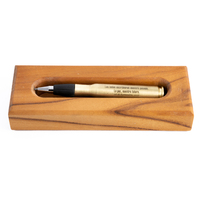 Pen made from shell casing
 This pen is identical to the one used when a peace agreement between the Colombian government and the FARC guerrilla was signed in 2016. The pen is made from a cartridge case of a bullet that was used in the long-lasting conflict in Colombia. It bears an inscription: “Bullets wrote our past, and education will write our future.” This is also what President Juan Manuel Santos said when handing the pen to the guerrilla leader Timoleón Jiménez.
The pen was designed by Christian Mondragón and created as part of a project led by Colombia’s Ministry of Education and the advertising agency McCann. The pen is a symbol of a shift in focus from military conflict to education.
Juan Manuel Santos donated the pen to the Nobel Prize Museum in 2016.
-
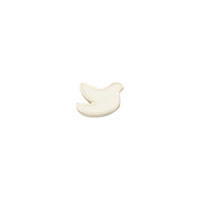 Pin button
 Juan Manuel Santos wears a button with a dove on his jacket lapel daily. The emblem with the dove was designed for his wife in connection with his presidential campaign in 2010. The insignia is a symbol of the transition from conflict to peace in Colombia. When a peace agreement between Colombia’s government and the FARC guerrilla was signed in 2016, Santos gave an identical button to the guerrilla leader Timoleón Jiménez.
Juan Manuel Santos donated the button to the Nobel Prize Museum in 2016.
-
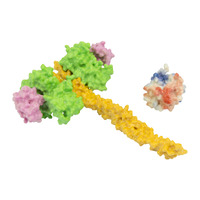 Molecular models
 These models depict molecules that are essential for autophagy. Autophagy means “self-devouring” and is a process in our cells where molecules are broken down and recycled. These structures are composed of "ATG proteins", where ATG stands for "autophagy-related". The club-shaped structure is composed of ATG 12, ATG 15 and ATG 16. The spherical structure depicts the ATG 8 protein.
Yoshinori Ohsumi donated the models to the Nobel Prize Museum in 2012.
-
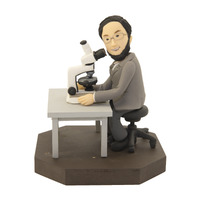 Statuette
 The statuette represents Yoshinori Ohsumi at his microscope when he started his research on autophagy, the process cells use to recycle chemical substances. Ohsumi was a professor at Tokyo University at the time. The statuette was made several years later, and Ohsumi received it as a gift from his colleagues.
Yoshinori Ohsumi donated the statuette to the Nobel Prize Museum in 2012.
-
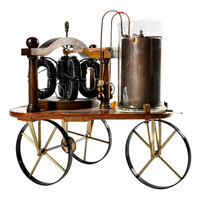 Model of first electric car
 Ben Feringa has a predecessor in Sibrandus Stratingh, who designed the first electric carriage in 1835. This is a replica of this carriage. Like Stratingh, Feringa, is a professor at the University of Groningen. In 2011, he produced a molecular car.
Ben Feringa donated the carriage to the Nobel Prize Museum in 2016.
-
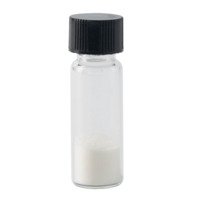 Molecular motors
 Ben Feringa was the first to produce molecules that look and behave like extremely small cars. In the vial is a white powder that consists of a quintillion (10^18) molecular cars.
Ben Feringa donated the molecular motors to the Nobel Prize Museum in 2016.
-
 Wooden clogs
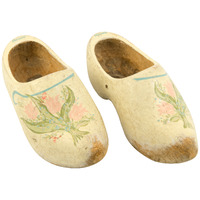
 When Ben Feringa grew up on his parents’ farm in the Netherlands, he wore traditional Dutch clogs, and when he put his right foot in the left shoe or vice versa, it hurt. Since then, he has never forgotten the difference between right and left. This was useful when he later devoted himself to chemistry, where mirror symmetry (or “chirality”) is an important concept when describing various molecular properties. Feringa developed a molecule that worked like a rotary motor. A basic problem with the molecular motor was how to control the rotation to the right or left, respectively.
Ben Feringa donated the clogs to the Nobel Prize Museum in 2016.
-
 Handwritten document
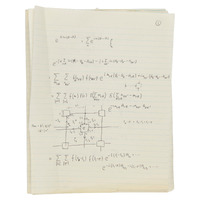
 This document by Jean-Pierre Sauvage includes sketches of rings that are interlinked. The document deals with molecules that are linked together to form molecular machines. The first articles about catenanes, ring-shaped molecules that fit together like the links of a chain, were published a few years later.
Jean-Pierre Sauvage donated the document to the Nobel Prize Museum in 2016.
-
 Rock climbing guide
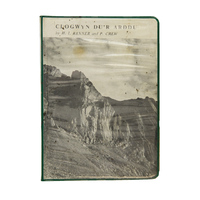
 This guidebook describes a cliff in North Wales where Michael Kosterlitz spent a lot of free time. Rock climbing is Kosterlitz’s passion, alongside physics. Rock climbing involves risks, and mistakes can be fatal. During the climb, all other thoughts are excluded. You must constantly concentrate on the next metres of the climb, and the outside world is blocked out.
Michael Kosterlitz donated the guidebook to the Nobel Prize Museum in 2016.
-
 Manuscript copy
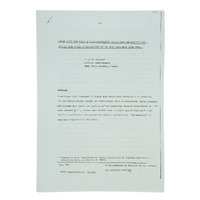
 In this copy of a manuscript, Duncan Haldane presents some of the ideas that laid the foundation for his theories that were awarded the Nobel Prize. The article was never published, however, as some of the manuscript’s reviewers felt that the content ran counter to basic principles of physics. When Haldane won the Nobel Prize and was contemplating a gift to the Nobel Prize Museum’s collections, he happened to think of this article. He no longer had a copy of the manuscript himself, but it turned out that a colleague had kept one.
Duncan Haldane donated the manuscript copy to the Nobel Prize Museum in 2016.
-
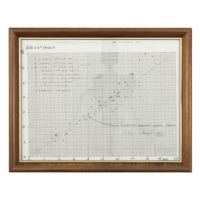 Framed graph
 This graph shows data that are consistent with the theory of phase transitions that David Thouless and Michael Kosterlitz developed. Thouless received the graph as a gift from colleagues on his 65th birthday and hung it on his office wall. David Thouless’ main contributions to physics are theoretical discoveries. Experiments confirming his theories have been performed by other physicists. This graph shows data from experiments by John Reppy and David Bishop.
David Thouless donated the graph to the Nobel Prize Museum in 2016.