-
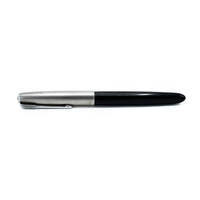 Penna
Penna Reservoarpennan har tillhört Ivo Andrić och var en ständig följeslagare till honom i hans litterära arbete. Den symboliserar hans sociala och konstnärliga engagemang och påminner oss om det skrivna ordets betydelse.
Pennan har donerats till Nobelprismuseet av Belgrads stadsmuseum 2025. Belgrads stadsmuseum förvaltar det museum med Ivo Andrićs kvarlåtenskap, som enligt författarens önskan bildades efter hans död.
-
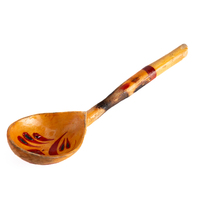 Träsked
 Skeden användes av Andrej Sacharov under 1980-talet när han av den sovjetiska regimen förvisats till Nizjnij Novgorod (som då hette Gorkij).
Sacharov var fysiker men hade sedan 1960-talet engagerat sig för mänskliga rättigheter. Han belönades för sina insatser med Nobels fredspris 1975. De sovjetiska myndigheterna hindrade honom dock att resa för att ta emot priset. För att försvåra hans arbete förvisades han 1980 till Nizjnij Novgorod. Han bodde där i en lägenhet och på andra sidan gatan inrättades en station varifrån han övervakades.
Han fick besök av sin hustru Jelena Bonner, men levde under långa perioder ensam och lagade sin mat själv. Träskeden, som är traditionell rysk typ, blev ett dagligt redskap i livet i förvisningen. Han använde skeden bland annat när han lagade mat i en teflonpanna för att inte rispa ytan av pannan. En av de rätter han gärna tillagade var en typ av kvarg som han stekte lätt eftersom han tyckte om varm mat. Han använde också skeden när han gjorde äggröra.
Träskeden donerades till Nobelprismuseet av Andrei Sakharov Foundation 2025.
-
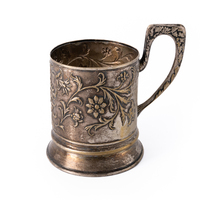 Glashållare
 Glashållaren användes under 1950- och 1960-talen av Andrej Sacharov när han drack te. På traditionellt ryskt vis drack han teet ur glas som placerades i hållaren av metall, som gjorde att han inte behövde bränna sig. Att dricka te var en viktig del av Sacharovs dagliga liv som fysiker och freds- och människorättsaktivist. Ett glas med te hade en given plats på hans skrivbord. Han använde glashållaren i sitt hem i Moskva och hade eventuellt även med den under sina återkommande vistelser i Sarov (som då hette Arzamas-16) där han arbetade inom det sovjetiska kärnvapenprogrammet.
Glashållaren donerades till Nobelprismuseet av Andrei Sakharov Foundation 2025.
-
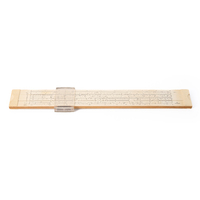 Räknesticka
 Räknestickan var ett flitigt använt redskap i Andrej Sacharovs arbete som fysiker. Sacharov gjorde viktiga insatser inom fysiken, både inom grundvetenskapliga områden och utveckling inom kärnenergi och kärnvapen. Han hade en viktig roll i utvecklingen av den sovjetiska vätebomben. Från slutet av 1950-talet gav han uttryck för oro inför riskerna med kärnvapen och verkade för att begränsa spridning av dem. Han engagerade sig senare också starkt i kampen för mänskliga rättigheter.
Räknestickan donerades till Nobelprismuseet av Andrei Sakharov Foundation 2025.
-
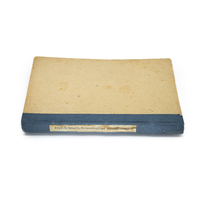 Vetenskapliga publikationer
 Denna samling av sina vetenskapliga publikationer satte Ragnar Granit ihop till sin far. Familjen Granit var finlandssvensk. Ragnar Granit gjorde sina första forskningsinsatser i Helsingfors, men flyttade 1940 till Stockholm där han blev professor vid Karolinska Institutet. De vetenskapliga publikationerna speglar hans insatser inom sinnes- och nervfysiologin.
Publikationerna donerades till Nobelprismuseet av Ragnar Granits efterlevande 2024.
-
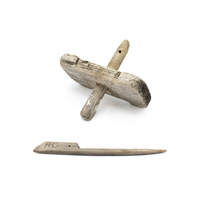 Nätflöte och nätnål
 Flötet och nätnålen har tillhört Ragnar Granit som gärna ägnade sig åt fiske vid sidan om sin forskning inom sinnes- och nervfysiologi. Initialerna RG på nätnålen är ingraverade av Granit själv. Redskapen kommer från familjen Granits sommarstuga på ön Korpo utanför Åbo i Finland. Där tillbringade Ragnar Granit många somrar, bland annat med att rengöra näten från tång. Forskarkolleger som kom på besök från när och fjärran fick också hjälpa till med detta arbete.
Flötet och nätnålen donerades till Nobelprismuseet av Ragnar Granits efterlevande 2024.
-
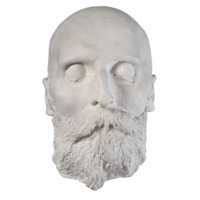 Death mask
 After Alfred Nobel's death, a cast of his face was made: a death mask. In the late 1800’s, death masks were often made of famous persons after they had died.
-
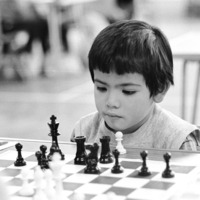 Fotografier
 Redan som fyraåring ägnade Demis Hassabis en stor del av sin tid åt schack. Intresset för schack ledde vidare till ett intresse för datorer som kunde spela schack. Hassabis kom att ägna sig alltmer åt datorer och artificiell intelligens (AI). Han medverkade till skapandet av AI-modellen AlphaFold, som kan förutsäga proteinmolekylers tredimensionella struktur.
Demis Hassabis donerade bilden till Nobelprismuseet 2024.
-
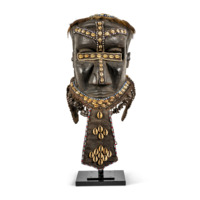 Mask och flugviskor
 Masken och flugviskorna kommer från Kubafolket i Demokratiska republiken Kongo. James Robinson har ett stort intresse för afrikansk historia och kultur och har under 12 år ägnat sig åt Kubafolket i sin forskning om samhällsinstitutioner. Masken är en ”Bwoom”, en av tre huvudsakliga masker som används för att berätta om kungarikets historia och återge några av historiens viktigaste händelser. Flugviskorna, vars praktiska användning är att vifta bort flugor, är också attribut som används i sammanhanget. Flugviskan är en traditionell symbol för makt i hela centrala och östra Afrika.
James Robinson donerade masken och flugviskorna till Nobelprismuseet 2024.
-
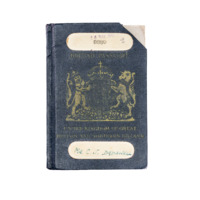 Pass
Pass Passet har tillhört Simon Johnsons morfar Cyril John Dadswell, som dog när Johnson bara var två veckor gammal. Dadswell har ändå betytt mycket för Johnson. Dadswell var den förste i släkten som ägnade sig åt akademiska studier. Han var metallurg och arbetade inom stålindustrin i Sheffield. Passet utfärdades under andra världskriget den 14 maj 1942 och det framgår att Dadswell omedelbart beviljades visum till USA. Syftet med resan till USA var att bidra med kunskap om stål som lämpade sig för stridsvagnar. Dadswells verksamhet knyter an till ett av Simon Johnsons forskningsintressen: hur teknik överförs mellan olika länder och områden.
Simon Johnson donerade passet till Nobelprismuseet 2024.
-
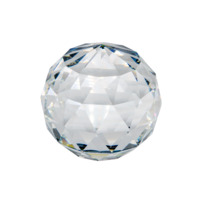 Brevpress
 En brevpress är en av mycket få minnessaker som bevarats efter Daron Acemoglus mor Irma, som betydde mycket för honom. Daron Acemoglu växte upp i Istanbul i en familj med armeniskt ursprung. Modern var lärare och rektor vid en armenisk skola som sonen gick i och hon uppmuntrade honom att studera. Irma Acemoglu gick bort 1991.
Daron Acemoglu donerade brevpressen till Nobelprismuseet 2024.
-
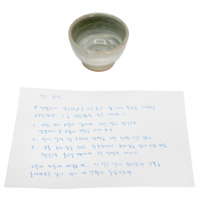 Tekopp
 Under arbetet med boken Jag tar inte farväl ingick denna tekopp i Han Kangs dagliga rutin. På papperet beskriver hon sitt dagliga arbete. Efter att ha stigit upp kl 05.30 och tagit en promenad drack hon en kopp te. (Hon drack svart te trots att koppen egentligen är avsedd för grönt te.) När hon tittade ner i virveln som bildades i koppen blev den hennes universum.
Han Kang donerade koppen till Nobelprismuseet 2024.
-
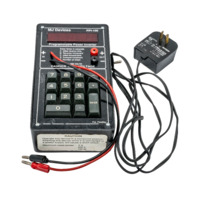 Instrument
 Instrumentet användes vid slutet av 1980-talet i Victor Ambros forskning om mikroRNA, som har stor betydelse för hur olika gener får genomslag i olika celler.
Instrumentet är en kontrollenhet för en typ av elektrofores, som används för att separera olika stora fragment av molekyler från varandra. Ambros använde utrustningen för att hitta och renframställa stora bitar av DNA. Detta var ett viktigt steg i undersökningarna av genen lin-4 och dess betydelse för mikroRNA,
Instrumentet var det första som utvecklades av företaget MJ Devices, som bildades av bröderna Michael and John Finney. Michael Finney var för övrigt doktorand i blivande Nobelpristagaren Robert Horvitz laboratorium.
Victor Ambros donerade instrumentet till Nobelprismuseet 2024.
-
 Kub
Kub För Demis Hassabis och hans medarbetare vid DeepMind symboliserar kuben att lösningen av ett problem kan leda till lösningen av många andra. På en av kubens sidor avbildas drag 37, det avgörande draget i ett parti Go där mästaren Lee Sedol 2016 förlorade mot datorprogrammet AlphaGo, som utvecklades av DeepMind. Detta var första gången en mästare på hög nivå förlorade mot en dator och händelse markerar också ett avgörande steg i utvecklingen av artificiell intelligens. Efter AlphaGo utvecklades AlphaZero som behärskar schack, shogi och go. Senare utvecklades AlphaFold, som kan förutsäga proteinmolekylers tredimensionella struktur.
Demis Hassabis donerade kuben till Nobelprismuseet 2024.
-
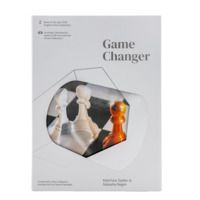 Bok: Game Changer
 Boken Game Changer av Matthew Sadler och Natasha Regan handlar om datorprogrammet AlphaZero som utvecklades av Demis Hassabis och hans medarbetare vid DeepMind. Boken har en inledning av Hassabis och ett förord av Garri Kasparov, som 1997 blev den första världsmästaren i schack som förlorade mot en dator.
Demis Hassabis donerade boken till Nobelprismuseet 2024.
-
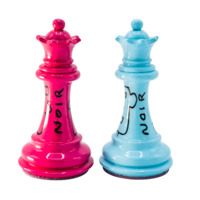 Schackpjäser
 Schackpjäserna symboliserar Demis Hassabis stora intresse för schack. De är två reservdamer i ett spel formgivet av konstnären Thierry Noir. Denne är känd som en av de konstnärer som först började utföra graffitikonst på Berlinmuren under 1980-talet. På brädet i schackspelet han formgett finns även ett mönster som erinrar om elektroniska kretsar.
Demis Hassabis donerade schackpjäserna till Nobelprismuseet 2024.
-
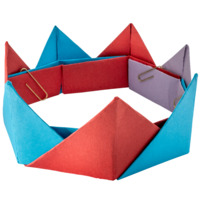 Papperskrona
 Papperskronan har fungerat som en sorts vandringspris i John Jumpers forskargrupp, som arbetar med proteinmolekylers struktur. Forskargruppen kallades i ett tidigt skede ”Origami-gruppen”, eftersom de såg en koppling mellan hur långa proteinmolekyler är veckade och konsten att vika figurer i papper. När någon i gruppen gjorde något bra fick hen papperskronan som belöning och fick behålla den tills någon annan gjorde något som var värt att belöna och fick överta kronan.
Jumper och hans kolleger arbetar annars inte med pappersmodeller utan med datorer och artificiell intelligens. De har utvecklat AlphaFold2, en algoritm som kan förutsäga den tredimensionella strukturen för alla tänkbara proteiner.
John Jumper donerade papperskronan till Nobelprismuseet 2024.
-
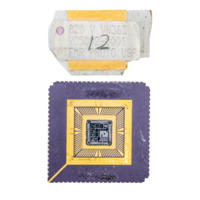 Mikrochip
 På detta mikrochip finns en tidig version av en Boltzmannmaskin, i vars utveckling Geoffrey Hinton spelade en avgörande roll. Boltzmannmaskinen är viktig inom maskininlärning med neurala nätverk och Hinton en av de ledande gestalterna inom artificiell intelligens (AI).
Mikrochippet, som gjordes av Joshua Alspector 1987, är en demonstration av att Boltzmann-maskiner kan placeras på specialkonstruerade chip. Boltzmannmaskinen på kortet är liten, den är ett nätverk med sex noder, och dess användningsområde litet. Som demonstration av en princip visade mikrochippet dock vägen mot den fortsatta utvecklingen inom maskininlärning och AI.
Geoffrey Hinton donerade mikrochippet till Nobelprismuseet 2024.
-
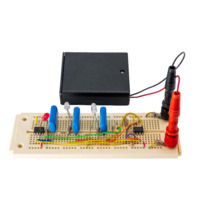 Elektronisk krets
 Denna elektroniska krets byggdes av John Hopfield i början av 2000-talet i samband med en kurs han gav vid Princeton University. Hopfield hade under 1980-talet gjort viktiga insatser inom maskinlärning genom neurala nätverk, som är av stor vikt inom artificiell intelligens.
För Hopfield är praktiskt byggande viktigt för att nå förståelse:
”Jag utformade en labbkurs om elektroniken i neurala nätverk. Jag hade en stark övertygelse om att vi får en djup förståelse av hur ett neuralt nätverk beter sig genom att bygga och utforska vad som händer. Studenterna fick börja med små kretsar, var och en fick bygga sin egen för hand utifrån en hög elektroniska komponenter. Detta är mitt eget demonstrationsbygge för den fjärde veckans projekt.”
Kretsen består bland annat av dioder som tänds och släcks genom att olika delar av kretsen växelverkar med varandra.
John Hopfield donerade kretsen till Nobelprismuseet 2024.
-
James A. Robinson
https://nobelprize.museum.link/s/multilingual-en/item/38882
-
Simon Johnson
https://nobelprize.museum.link/s/multilingual-en/item/38882
-
Daron Acemoglu
https://nobelprize.museum.link/s/multilingual-en/item/38882
-
Nihon Hidankyo
https://nobelprize.museum.link/s/multilingual-en/item/38881
-
Han Kang
https://nobelprize.museum.link/s/multilingual-en/item/38880
-
Gary Ruvkun
https://nobelprize.museum.link/s/multilingual-en/item/38879
-
Victor Ambros
https://nobelprize.museum.link/s/multilingual-en/item/38879
-
John Jumper
https://nobelprize.museum.link/s/multilingual-en/item/38878
-
Demis Hassabis
https://nobelprize.museum.link/s/multilingual-en/item/38878
-
David Baker
https://nobelprize.museum.link/s/multilingual-en/item/38878
-
Geoffrey Hinton
https://nobelprize.museum.link/s/multilingual-en/item/38877
-
John J. Hopfield
https://nobelprize.museum.link/s/multilingual-en/item/38877
-
Sveriges Riksbanks pris i ekonomisk vetenskap till Alfred Nobels minne 2024
-
Nobels fredspris 2024
-
Nobelpriset i litteratur 2024
-
Nobelpriset i medicin 2024
-
Nobelpriset i kemi 2024
-
Nobelpriset i fysik 2024
-
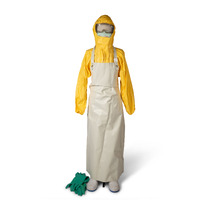 Skyddsutrustning
 Skyddsutrustning som denna används av personal för Läkare utan gränser i samband med utbrott av den smittsamma och mycket farliga sjukdomen ebola. Eboladräkten består av skyddsglasögon, munskydd, skyddsdräkt, dubbla uppsättningar plasthandskar, plastförkläde samt gummistövlar.
Läkare utan gränser rekryterar både medicinsk och icke-medicinsk personal till sitt humanitära arbete i kriser och katastrofer världen över. Vid utbrott av smittsamma sjukdomar arbetar Läkare utan gränser för att snabbt ge tillgång till vård, läkemedel och vaccinationer. Det krävs också ofta omfattande logistikinsatser. Detta kan omfatta allt från att öppna tillfälliga vårdinrättningar för att behandla och isolera patienter till att förbättra rutiner för smittskydd, vatten och sanitet för att förhindra att sjukdomen sprids inom vården och i lokalsamhället.
Det hittills största utbrottet av ebola inträffade i Västafrika 2014–2016. Det ledde också till Läkare utan gränsers dittills största insats. Sedan 2018 har Kongo-Kinshasa drabbats av flera utbrott, bland annat i den konfliktdrabbade provinsen Nordkivu, och 2022 drabbades Uganda av ett ebolautbrott. Genom medicinsk forskning har möjligheterna att bekämpa sjukdomen förbättrats genom utveckling av vaccin mot sjukdomen.
Skyddsutrustningen donerades till Nobelprismuseet av Läkare utan gränser 2024.
-
 Väst
Väst Västar som denna används av personal som arbetar för FN:s World Food Programme (WFP) i olika delar av världen. Västen markerar att den som bär den är ute i goda syften, vill ge hjälp och går att lita på. I områden där det råder konflikt visar västen att den som bär den tillhör en neutral part.
Västen donerades till Nobelprismuseet av World Food Programme 2025.
-
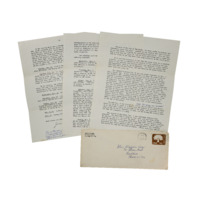 Brev om upplevelser under Nobelveckan 1977
 I detta brev ges en inblick i en Nobelpristagares besök i Stockholm under Nobelveckan. Brevet sändes i januari 1978 av den nyblivne fysikpristagaren John Van Vleck och hans hustru Abigail till vännen Marjorie Cary. De berättade att de på grund av sin resa till Europa inte haft tid att sända några julkort i december. I stället valde de att skriva ett längre brev där de berättade om sina upplevelser före och under resan. Här berättas om svårigheter att hitta rätt kläder, intensiv mediauppmärksamhet, och välplanerade arrangemang i ett program som förutom prisutdelning och bankett omfattade föreläsningar, mottagningar, middagar samt Luciatåg.
Likadana brev sändes till ett flertal vänner och bekanta, men ett par tillägg om olika flygbolag i detta brev beror på att mottagaren Marjorie Cary arbetade på ett flygbolag.
Brevet donerades till Nobelprismuseet av Marjorie Morrissey, syskonbarn till Marjorie Cary, 2024.
-
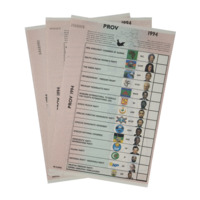 Valsedlar från valet i Sydafrika 1994
 Valsedlar från det sydafrikanska valet 1994 markerar övergången till demokrati för alla landets medborgare, oavsett hudfärg. På valsedlarna syns Nelson Mandela, som varit ledande i kampen mot rasåtskillnadssystemet apartheid, och den sittande presidenten F.W. de Klerk, som 1990 fattat beslutet att frige Mandela efter 27 år i fängelse. Valet slutade med seger för ANC, partiet som Mandela tillhörde, och denne utsågs till president.
Valsedlarna förvärvades av Nobelprismuseet 2024.
-
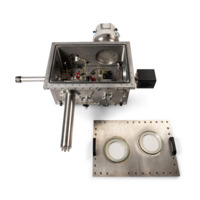 Apparatur
 This apparatus is the measurement-related part of the setup used in Ferenc Krausz' experiments with attosecond laser pulses. The pulses are generated through interactions between laser light and electrons.
A spherical double mirror is used to focus the laser beam at a nozzle that emits a ray of crypton atoms. A spectrometer is used to measure the distribution of kinetic energy of electrons that the laser light has released from the crypton atoms. The duration of the laser pulses can be determined by analysing the kinetic energy of the electrons and the displacements in different sections of the laser beam.
Ferenc Krausz donated this apparatus to the Nobel Prize Museum in 2024.
-
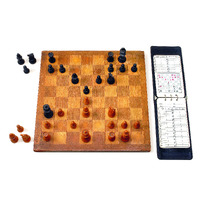 Schackspel och protokoll
 Vid detta schackspel tillbringade Herbert Simon mycket tid. Spelets väldefinierade regler, men enorma rikedom av scenarier och strategier, hade också beröringspunkter med hans forskning i ekonomi och psykologi. Kan mänskligt tänkande översättas till rutiner som en maskin kan utföra? Redan på 1950-talet arbetade han med artificiell intelligens (AI) och utvecklingen av ett schackprogram.
Schackspelet och protokollen donerades till Nobelprismuseet av Herbert Simons efterlevande 2003.
-
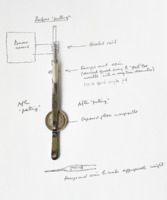 Pincett, mynt och pipett
 En pincett, ett mynt, och en glaspipett blev genom John Gurdons uppfinningsrikedom ett avgörande redskap i hans forskning om stamceller. Med hjälp av redskapet och känsliga fingrar lyckades han ersätta cellkärnan i ett befruktat grodägg med cellkärnan från en mogen cell hos ett grodyngel. Detta ledde till det första skapandet av en genetisk kopia, en klon, av en högre organism.
John Gurdon donerade pipetterna till Nobelprismuseet 2012.
-
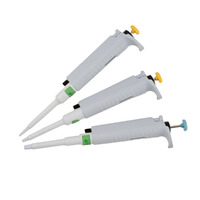 Pipetter
 Det första Shinya Yamanaka köpte när han fick leda sitt eget laboratorium var pipetter. Pipetterna är av en typ som är mycket vanliga i laboratorier över hela världen. Yamanaka använde dem flitigt i arbetet med att skapa "pluripotenta stamceller". Detta bygger på att en mogen cell i vår kropp kan omvandlas till en stamcell som i sin tur kan omvandlas till en cell av vilken typ som helst i kroppen.
Shinya Yamanaka donerade pipetterna till Nobelprismuseet 2012.
-
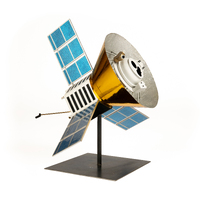 Modell av satelliten COBE
 Modellen visar satelliten COBE, som användes för att mäta kosmisk bakgrundsstrålning. Resultaten har gett fördjupad kunskap om universums utveckling och uppbyggnad.
John Mather och George Smoot gjorde avgörande insatser i arbetet med satelliten och tolkningen av mätresultaten.
Satellitmodellen överlämnades 2006 till Nobelprismuseet av George Smoot och NASA.
-
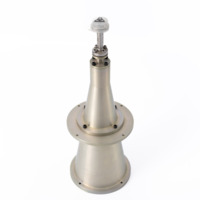 Hornantenn
 This horn antenna was intended for the COBE satellite, which was used to measure cosmic background radiation.
The antenna was presented to the Nobel Prize Museum in 2006 by George Smoot and NASA.
-
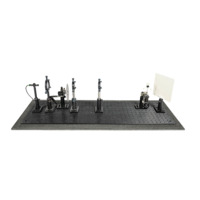 Apparatur
 Med denna uppställning ville Ahmed Zewail visa principen för sin metod att med hjälp av laserteknik studera kemiska reaktioner. Hur kemiska reaktioner går till i detalj är svårt att studera eftersom de går oerhört fort – de utspelar sig under några femtosekunder. En femtosekund förhåller sig till en sekund som en sekund förhåller sig till 32 miljoner år. Zewail sade att hans teknik är ungefär som om man gjorde en 32 miljoner år lång film och sedan kunde titta på den sekund för sekund – ”en femtofilm”!
Apparaturen är installerad efter anvisningar ursprungligen givna av Ahmed Zewail.
-
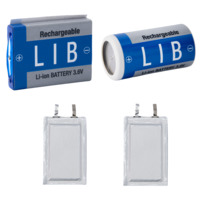 Lithium ion batteries
 These copies of batteries reflect the development of lithium-ion batteries. Akira Yoshino played a pivotal role in this development.
The cylindrical battery, from 1985–1986, was the first lithium-ion battery that was produced for user evaluation. The battery had a cathode of LiCoO2, and a carbon anode.
The prismatic battery is a lithium-ion battery for mobile phones from 2000–2010.
The thin battery is a laminate battery for a smartphone from 2019.
Akira Yoshino donated the lithium-ion batteries to the Nobel Prize Museum in 2019.
-
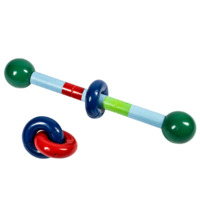 Molekylmodeller
 These are models of two types of molecular machines: they are composed of interlinked molecules that can rotate in relation to each other. The model with two interlinked rings represents two catenane molecules. The model with a ring on an axle represents a rotaxane molecule. The colours represent different electric charges. These determine the motion of the different parts can move in relation to one another. Fraser Stoddart used the models to explain his research results. The models were made at Sheffield University, and Stoddart has had them with him throughout his career at various universities.
Fraser Stoddart donated the models to the Nobel Prize Museum in 2016.