-
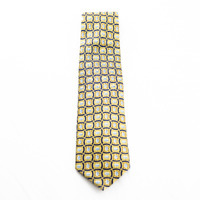 Silk tie with Viagra pills pattern
 This is how Louis Ignarro describes this tie with a pattern of Viagra tablets:
“This special tie was fabricated just for me and presented to me by a representative of the Pfizer Pharmaceutical Company in New York City. The tie subtly depicts dozens of blue ‘VIAGRA’ tablets scattered throughout the tie. The significance of the tie is that my laboratory, in 1992, reported that the long sought-after neurotransmitter that causes penile erection is nitric oxide (NO). Based on our work, Pfizer developed and marketed Viagra, which works by increasing the erectile action of NO. Interestingly, Viagra was approved and marketed in April 1998, and the Nobel Prize for our research on nitric oxide was announced only a few months later, in October 1998. Amusingly, I am often referred to as the Father of Viagra.”
Louis Ignarro donated the tie to the Nobel Prize Museum in 2017.
-
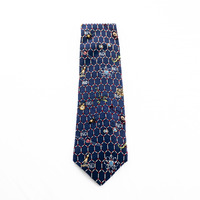 Silk tie with nitric oxide pattern
 This is how Louis Ignarro describes this tie with a pattern of chemical structures:
“This special tie was fabricated just for me and presented to me at a Nitric Oxide conference held in 1999 in celebration of the 1998 Nobel Prize in Physiology or Medicine. The tie depicts a pattern of chemical structures, also showing the chemical symbol for nitric oxide, which is NO. I wore this tie at many nitric oxide conferences that followed. The significance of the tie is that my laboratory originally discovered in 1986 that our bodies produce NO to maintain cardiovascular health. This discovery resulted in the Nobel Prize.”
Louis Ignarro donated the tie to the Nobel Prize Museum in 2017.
-
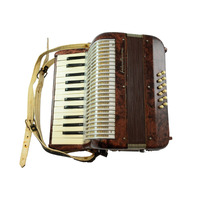 Accordion
 Music and science play an important part in Louis Ignarro’s life. This is how he describes his accordion:
“This is a 1944 model Fontanella Pesaro accordion made originally in Napoli, Italy, the birthplace of my father. My parents presented it to me on my 6th birthday in May of 1947 in New York City, where we resided. After quickly learning to play by ear without any instruction, my parents had me take professional lessons. Within a few years, I became proficient enough to play at traditional Italian weddings and parties. Playing the accordion in front of large crowds gave me greater confidence to interact with adults. Moreover, learning to play music composed by Vivaldi, Mozart, and Bach led me to appreciate the scientific approach taken by such scholars in composing their masterpieces. Playing such music on my accordion motivated me toward the field of science. In the 40 plus years of my scientific career, I routinely listened to the compositions of Vivaldi, Mozart and Bach while working. I attribute my career success in large part to that little accordion that I started playing at the age of 6 years.”
Louis Ignarro donated the accordion to the Nobel Prize Museum in 2017.
-
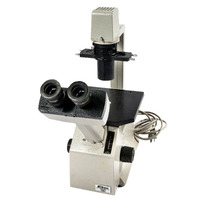 Microscope
 During a period in the 1970s, Ralph Steinman used this microscope several times a day to study the reactions of white blood cells. Steinman’s research related to how our immune system defends the body against foreign substances and microorganisms. The study in which he used the microscope was part of the work that was awarded the Nobel Prize.
Ralph Steinman died a couple of days before the Nobel Prize was announced in October 2011. It was decided long ago that a Nobel Prize can only be awarded to people who are alive, but word of his death had not reached the Nobel Assembly at the Karolinska Institute, and the decision was made to let Steinman be represented by his family at the Nobel Prize ceremony.
The microscope was presented to the Nobel Prize Museum in 2017 by Maggi Pack, a colleague of Ralph Steinman at Rockefeller University.
-
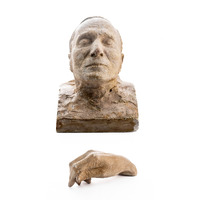 Death mask and hand casting
 This is a sculpture of Boris Pasternak, who died at his dacha in Peredelkino outside Moscow in May 1960. The family agreed they wanted a sculptor to capture his final facial expression. They contacted a family acquaintance, the sculptor Zinovi Vilensky. Alone in the room with the deceased, Vilensky made these sculptures of Pasternak’s face and hands over the ensuing days.
The sculptures were donated to the Nobel Prize Museum by Vera Kovalskaya, a great-grandchild of Pasternak, and her husband Artem Platov. Kovalskaya sees capturing the final facial expression of a person as a contribution to history rather than anything personal. For this reason, she felt it was appropriate to donate the sculptures to the Nobel Prize Museum.
-
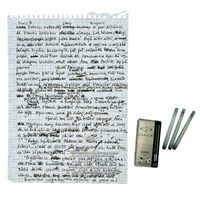 Manuscript page and ink cartridges
 On a visit in 2017, Orhan Pamuk donated ink cartridges and a manuscript page from the book he was writing to the Nobel Prize Museum. Boken heter Nights of Plague and was published in 2021. At the time, the Covid-19 pandemic was underway, but work on the book had begun several years earlier.
Pamuk writes his books in longhand with a fountain pen. He writes slowly, one or two sentences at a time, and then thinks for several minutes about the next sentence. He uses black ink and makes corrections in other colours. This makes it easier to follow the writing process, as he has the old versions available and can easily compare them.
-
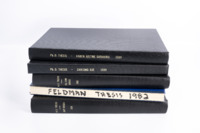 Theses
 Avhandlingarna är tillkomna vid Molecular Biology Institute vid University of California Los Angeles. Ett fruktbart utbyte med doktorander och andra kolleger var av stor vikt för den forskning som gav institutets förste föreståndare, Paul Boyer, Nobelpriset. Avhandlingarna handlar liksom Boyers Nobelprisbelönade forskning om hur den energirika molekylen ATP (adenosintrifosfat) bildas i kroppens celler. I sin Nobelföreläsning refererade Boyer bland annat till artiklar han producerat tillsammans med avhandlingarnas författare: Karen Justine Guerrero, Richard I Feldman, Jill Ann Myers, Gary Rosen och Zhixiong Xue.
Avhandlingarna överlämnades till Nobelprismuseet 2017 av professor Steve Clarke, University of California Los Angeles, vars kontor en gång var Paul Boyers kontor.
-
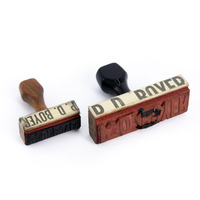 Rubber stamps
 Stämplarna användes av Paul Boyer i arbetet på hans kontor. Som föreståndare för ett stort forskningsinstitut hade Paul Boyer många dokument att signera och hålla reda på. Stämplarna gjorde förmodligen arbetet mer effektivt.
Molekylärbiologin blev under 1960-talet allt mer storskalig. Boyer ledde verksamheten vid Molecular Biology Institute vid University of California Los Angeles från dess grundande 1965 till 1983. Uppbyggnaden av institutet innefattade såväl ett forskarutbildningsprogram gemensamt för flera institutioner som en ny byggnad.
Stämplarna överlämnades till Nobelprismuseet 2017 av professor Steve Clarke, University of California Los Angeles, vars kontor en gång var Paul Boyers kontor.
-
 Briefcase
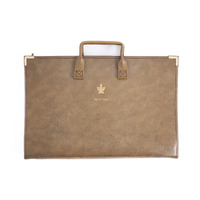
 Portföljen användes av Paul Boyer för att ta med sig anteckningar och dokument till möten vid University of California Los Angeles. Som föreståndare för ett molekylärbiologiskt forskningsinstitut behövde Boyer delta i många möten vid sidan av den egna forskningen. Troligen hade han fått väskan vid en vetenskaplig konferens utomlands.
Portföljen överlämnades till Nobelprismuseet 2017 av professor Steve Clarke, University of California Los Angeles, vars kontor en gång var Paul Boyers kontor.
-
 Go board
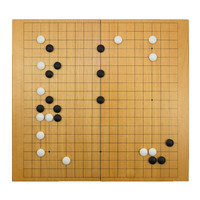
 Go is an ancient Chinese board game. This board belonged to Bengt Holmström, who lists game theory as one of his interests in economic science. The game has simple rules, such as allowing players to lay down only one stone at a time, but involves very complicated strategies. Holmström practises in the US, where he has a Go game. This one belonged to him when he was still living in Finland, where he also played Go with his friends.
Bengt Holmström donated the Go game to the Nobel Prize Museum in 2016.
-
 Pen made from shell casing
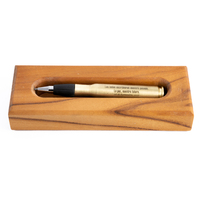
 This pen is identical to the one used when a peace agreement between the Colombian government and the FARC guerrilla was signed in 2016. The pen is made from a cartridge case of a bullet that was used in the long-lasting conflict in Colombia. It bears an inscription: “Bullets wrote our past, and education will write our future.” This is also what President Juan Manuel Santos said when handing the pen to the guerrilla leader Timoleón Jiménez.
The pen was designed by Christian Mondragón and created as part of a project led by Colombia’s Ministry of Education and the advertising agency McCann. The pen is a symbol of a shift in focus from military conflict to education.
Juan Manuel Santos donated the pen to the Nobel Prize Museum in 2016.
-
 Pin button
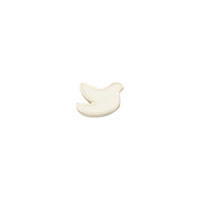
 Juan Manuel Santos wears a button with a dove on his jacket lapel daily. The emblem with the dove was designed for his wife in connection with his presidential campaign in 2010. The insignia is a symbol of the transition from conflict to peace in Colombia. When a peace agreement between Colombia’s government and the FARC guerrilla was signed in 2016, Santos gave an identical button to the guerrilla leader Timoleón Jiménez.
Juan Manuel Santos donated the button to the Nobel Prize Museum in 2016.
-
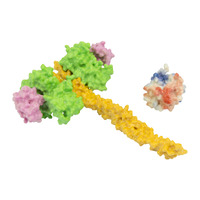 Molecular models
 These models depict molecules that are essential for autophagy. Autophagy means “self-devouring” and is a process in our cells where molecules are broken down and recycled. These structures are composed of "ATG proteins", where ATG stands for "autophagy-related". The club-shaped structure is composed of ATG 12, ATG 15 and ATG 16. The spherical structure depicts the ATG 8 protein.
Yoshinori Ohsumi donated the models to the Nobel Prize Museum in 2012.
-
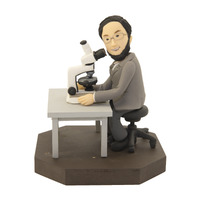 Statuette
 The statuette represents Yoshinori Ohsumi at his microscope when he started his research on autophagy, the process cells use to recycle chemical substances. Ohsumi was a professor at Tokyo University at the time. The statuette was made several years later, and Ohsumi received it as a gift from his colleagues.
Yoshinori Ohsumi donated the statuette to the Nobel Prize Museum in 2012.
-
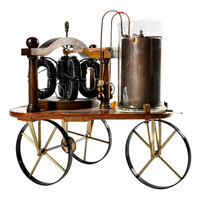 Model of first electric car
 Ben Feringa has a predecessor in Sibrandus Stratingh, who designed the first electric carriage in 1835. This is a replica of this carriage. Like Stratingh, Feringa, is a professor at the University of Groningen. In 2011, he produced a molecular car.
Ben Feringa donated the carriage to the Nobel Prize Museum in 2016.
-
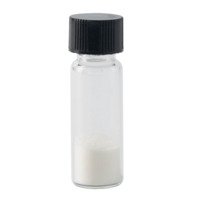 Molecular motors
 Ben Feringa was the first to produce molecules that look and behave like extremely small cars. In the vial is a white powder that consists of a quintillion (10^18) molecular cars.
Ben Feringa donated the molecular motors to the Nobel Prize Museum in 2016.
-
 Wooden clogs
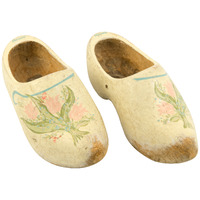
 When Ben Feringa grew up on his parents’ farm in the Netherlands, he wore traditional Dutch clogs, and when he put his right foot in the left shoe or vice versa, it hurt. Since then, he has never forgotten the difference between right and left. This was useful when he later devoted himself to chemistry, where mirror symmetry (or “chirality”) is an important concept when describing various molecular properties. Feringa developed a molecule that worked like a rotary motor. A basic problem with the molecular motor was how to control the rotation to the right or left, respectively.
Ben Feringa donated the clogs to the Nobel Prize Museum in 2016.
-
 Handwritten document
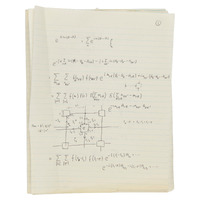
 This document by Jean-Pierre Sauvage includes sketches of rings that are interlinked. The document deals with molecules that are linked together to form molecular machines. The first articles about catenanes, ring-shaped molecules that fit together like the links of a chain, were published a few years later.
Jean-Pierre Sauvage donated the document to the Nobel Prize Museum in 2016.
-
 Rock climbing guide
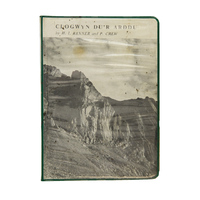
 This guidebook describes a cliff in North Wales where Michael Kosterlitz spent a lot of free time. Rock climbing is Kosterlitz’s passion, alongside physics. Rock climbing involves risks, and mistakes can be fatal. During the climb, all other thoughts are excluded. You must constantly concentrate on the next metres of the climb, and the outside world is blocked out.
Michael Kosterlitz donated the guidebook to the Nobel Prize Museum in 2016.
-
 Manuscript copy
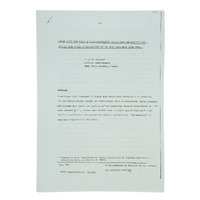
 In this copy of a manuscript, Duncan Haldane presents some of the ideas that laid the foundation for his theories that were awarded the Nobel Prize. The article was never published, however, as some of the manuscript’s reviewers felt that the content ran counter to basic principles of physics. When Haldane won the Nobel Prize and was contemplating a gift to the Nobel Prize Museum’s collections, he happened to think of this article. He no longer had a copy of the manuscript himself, but it turned out that a colleague had kept one.
Duncan Haldane donated the manuscript copy to the Nobel Prize Museum in 2016.
-
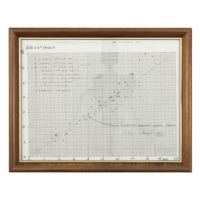 Framed graph
 This graph shows data that are consistent with the theory of phase transitions that David Thouless and Michael Kosterlitz developed. Thouless received the graph as a gift from colleagues on his 65th birthday and hung it on his office wall. David Thouless’ main contributions to physics are theoretical discoveries. Experiments confirming his theories have been performed by other physicists. This graph shows data from experiments by John Reppy and David Bishop.
David Thouless donated the graph to the Nobel Prize Museum in 2016.
-
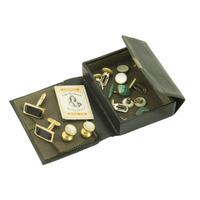 Box with cuff-links
 This box of cuff-links belonged to Max Born.
The cufflinks were donated to the Nobel Prize Museum by Gustav Born, Max Born’s son, in 2016.
-
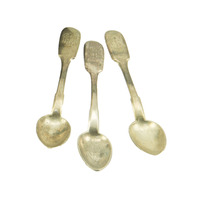 Three spoons
 These spoons belonged to Max Born.
The spoons were donated to the Nobel Prize Museum by Gustav Born, Max Born’s son, in 2016.
-
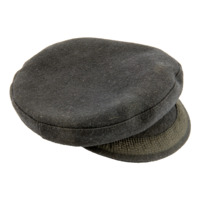 Cap
Cap This cap is one that Desmond Tutu owned and wore for more than 30 years of his life. His enthusiasm for this type of cap arose in the 1970s when he saw German Chancellor Helmut Schmidt wearing one. After a while, he bought one for himself and was later given several as gifts. This type of cap probably originated in France and is used by sailors. Tutu used it in the winter to protect against the cold and in the summer to protect against the sun.
Desmond Tutu donated the cap to the Nobel Prize Museum in 2016.
-
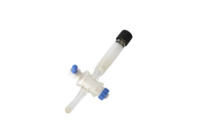 Reaction vessel
 This small reaction vessel was used for the synthesis of small amount of peptides that Bruce Merrifield used in experiments. He was awarded the Nobel Prize for his efficient methods for the synthesis of peptides and proteins. The reaction vessel was made at the Rockefeller University glass blowing shop.
The reaction vessel was donated to the Nobel Prize Museum by Bruce Merrifield's family in 2016.
-
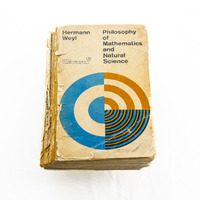 Philosophy of Mathematics and Natural Science by Herman Weyl
 This book, Philosophy of Mathematics and Natural Science by Herman Weyl, was an important source of inspiration for Frank Wilczek, who has done his ground-breaking work in theoretical physics. In an introduction to a new edition of Weyl’s book, Wilczek wrote: “I’ve consulted Philosophy of Mathematics and Natural Science many times, and each time I've come away enriched.”
Frank Wilczek donated the book to the Nobel Prize Museum in 2016.
-
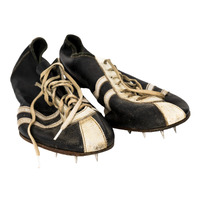 High jump shoes
 These high jumping shoes with spikes were used by Kurt Wüthrich in the early 1960s. Wüthrich’s interest in competitive sports was awakened during his years as a high school student at Biel high school in Switzerland. Although he decided to pursue a career in chemistry and physics, athletics remained an important part of his life.
Kurt Wüthrich donated the shoes to the Nobel Prize Museum in 2016.
-
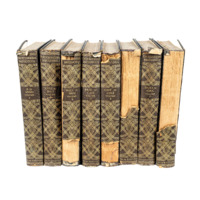 Encyclopedia Britannica
 The knowledge found in the Encyclopaedia Britannica was vital for chemist Archer Martin. But obtaining knowledge from the world of books was not easy at first. As a child, he struggled with dyslexia, and he took a long time learning to read. His love of science began with devices and experiments that he assembled in his family’s basement.
The encyclopedia was donated to the Nobel Prize Museum by Archer Martin's daughter Sara Beck in 2016.
-
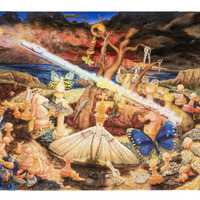 Watercolour "For Edward B. Lewis" by Pamela Lewis
 This watercolour, dedicated to Edward B. Lewis, was painted by his wife Pamela Lewis. Butterflies and other insects refer to Edward Lewis’s scientific interest in genetic traits and the development of organisms. In addition to science, the flute was central to his life. He played the instrument from early childhood and continued playing in a chamber orchestra and taking lessons. While fighting his losing battle against cancer, he found comfort in playing the flute. Chess pieces also feature in the picture, reflecting another of Lewis’s interests. The keys hint at his absent-mindedness, which caused him to lose his car keys, glasses and other important objects.
The watercolour was donated to the Nobel Prize Museum by Pamela Lewis in 2016.
-
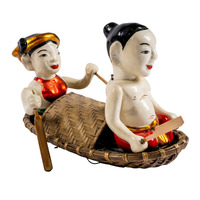 Puppets
 This is Françoise Barré-Sinoussi’s description of these puppets:
“In the 90s, I attended the show of the world-famous Thang Long Water Puppet Theatre in Hanoi and received this gift from Vietnamese colleagues when visiting Vietnam to develop an official partnership with the Health Authorities.
This is symbolic of the day-to-day life of people in low-middle-income countries, with their culture and traditions from which I personally have learned a lot. It embodies my respect for these people, but also my love for theatre.
I think this gift also quite well represents my commitment to strengthening capacity and for developing evidence-based interventions, including community-based interventions to improve access to health care services in low-middle-income countries.”
Françoise Barré-Sinoussi donated the puppets to the Nobel Prize Museum in 2016.
-
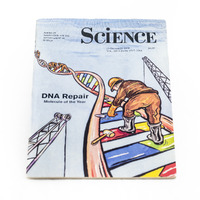 Science, 23 December, 1994
 A 1994 issue of the journal Science largely focused on the cell’s system for repairing continuous damage to DNA. The enzymes that handle DNA repair were named Molecule of the Year. Aziz Sancar and Paul Modrich were among the scientists noted in the journal, and they also contributed articles.
Aziz Sancar donated the journal issue to the Nobel Prize Museum in 2015.
-
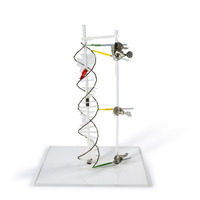 DNA repair model
 Using this model, Aziz Sancar illustrates how our cells repair damage to their DNA molecules. It was built in 1986 and shows at the red mark how UV radiation has caused two base pairs of the DNA double helix to join together. Bacteria and humans have molecules – repair enzymes – that sense damage and remove strings of 12 or 27 half-base pairs around the damage. The model indicates the boundaries of these areas with the yellow and green markers. The double spiral's remaining strand then acts as a template to recreate the damaged strand.
Aziz Sancar donated the model to the Nobel Prize Museum in 2015.
-
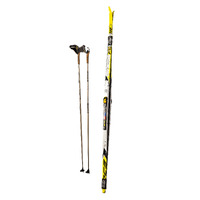 Cross country skiing equipment
 Peter Agre has completed the 90-kilometre Swedish ski-race Vasaloppet five times together with his brother Jim. This is some of the equipment he used.
A descendent of Norwegian and Swedish emigrants to the US in the 19th century, Peter Agre has always felt a strong link to his Scandinavian heritage. Besides research in biochemistry, Agre enjoys outdoor life, especially canoeing and cross-country skiing.
Peter Agre donated the skiing equipment to the Nobel Prize Museum in 2016.
-
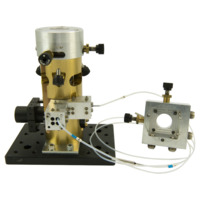 Part of a microscope
 This is part of a microscope that was vital to Eric Betzig’s work on super-resolved fluorescence microscopy. Betzig made his breakthrough after leaving academia. Together with his colleague and friend Harald Hess, he built the new microscope in Hess’s living room.
Eric Betzig donated the microscope parts to the Nobel Prize Museum in 2016.
-
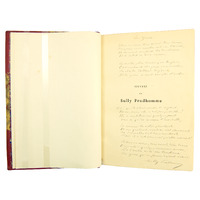 Œuvres by Sully Prudhomme
 On the title page of this copy of his collected works, Sully Prudhomme has written and signed one of his poems, “Les Yeux” – “The Eyes”.
The book was presented to the Nobel Prize Museum in 2016 by Dr. Maarten Asscher, director of Athenaeum Booksellers in Amsterdam, the Netherlands.
-
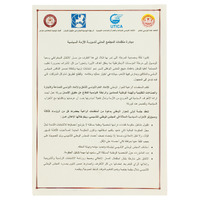 Road Map
 This document, known as the Road Map, describes a way toward democracy in Tunisia. After the Jasmine Revolution in 2011, Tunisia experienced social unrest. To establish a stable democracy, the Tunisian General Labour Union (UGTT), the Tunisian Confederation of Industry, Trade and Handicrafts (UTICA), the Tunisian Human Rights League (LTDH), and the Tunisian Order of Lawyers formed the National Dialogue Quartet. In this document, the quartet presented four proposals: the government would resign, a new constitution would be adopted, a new prime minister would be appointed, and a date for general elections would be determined. The document was signed by the leaders of the four organisations on 17 September 2013 and presented to the parties the following day.
The National Dialogue Quartet donated the road map to the Nobel Prize Museum in 2015.
-
 Fishing flies
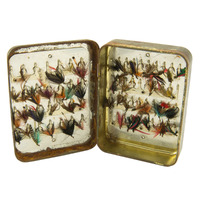
 Even in his youth, Angus Deaton eagerly went on fishing trips for some time alone. These fishing trips taught him that he is often at his most creative when doing something other than his regular routine. While fishing, he could unconsciously explore scientific problems – an experience he shares with many. This box of flies is from the mid-1950s. The flies are all different and have specific names. Deaton has tied some of them himself but says his talent lies more in economics.
Angus Deaton donated the fishing flies to the Nobel Prize Museum in 2015.
-
 Dictaphone
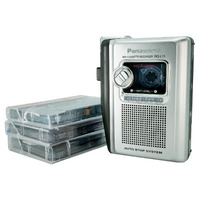
 Dictaphones have been important to Svetlana Alexievich's literary process. Her documentary novels are based on large numbers of interviews. This dictaphone was used when collecting material for the books Zinky Boys and Voices from Chernobyl. The tapes contain some of the many interviews.
In her Nobel Prize lecture Alexievich said,
“It always troubled me that the truth doesn’t fit into one heart, into one mind, that truth is somehow splintered. There’s a lot of it, it is varied, and it is strewn about the world. Dostoevsky thought that humanity knows much, much more about itself than it has recorded in literature. So, what is it that I do? I collect the everyday life of feelings, thoughts, and words. I collect the life of my time.”
Svetlana Alexievich donated the dictaphone and the tapes to the Nobel Prize Museum in 2015.
-
 Plate
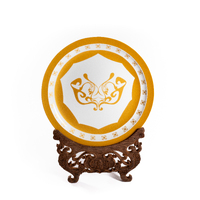
Plate The plate was designed by fashion designer Galo in connection with Tu Youyou receiving the Nobel Prize in Physiology or Medicine in 2015. Galo also designed the clothes Tu Youyou wore during Nobel Week.
Tu Youyou donated the plate to the Nobel Prize Museum in 2015.
-
 Plate
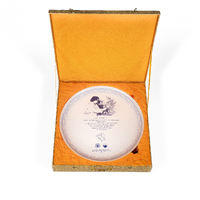
Plate This plate commemorates Tu Youyou's discovery of the antimalarial drug artemisinin.
Tu Youyou donated the plate to the Nobel Prize Museum in 2015.
-
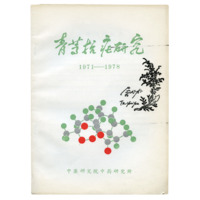 Research report
 This book is the first publication describing the results of a project on antimalarial drugs. Tu Youyou played a crucial role in the project.
Malaria is a widespread disease in tropical countries. It is caused by a parasite that spreads through mosquitoes and is often treated with quinine. During the Vietnam War, North Vietnamese soldiers suffered from a form of malaria in which the parasite was resistant to quinine. After North Vietnam asked China for help in developing a new treatment for malaria, China initiated a project where Tu Youyou participated. Drawing inspiration from ancient Chinese herbal recipes, she was able to extract a substance, artemisinin, from sweet wormwood extract. Artemisinin inhibits the malaria parasite.
Tu Youyou donated the research report to the Nobel Prize Museum in 2015.
-
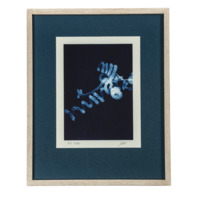 Collotype photograph
 This picture is a collotype photograph and is an image of the bacterium Streptomyces avermectinius. The image, originally taken with a scanning electron microscope, highlights the captivating beauty that Satoshi Ōmura sees in bacteria.
Satoshi Ōmura donated the collotype photograph to the Nobel Prize Museum in 2015.
-
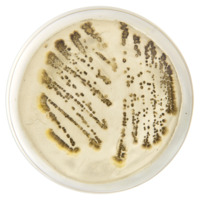 Petri dish with bacterial culture
 This dish contains the bacteria Streptomyces avermectinius, cultivated by Satoshi Ōmura, who often cultivated bacteria from soil, which can produce substances that inhibit other microorganisms. This can be useful when developing pharmaceuticals. Ōmura’s bacterial strain led to the drug avermectin, used to fight the diseases elephantiasis and river blindness.
Satoshi Ōmura donated the bacterial culture to the Nobel Prize Museum in 2015.
-
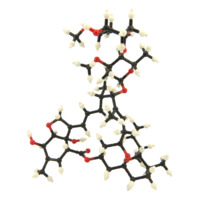 Molecular model of Ivermectin B1a
 This model shows the structure of the ivermectin B1a molecule. The substance could be extracted from a bacterial strain cultured by Satoshi Ōmura. This led to the drugs used to fight the diseases elephantiasis and river blindness.
Satoshi Ōmura donated the model to the Nobel Prize Museum in 2015.
-
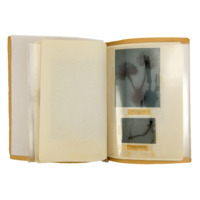 X-ray photographs
 When Paul Modrich was 15 years old, he convinced his father to order samples of radioactive isotopes of different substances. At that time, small amounts of radioactive isotopes could be purchased without a license. Modrich made solutions of isotopes in which he then put seeds to germinate and leaves that absorbed the isotopes. He also injected isotopes into frogs. He could then use X-ray photographs to see how the substances were distributed in the sprouts, the leaves and the frogs.
Paul Modrich donated the photographs to the Nobel Prize Museum in 2015.
-
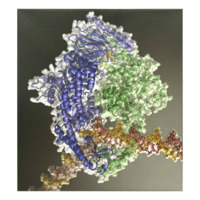 Picture
 The picture shows the structure of the protein MutS alpha, which was discovered by Paul Modrich in 1996. The protein is vital in detecting when errors have occurred in the replication of DNA molecules in our cells. A few years after Modrich's discovery, Lorena Beese determined the structure of the protein. It hung in Paul Modrich’s laboratory until he donated it to the Nobel Prize Museum.
Paul Modrich donated the image to the Nobel Prize Museum in 2015.
-
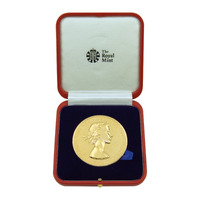 Medal
Medal The Royal Medal is one of the top scientific awards in the United Kingdom, and was an important recognition for Tomas Lindahl's scientific achievements. Awarded annually, the medals are given for the most outstanding scientific efforts made in the British Commonwealth. Tomas Lindahl is from Sweden, but has conducted his most important scientific work in the UK and received the medal in 2007. The medal is awarded by Queen Elizabeth II on the recommendation from the Royal Society, the independent scientific academy of the UK and the Commonwealth.
Tomas Lindahl donated the medal to the Nobel Prize Museum in 2015.
-
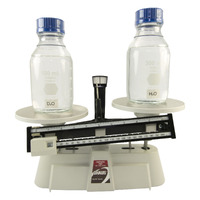 Heavy water
 Arthur McDonald has let heavy water represent his research at the Sudbury Neutrino Observatory (SNO). The bottles on the scales contain equal volumes of heavy and regular water respectively. As the scales show, the density of heavy water is about ten per cent higher.
(SNO) was an underground facility where physicists from Canada, the US and the UK studied neutrinos, some of the universe's smallest and most elusive particles. Almost all neutrinos zip unimpeded through the earth, but some of could be captured in the SNO detector. The detector used heavy water, where the nucleus of the hydrogen atoms has both a proton and a neutron. Heavy water allows the neutrinos to react differently than with regular water.
Arthur McDonald donated the heavy water to the Nobel Prize Museum in 2015.
-
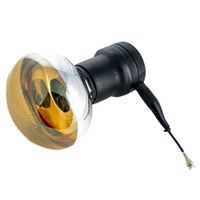 Small photomultiplier
 This photomultiplier tube representa Takaaki Kajita's research at the Super-Kamiokande underground facility in Japan. The facility is a collaboration between several nations. This photomultiplier tube belongs to a part managed by the US.
Takaaki Kajita donated the photomultiplier tubes to the Nobel Prize Museum in 2015.
-
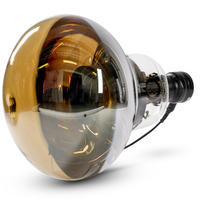 Large photomultiplier
 This photomultiplier tube represents Takaaki Kajita's research at the Super-Kamiokande underground facility in Japan. At the Super-Kamiokande, physicists study neutrinos, some of the smallest particles in the universe. The detector consists of a large water-filled container with walls lined with photomultiplier tubes. Neutrinos exist in large quantities but very rarely react with other particles. When they hit a particle in the Super-Kamiokande, this generates a small flash that can be detected and amplified by the photomultiplier tubes.
Takaaki Kajita donated the photomultiplier tube to the Nobel Prize Museum in 2015.