-
 Lithium ion batteries
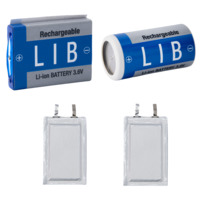
 These copies of batteries reflect the development of lithium-ion batteries. Akira Yoshino played a pivotal role in this development.
The cylindrical battery, from 1985–1986, was the first lithium-ion battery that was produced for user evaluation. The battery had a cathode of LiCoO2, and a carbon anode.
The prismatic battery is a lithium-ion battery for mobile phones from 2000–2010.
The thin battery is a laminate battery for a smartphone from 2019.
Akira Yoshino donated the lithium-ion batteries to the Nobel Prize Museum in 2019.
-
 Molekylmodeller
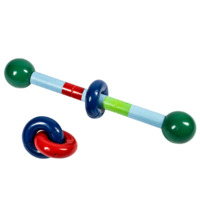
 These are models of two types of molecular machines: they are composed of interlinked molecules that can rotate in relation to each other. The model with two interlinked rings represents two catenane molecules. The model with a ring on an axle represents a rotaxane molecule. The colours represent different electric charges. These determine the motion of the different parts can move in relation to one another. Fraser Stoddart used the models to explain his research results. The models were made at Sheffield University, and Stoddart has had them with him throughout his career at various universities.
Fraser Stoddart donated the models to the Nobel Prize Museum in 2016.
-
 Hattar
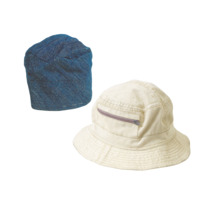
 In certain situations in the past, Wole Soyinka used hats to hide his characteristic bushy hair when he wanted to avoid being recognised.
This is how Soyinka describes these two hats:
Peripeteia (from the Hunter to the Hunted)
Floppy Hat
Peripeteia is the Greek expression (used especially in drama) for a reversal of fortunes. At home, my favourite form of relaxation is hunting, and I wore the faded khaki hat when I undertook my final hunt in Nigeria in November 1994, ‘got lost’ in the forest and surfaced in the neighbouring Republic of Benin – a fugitive from the dictatorship of Sanni Abacha. Later – on my exile circuit in African countries, Europe, the US etc – the hat was pressed into service as part of a prudent disguise as I continued to evade the dictator’s rather persistent agents – my head of hair being the most obvious giveaway.
Yoruba Cap
The black Yoruba cap was part of my formal attire – mostly retained in my hand - when I received the Nobel Prize in 1986. It surfaced again among the wardrobe which joined me later in exile, so I added it to the other head camouflage. (I still wear a headgear on occasion, despite the end of the dictatorship, but only to enjoy some anonymity).
While working on a project of the International Parliament of Writers, the setting up of a network of Cities of Asylum for persecuted writers, I received a complimentary ticket of a $1000 (!!!) ringside seat for a boxing match from a casino-hotelier-cum-bibliophile who was once an aspiring writer. He had spearheaded the creation of the first such city in the United States in – of all places! – Las Vegas! Again, I wore this very cap – to avoid easy recognition. After this novel and extravagant addition to its mixed fortunes, what else is left but to retire the cap, in grand style, from active service!
Wole Soyinka
Wole Soyinka donated the hats to the Nobel Prize Museum in 2000.
-
 Spektrum
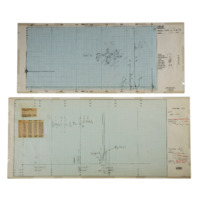
 These spectra carry information about a chemical compound that Richard Schrock produced in 1973. The spectra are produced with nuclear magnetic resonance (NMR), a method where radio waves are used to map molecular structure and composition. This chemical compound was a decisive step in the development of new ways of assembling organic molecules. Schrock’s methods amounted to facilitating metathesis. This means that the double bonds between carbon atoms are broken and reorganised at the same time as atomic groups change place.
Richard Schrock donated the spectra to the Nobel Prize Museum in 2018.
-
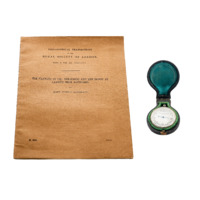 Barometer och vetenskaplig publikation
 Med en liten barometer och en vetenskaplig publikation från 1913 uppmärksammar Peter Ratcliffe en viktig vetenskaplig föregångare. Mabel Purefoy Fitzgerald, en kvinnlig pionjär inom vetenskapen, deltog i John Scott Haldanes expedition till Pike’s Peak i Colorado för att studera förändringar i kroppen på hög höjd. Hon var den första som påvisade att mängden hemoglobin i kroppen ökar när syrenivåerna sjunker, vilket de gör på hög höjd. Barometern användes för att mäta lufttrycket under experimenten. Ratcliffes egen forskning har klarlagt den molekylärbiologiska mekanism som ligger bakom Purefoy Fitzgeralds upptäckt.
Efter förfrågan från Peter Ratcliffe donerades barometern till Nobelprismuseet av David Paterson 2019.
-
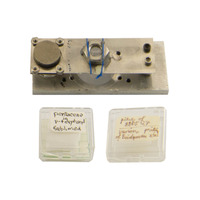 Prov och provhållare
 Två prov och en hållare som hållit proven på plats i apparaturen har använts i experiment av William E. Moerner. Experimenten ledde till utvecklingen av mikroskop med detaljnivåer som tidigare varit omöjliga.
William E. Moerner donerade proven och provhållaren till Nobelprismuseet 2014.
-
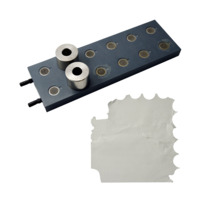 Filterhållare och filterpapper
 This filter manifold and this filtration paper were used by Robert Lefkowitz and Brian Kobilka in their studies of cell surface receptors. To study the receptors, they developed radioligand binding methods. After incubating membrane fractions from tissue with radioactively labelled ligands, they would pass them through small glass fibre filter discs which captured the membranes and let everything else pass through. In the filtration manifold could hold twelve filters. The filters were then washed, the radioactivity measured and the receptors found.
Robert Lefkowitz donated the filter manifold and the filtration paper to the Nobel Prize Museum in 2012.
-
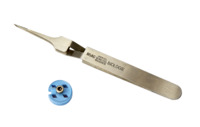 Cassette and tweezers
 The cassette and tweezers were used by Brian Kobilka in his research on “beta-adrenergic receptors” on the surface of our cells. These receptors are sensitive to the hormone adrenaline and transmit signals into our cells via G proteins. To map the structure of the molecular complex that these receptors form with G proteins, Kobilka and his colleagues used electron microscopy. Samples of the molecular complex were placed inside this pill-like cassette, which was inserted into the electron microscope using tweezers.
Brian Kobilka donated the cassette and tweezers to the Nobel Prize Museum in 2012.
-
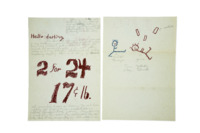 Brev från Donald Cram
 In a 1939 illustrated letter to his fiancée, Jean Turner, 20-year-old Donald Cram writes that he is thinking of giving up his chemistry studies in favour of drawing. Cram was working that summer for the National Biscuit Company (NABISCO), selling crackers to stores in New York. The job was demanding, and the drawings in the letter illustrate a scene in which Cram trips on the pavement and all the crackers fly in the air while his boss looks on. During a couple of following summers, he worked as a chemist in NABISCO’s laboratory. And his career as a chemist was destined to continue.
The letters were donated to the Nobel Prize Museum by Jean Turner Trueblood’s family in 2017.
-
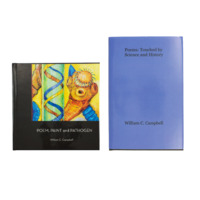 Böcker
 William Campbell’s paintings and poetry have resulted in books that he sees as an expression of the relationship between work and play. As a child, Campbell loved writing and painting. He had no knowledge of science before the age of thirteen but later developed an interest in medical research. Until he was in his 50s, he focused entirely on research, but then he began to paint again. His subject matter is associated with his work— parasites often feature in his paintings. Campbell also writes poetry. His poems also often have scientific connections and have been used in teaching, both by himself and others.
William Campbell donated the books to the Nobel Prize Museum in 2015.
-
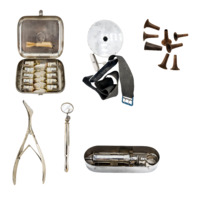 Läkarinstrument
 These instruments were used by Robert Bárány in his work as a physician and researcher. His most important scientific contribution concern the construction and function of the inner ear.
During the First World War, Bárány was a volunteer surgeon in the Austrian army on the Eastern Front. He was a prisoner of war in Russia in1915, when it was announced that he had won the 1914 Nobel Prize in Physiology or Medicine. Thanks to negotiations headed by Sweden’s Prince Carl on behalf of the Red Cross, he was released in 1916. After receiving the Nobel Prize, Bárány remained in Sweden. From 1917 he worked at Uppsala University.
The instruments were donated to the Nobel Prize Museum by the Bárány family in 2007.
-
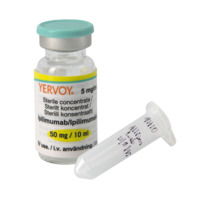 Provrör och ampull
 This test tube contains a solution with antibodies from mice that neutralise the CTLA-4 protein. James Allison discovered that the antibody can make the immune system more responsive so it can neutralise cancer tumours. After the discovery, a corresponding antibody was found in humans. Based on the results, a pharmaceutical could then be developed to treat some types of cancer. The vial contains this drug.
James Allison donated the test tube and the vial to the Nobel Prize Museum in 2018.
-
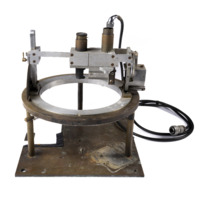 Oftalmoskop
 Instrumentet, ett oftalmoskop, användes av Torsten Wiesel och David Hubel i deras tidiga forskning om hur ljus som träffar näthinnan i ögat omvandlas till nervsignaler som i hjärnan blir till synintryck. Oftalmoskopet utvecklades av Stephen Kuffler och S.A. Talbot vid början av 1950-talet. När Wiesel som ung forskare kom till Johns Hopkins University blev Kuffler hans mentor. För Wiesel symboliserar instrumentet mentorskapets betydelse i vetenskapen. Han använde det bara några månader omkring 1958, men det följde ändå med honom i hans senare forskarliv.
Ett oftalmoskop ger möjlighet att belysa och observera ögonbotten. Detta oftalmoskop ger också möjlighet att stimulera ögonbotten med olika mönster. Wiesel och Hubel använde katter i sina experiment. Kattens huvud och ögon fixerades under det ringformade stativet och ögonbotten kunde sedan stimuleras och observeras med hjälp av optiska instrument på tvärslån över det ringformade stativet. Aktiviteten i nervcellerna mättes med hjälp av små elektroder.
Efter sina första studier övergick Wiesel och Hubel till att projicera mönster på ögonbotten på andra sätt än med detta oftalmoskop.
Torsten Wiesel donerade oftalmoskopet till Nobelprismuseet i samband med sin 100-årsdag i juni 2024.
-
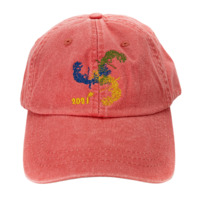 Keps
Keps Efter Nobelprisbeskedet 2021 lät Ardem Patapoutian och hans medarbetare tillverka kepsar till dem som varit delaktiga i arbetet. På kepsen syns molekylstrukturen för de piezo-kanaler upptäckten gällde. Piezokanaler finns i celler som känner av tryck. I årtalet 2021 är ettan utformad som en dynamitpatron, som en referens till Alfred Nobel.
Ardem Patapoutian donerade kepsen till Nobelprismuseet 2023.
-
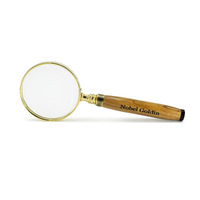 Magnifying glass
 In the Royal Swedish Academy of Sciences' popular information of Claudia Goldin's research, she was depicted as a detective with a magnifying glass. Her research on differences between men and women in terms of wages and employment rates is based on extensive archival studies. Goldin thought the image of her as a detective was apt and had a magnifying glass made with her name on it.
Claudia Goldin donated the magnifying glass to the Nobel Prize Museum in 2023.
-
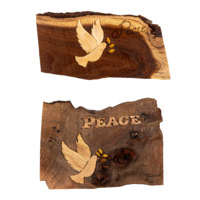 Tavlor
 These pictures were made by Narges Mohammadi in 2023 in Evin Prison, where she was previously held. She was transferred back to Evin in 2022 after periods of freedom and after having been held in other prisons:
“My return to Evin was strange, nostalgic and simultaneously exciting. The whole prison was familiar and full of memories to me. I went to the mosaic workshop and sat right in the same chair as I was sitting eight years ago, holding the little saw and picking up the wood and smelling it. I said myself I'd fly the same bird that was seeking peace eight years ago. And I sent these two birds into peace with an olive branch on the beak. The birds have now arrived at the Nobel Prize Museum. Well done.”
Narges Mohammadi donated the pictures to the Nobel Prize Museum in 2023.
-
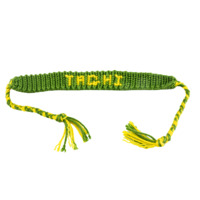 Armband
 This bracelet was weaved as a gift to Narges Mohammadi by her fellow prisoner Sedigheh Moradi. The first time Mohammadi saw Moradi in 2012, she suspected that Moradi had been in prison for a long time. This proved true. When Moradi shared her story, she revealed that she had lived most of her life in prison. She and many of her friends had been arrested and imprisoned in the 1980s. It was then that she came to know Mohammadi’s husband, Taghi Rahmani, whose name is on the bracelet. He is also a human rights activist and has been imprisoned periodically.
Narges Mohammadi donated the bracelet to the Nobel Prize Museum in 2023.
-
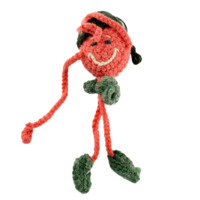 Docka
Docka This doll was given to Narges Mohammadi by a women, who was her cellmate between 2015 and 2017. The woman was a member of a spiritual group led by her husband. The husband treated her badly, and she was followed by the regime’s security service. Her husband was arrested and executed. She was also sentenced to death. In 2017, she was transferred to another prison where she spent months in solitary confinement and was badly injured. She sent this doll to Narges Mohammadi with the help of another prisoner who was being transferred: “Every time I saw this suspended doll, I was reminded of my dear cellmate, who was suspended under the patriarchal religious tyranny at home, in society, and in prison, awaiting her death sentence.”
Narges Mohammadi donated the doll to the Nobel Prize Museum in 2023.
-
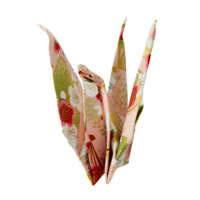 Pappersfågel
 This paper bird is a birthday present to Narges Mohammadi from her fellow prisoner Nazanin Zagari, who made it together with her daughter, Gisu, in the visitor’s room in 2018. At the time, Zagari had been in prison for just over two years and each Monday Gisu would visit together with her grandmother. When Mohammadi was transferred to the prison in Zanjan, her mementos remained in Evin Prison. After she was released in 2020, she was surprised to be given these back, when another prisoner on leave was allowed to bring them to her.
Narges Mohammadi donated the paper bird to the Nobel Prize Museum in 2023.
-
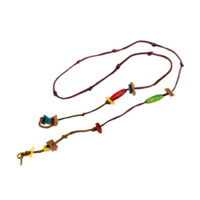 Glasses strap
 Narges Mohammadi’s fellow prisoner Golrokh Iraee made Mohammadi this strap for her glasses in 2017. Mohammadi would hide her glasses in different places since she lacked a strap to hold them around her neck. Iraee made the strap from a piece of leather that was left over from her work. The strap wasn’t long enough to reach around her frizzy hair and hung from her hair instead of her neck. Her fellow prisoners thought it humorous and one, Atena Daemi, would imitate Mohammadi often.
Narges Mohammadi donated the glasses strap to the Nobel Prize Museum in 2023.
-
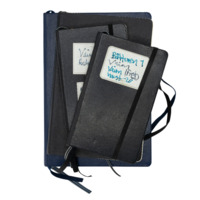 Manuskript
 Anteckningsböckerna innehåller det första utkastet till en ännu inte utgiven roman med titeln "Vaim" av Jon Fosse. Titeln är ett fiktivt ortsnamn och boken är planerad att ges ut 2025.
I början av sitt författarskap skrev Fosse sina manuskript på skrivmaskin, men han har sedan övergått till att först skriva hela boken för hand med bläck med olika färger och därefter skriva in och bearbeta manuskriptet på dator. Manuskriptet till Vaim är nu inskrivet på dator och Fosse har därför kunnat donera anteckningsböckerna till Nobelprismuseet.
Jon Fosse donerade manuskriptet till Nobelprismuseet 2023.
-
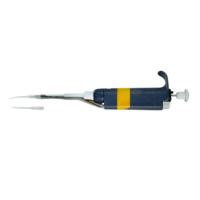 Pipett
 Katalin Karikó believes that she has been her most used tool in her research career. It is used to draw small amounts of liquids. This particular pipette, marked with a piece of tape, is her favourite. She used it for about 10 years from the early 2000s. She sees it as a symbol of her research findings that set the stage for the mRNA vaccine.
Katalin Karikó donated the pipette to the Nobel Prize Museum in 2023.
-
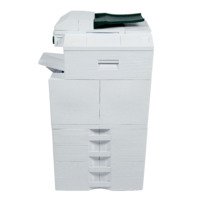 Kopia av kopieringsmaskin
 Drew Weissman’s and Katalin Karikó’s collaboration began at a copying machine. They were both avid readers of scientific articles that they photocopied from journals. Weissman was researching immunology and Karikó mRNA, but since there was only one copying machine, it became their meeting point and where they began discussing their research. These discussions led to a collaboration that laid the groundwork for mRNA vaccines. Weissman had this 3D printed copy of a copying machine made to celebrate the inspiration of their collaboration.
Drew Weissman donated the copying machine to the Nobel Prize Museum in 2023.
-
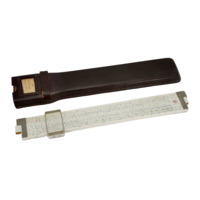 Räknesticka
 Louis Brus purchased this slide rule during his studies at Rice University in Houston, Texas in the early 1960s. Later, he replaced the slide rule with pocket calculators and computers.
Louis Brus donated the slide rule to the Nobel Prize Museum in 2023.
-
 Prov
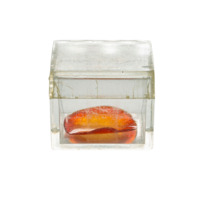
Prov Provet togs fram i Moungi Bawendis forskning om kvantprickar under det tidiga 1990-talet. Bawendi experimenterade med att injicera olika ämnen i olika lösningsmedel för att få små kristaller av halvledarmaterial, kvantprickar, att bildas. Provet består av små kristaller infattade i ett plastmaterial. Bawendi har sparat sina prover i ett eget litet museum, men valt att överlåta detta prov till Nobelprismuseet.
Moungi Bawendi donerade provet till Nobelprismuseet 2023.
-
 Fördröjningsplattor
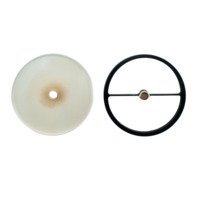
 Glasplattorna är kopior av plattor som Pierre Agostini använde när han först lyckades skapa mycket korta pulser av laserljus. Plattorna användes för ett avgörande steg i experimentet: för att fördröja en del av en laserstråle. Plattorna är precis lika tjocka eftersom den ena plattan är utskuren ur den andra. Genom att placera plattorna på lämpligt sätt, dela upp en laserstråle i två delar och låta dem passera genom varsin platta kunde den ena delen fördröjas i förhållande till den andra med hög precision.
Agostinis experiment handlade om att utnyttja övertoner i laserljusets vågor för att skapa och undersöka ett tåg av ljuspulser efter varandra. Genom att lägga ihop pulståget med en fördröjd del av den ursprungliga laserpulsen kunde de undersöka hur övertonerna var i fas med varandra.
Pierre Agostini donerade fördröjningsplattorna till Nobelprismuseet 2023.
-
 Instrument
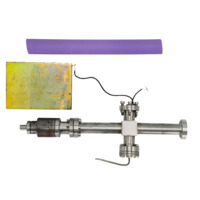
 These instruments were used by Anne L’Huillier in her early research on laser harmonics. A laser beam was created using the rod, which consists of glass with a layer of neodymium atoms. The metal parts were used to create a gas stream of noble atoms that the laser beam passed through. This created the laser harmonics. The shiny metal plate is a diffraction grating. The reflecting surface has many microscopic slits that split the light into wavelengths. This allows the study of how the light’s different wavelengths are composed. Laser harmonics allows the creation of laser pulses that are so short that they are measured in attoseconds.
Anne L'Huillier donated the instruments to the Nobel Prize Museum in 2023.
-
 Räknesticka
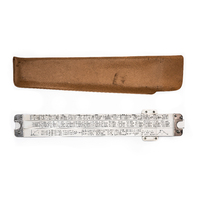
 William Phillips fick denna räknesticka 1963, strax innan han fyllde 15 år och skulle börja läsa fysik i high school. Han använde räknestickan för beräkningar vid läxor och prov, där den var ett tillåtet hjälpmedel. Han minns ett tillfälle när han räknat fel på en uppgift trots att han förstått den korrekt. Han hade adderat fel och sade till läraren att han hade förlitat sig på räknestickan men att denna inte klarade addition, utan bara multiplikation och division. Läraren uppmanade honom att försöka konstruera en räknesticka som kunde göra additioner. Detta fick Phillips att fundera över hur räknestickan fungerar. Den fungerar för multiplikationer genom att skalan är logaritmisk, men om skalan byts till en linjär skulle den fungera för additioner. Han presenterade idén för läraren. Idén kom aldrig till användning i praktiken, men den gjorde gott intryck på läraren.
När Phillips började sina universitetsstudier skaffade han en mer avancerad räknesticka och hade även tillgång till större mekaniska och så småningom en elektrisk räknemaskin. När sedan miniräknare kom förändrades möjligheterna helt.
William Phillips donerade räknestickan till Nobelprismuseet 2024.
-
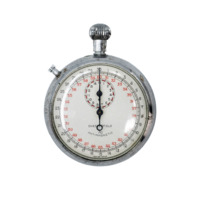 Stoppur
 När William Phillips var elva år gammal fick han detta stoppur av sina föräldrar. Han hade önskat sig det för att kunna göra enkla experiment. Han mätte bland annat tiden det tog för pendlar och gungor att svänga och olika föremål att falla till marken. Han använde också stoppuret för tidtagning vid löpning.
Som fysiker skulle Phillips senare utveckla metoder att kyla atomer med laserljus. Metoderna möjliggjorde ännu mer noggranna atomklockor. Felet hos sådana motsvarar en sekund på 300 miljoner år.
William Phillips donerade stoppuret till Nobelprismuseet 2024.
-
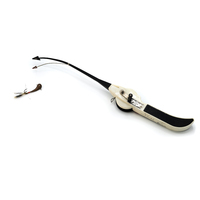 Pimpelspö
 Fiskespöet, som är avsett för fiske på is under vintertid, har tillhört Aleksej Jekimov. Fiske är ett av Jekimovs stora intressen i livet.
Aleksej Jekimov donerade fiskespöet till Nobelprismuseet 2024.
-
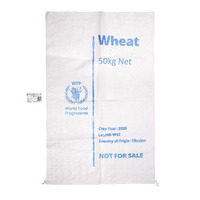 Säck och kort
 En säck för vete och ett kort för matransoner berättar om hur FN:s World Food Programme hjälper människor som lider brist på mat på grund av krig, konflikter eller andra nödlägen. Säcken är märkt för vete som skördades i Ukraina 2020. Den symboliserar det traditionella sättet att ge hjälp genom att dela ut matransoner. Kortet är ett nyare sätt att ge behövande möjlighet att få mat. Det fungerar som en voucher eller stämpelkort som kan användas för att betala mat i en butik eller på en marknad. Detta stärker mottagarnas självständighet och värdighet, samtidigt som det stödjer lokala samhällen och marknader. Korten delas oftast ut till kvinnor som har ansvar för barnen i familjerna som behöver hjälp.
Säcken och kortet överlämnades till Nobelprismuseet då WFP:s verkställande direktör Cindy McCain besökte museet 2024.
-
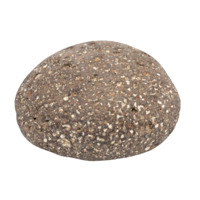 Sten
Sten Denna sten var av stor betydelse för José Saramago. Han hittade stenen, som är av vulkaniskt ursprung, på Lanzarote där han bodde. Saramago såg en symbolisk mening i den. Han menade att fram till boken Blindheten hade han bildligt talat försökt beskriva människor som statyer, men därefter intresserade han sig mer för stenen, materialet som statyerna består av.
Stenen donerades till Nobelprismuseet av José Saramago-stiftelsen och Pilar del Río 2024.
-
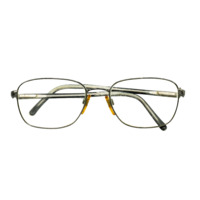 Glasögon
 Genom dessa glasögon såg José Saramago världen och människorna i den. Kanske kan vi säga att bilderna som passerade genom glasögonen så småningom tog form i hans böcker?
Glasögonen är för Saramagos närmaste förknippade med minnen och saknad. Saramago bar glasögonen på sin dödsbädd och när han hade gått bort tog hans hustru Pilar del Río av honom dem.
Glasögonen donerades till Nobelprismuseet av José Saramago-stiftelsen och Pilar del Río 2024.
-
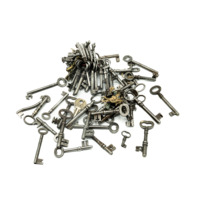 Nycklar
 Denna samling nycklar hade Eyvind Johnson liggande i ett kuvert i en skrivbordslåda. Där låg de kvar när han gick bort och bevarades därefter av hans familj. Hans dotter Maria Ekman har skrivit så här om nycklarna:
”Ingen har förstås vetat på evigheter vart de gick - de var helt enkelt kvar som avlagringar av tidigare faser i Eyvinds liv. (Alla har vi väl kvar en och annan gammal nyckelknippa som ännu inte har blivit utsorterad...) I familjen gick de under namnet "Krilons nycklar" efter det långa avsnitt i _Krilon Själv_, sista delen i Krilon-trilogin, som heter just "Johannes Krilons nycklar" och där Krilon sitter och begrundar sitt liv med utgångspunkt i ett skrin med gamla nycklar.
Nu låg ju låg Eyvinds nycklar visserligen inte i något skrin. När jag väl tog hand om dem låg de helt prosaiskt i ett kuvert från Kungliga Biblioteket poststämplat 1966 och adresserat till Herr Doktor Eyvind Johnson. Och just de här nycklarna är ju faktiskt inte Krilons på riktigt, utan Eyvinds.
En tanke med den här nyckelanhopningen med sin verklighet och sin samtidiga s.a.s. fiktiva Krilon-anknytning är att Krilon-trilogin ligger ungefär mitt i författarskapet, efter bland annat en rad självbiografiska böcker och före sviten av historiska romaner, och därmed pekar både framåt och bakåt i det långa författarskapet.”
Nycklarna donerades till Nobelprismuseet av Eyvind Johnsons efterlevande 2024.
-
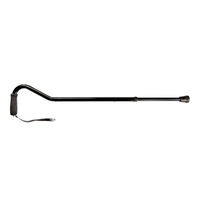 Walking stick
 This walking stick was used by Mikhail Gorbachev in his later years. After his death, Dmitry Muratov received it as a gift from Gorbachev's daughter Irina Virganskaya. Gorbachev had helped finance the founding of the newspaper Novaya Gazeta, which under Muratov's editorship engaged in critical investigative journalism.
Muratov remembers how Gorbachev once in a restaurant pounded the table with his stick and said: "First of all, listen to my UN speech!" He picked up a sheet and read: "BAN THE WAR." Muratov asked: "Was that all?" Gorbachev replied: "Is there anything to add?" And pounded the table once more with his stick.
Dmitry Muratov donated the walking stick to the Nobel Prize Museum in 2023.
-
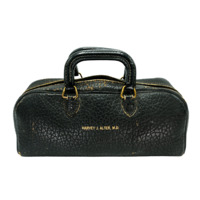 Doctor's bag
 This doctor’s bag was used by Harvey Alter during his last year of training to become a doctor. He studied at the University of Rochester and did his final internship at Strong Memorial Hospital in the early 1960s. Alter later did groundbreaking research in virology and discovered the previously unknown hepatitis C virus.
Harvey Alter donated the doctor’s bag to the Nobel Prize Museum in 2023.
-
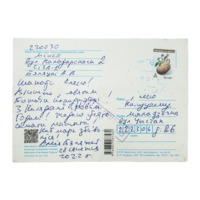 Postcard
 On Christmas 2022, the Belarusian human rights activist Ales Bialiatski sent this card to his colleague Ales Kapucki. The blue stamp shows that the card was sent from the pre-detention centre SIZO No. 1 in Minsk, where Bialiatski was detained at the time. The greeting reads:
“Dear Ales!
I congratulate you on the feast of the birth of God!
Merry Christmas and Happy New Year! I wish you all the best! May dreams come true!
Ales Bialiatski, 28 December 2022.”
Bialiatski had been detained in 2021, accused of tax evasion. He was in prison when it was announced in October 2022 that he had been awarded the Nobel Peace Prize. In 2023, he was sentenced to ten years in prison for smuggling and financing political protests.
The postcard was donated to the Nobel Prize Museum by Ales Kapucki in 2022.
-
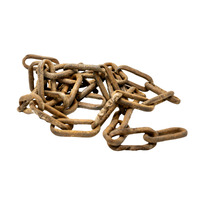 Chain
Chain This chain has been used in various activities carried out by the Center for Civil Liberties (CCL) since 2014 in response to Russia’s arrests of human rights activists in Crimea. One example is the #SaveOlegSentsov campaign, which gathered thousands of people from 40 countries to demonstrate against the illegal imprisonment of Ukrainian film director Oleg Sentsov and other political prisoners. In the end, 34 people were released, and one of them was Sentsov. The campaign appealed for support from the Parliamentary Assembly of the Council of Europe and was also a reminder that political prisoners are still being held in Russia.
CCL donated the chain to the Nobel Prize Museum in 2023.
-
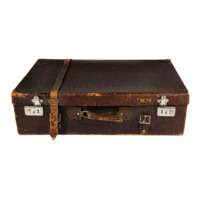 Suitcase
 When Nelly Sachs arrived in Sweden in 1940, she had this suitcase with her. It contained only what she could carry when she escaped from Berlin with her mother on one of the last civilian flights during the Second World War. As a Jew, she had been persecuted by the Nazis and realised her life was in danger. The escape was made possible through the concerted efforts of friends. One of the friends who vouched for Nelly Sachs and her mother was Selma Lagerlöf. In her youth, Sachs had been fascinated by Lagerlöf’s stories and had corresponded with her. Nelly Sachs also became a writer. and her poetry and plays often centred on the fate of the Jewish people.
Nelly Sachs gave the suitcase to her friend and translator Margaretha Holmqvist. In 2010, Holmqvist gave it to the author Aris Fioretos, to be included in a major exhibition on Sachs’s life and work in Germany, Switzerland and Stockholm. In 2023, Fioretos donated it to the Nobel Prize Museum.
-
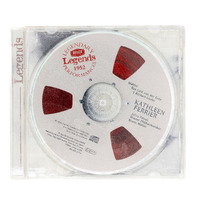 CD record
 In the four years it took her to write the poems in Averno, Louise Glück listened intensely to this CD of Gustav Mahler. She described how important music was to her writing in a letter sent to the Nobel Prize Museum in connection with her donation of the CD:
“For most of my life, the writing of a book has been preceded (often by several years) by obsessive listening to a particular piece of music. I say the writing of a book as though there were a matter of steady application toward a calculated end. But in my experience, writing is erratic, a kind of possessed fluency alternating with a steady silence. Only the music is both inspired and steady; it seems to me my poems emerge from it.
During the four years in which AVERNO was written, this is what I listened to. A few readers who knew nothing of my writerly habits heard Mahler, especially in 'October' – a tribute, I think, to the music’s haunted strangeness.”
Louise Glück donated the CD to the Nobel Prize Museum in 2023.
-
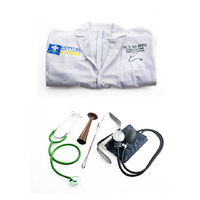 White coat and instruments
 To Denis Mukwege, a white coat and five instruments for medical examinations represent his work to help women who are victims of sexual violence in the Democratic Republic of Congo.
School children often ask Denis Mukwege what it takes to get the Nobel Peace Prize. He usually gives a concrete example by telling them about his work as a doctor. With the same end in mind, he gave these gifts to the Nobel Prize Museum:
a white coat
a blood pressure machine
a stethoscope used for listening to the heart and lungs and other organs
a trumpet-shaped wood stethoscope for listening to the heartbeat of a foetus
a depressor and a speculum, two instruments used for gynaecological examinations
With these instruments, and empathy and passion, Mukwege has helped women who were victims of sexual violence. He works at the Panzi Hospital in his hometown Bukavu in the Democratic Republic of Congo. Internationally, he is deeply committed to the fight against the use of sexual violence in wars and other conflicts.
Denis Mukwege donated the white coat and the instruments to the Nobel Prize Museum in 2023.
-
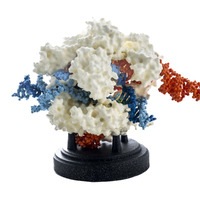 Model of Cas9
 This is a model of the protein Cas9, which plays a key role in CRISPR/Cas9, a powerful and precise method for altering the genome of organisms. The model was used by Jennifer Doudna, one of the scientists behind CRISPR/Cas9.
Jennifer Doudna donated the model to the Nobel Prize Museum in 2022.
-
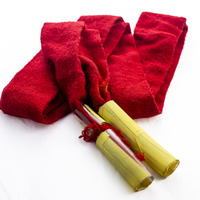 Oversized shoelaces
 Shoelaces with little caps at the end that stops them from fraying. Elizabeth Blackburn has compared this to the purpose of the telomeres, which she studied. In her lectures, she used these large shoelaces to illustrate this. The telomeres are the end bits in the chromosomal DNA molecules. They are shaped to partly protect the chromosomes, but the telomeres shorten slightly with every cell division.
Elizabeth Blackburn donated the shoelaces to the Nobel Prize Museum in 2022.
-
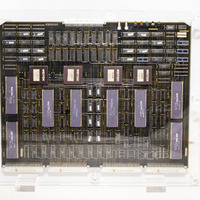 Circuit board
 This circuit board is the floating point unit of the APE (Array Processor Experiment) computer, which was built in Rome, Italy, in 1985–1987. It was important for the extensive calculation needed in Giorgio Parisi's research on complex systems.
Giorgio Parisi donated the circuit board to the Nobel Prize Museum in 2022.
-
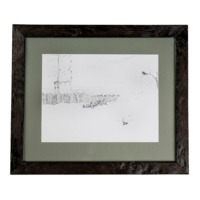 Drawing
 This copy of a drawing was donated to the Nobel Prize Museum by the human rights organisation Memorial, which is dedicated to collecting, preserving and publishing material on oppression during the Soviet Union’s totalitarian regime.
The drawing “The Crow” was made by the Russian artist Boris Sveshnikov in a prison camp in 1949–1950. In 1946, when Sveshnikov was a 19-year-old art student, he was sentenced to eight years in prison for anti-Soviet propaganda. He served his sentence in the labour camp Ukho-Izhemsky in the Komi Republic in northern Russia.
The drawing includes both realistic and dream-like elements. For Memorial, it tells of the destruction of life and talent. It symbolises loneliness, injustice and lack of freedom, while also expressing hope.
Memorial donated the copy of the drawing to the Nobel Prize Museum in 2023.
-
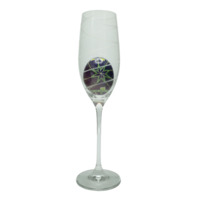 Egg and glass
 When Charles Rice turned 60, he received this egg from his mentor Dennis Barrett, who had painted it. The egg came in a protective glass. Rice met Barrett in 1970. Barrett sparked Rice’s interest in virology and became his mentor and friend. For Rice, the egg symbolises that a chance meeting can lead to new directions in life. He also wants to emphasise the importance of having a supportive mentor.
Charles Rice donated the egg and the glass to the Nobel Prize Museum in 2022.
-
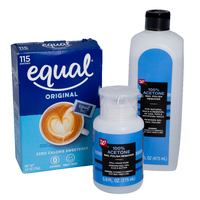 Artificial sweetener and acetone
 I dessa alldagliga kemiska produkter finns ingredienserna till en banbrytande kemisk innovation. Paketet innehåller ett sötningsmedel där aminosyran fenylalanin ingår. Flaskan innehåller aceton, som bland annat används som färgborttagningsmedel. David MacMillans forskargrupp kombinerade dessa två molekyler till det första exemplet på en ny typ av katalysator: en organokatalysator. Två vanliga, billiga och hållbara ämnen kunde alltså kombineras till en katalysator som kan driva fram en mångfald av olika kemiska reaktioner.
David MacMillan donerade kemikalierna till Nobelprismuseet 2022.
-
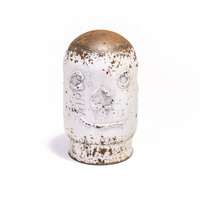 Mascot
 This cap for a gas tube served as a mascot for David MacMillan’s research team. They called the mascot Nabo. MacMillan is not particularly fond of Nabo, but his colleagues loved sneaking him into various contexts. For example, he appeared at MacMillan’s Nobel Prize lecture. Nabo represents MacMillan’s warm relationship to his many colleagues. But now, Nabo has joined the Nobel Prize Museum’s collection.
David MacMillan donated the mascot to the Nobel Prize Museum in 2022.
-
 Dietary supplements
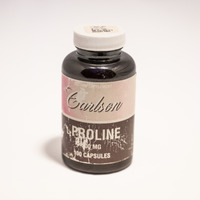
 Benjamin List bought this jar of dietary supplements while conducting his Nobel Prize-awarded research. The supplements contain the substance proline, which plays a key role in List’s discovery. Proline serves as a catalyst for building molecules. List tested using it to build a molecule that occurs in two mirrored forms and discovered that only one form arose nearly every time. This is very useful when manufacturing pharmaceuticals.
Benjamin List donated the dietary supplements to the Nobel Prize Museum in 2022.
-
 Magnetic tape and notes
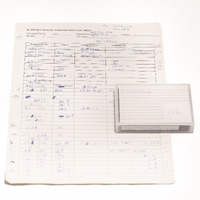
 This magnetic tape contains the first collection of measurements from Andrea Ghez’s research on a super massive black hole at the centre of our Milky Way galaxy. Ghez had to struggle to receive resources and access to the Keck Observatory in Hawaii to conduct the project. When the measurement data arrived, it provided surprisingly clear answers. The notes from the observations include the comment “Holy shit!”. The research, however, has taken a long time, around 30 years, and during that time technology has advanced immensely. Not only was collecting data important but also preserving the data. The magnetic tape symbolises this as well.
Andrea Ghez donated the to the Nobel Prize Museum in 2022.